The tragic death of Captain Valter Mărăcineanu, hero of Romania’s War of Independence
- Articles
- 16 JAN 26
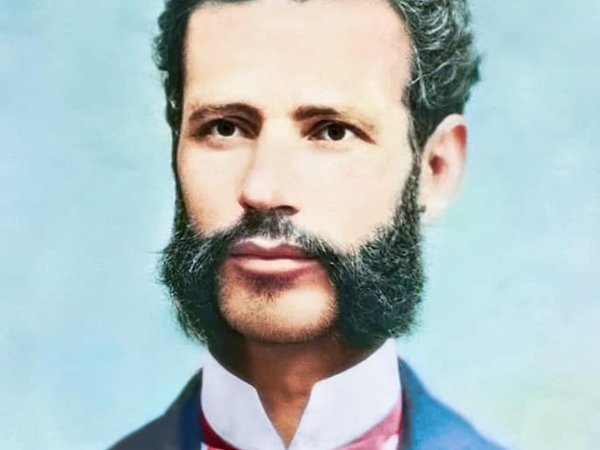
Romania’s War of Independence of 1877–1878 was not only a decisive military confrontation for the destiny of the modern Romanian state, but also the stage for acts of heroism that remained deeply imprinted in the national memory. Among these emblematic figures is Captain Valter Mărăcineanu, the officer who led his men into the fire of battle with uncommon courage and who met his end in a tragic manner, becoming a symbol of the supreme sacrifice for the country’s independence. His military destiny, marked by constant advancement, discipline, and devotion, ended abruptly on the battlefield at Grivița, in a moment that was to define not only his career, but also the image of heroism of the Romanian army in the collective consciousness.
Origins and the beginnings of his military career
Valter Mărăcineanu was born on 30 May 1840, at a time when the Romanian Principalities were undergoing a slow but irreversible process of political and institutional modernization. The choice of a military career was not accidental, but reflected the spirit of the age, in which young people animated by national ideals saw the army as an essential instrument for the affirmation of the Romanian state.
After completing his studies, Mărăcineanu entered the ranks of the army on 16 October 1858, with the rank of cadet, in a cavalry regiment. This first stage of his military training provided him with the discipline and rigor necessary for an officer, as well as his first contacts with the realities of barracks life. The ambition and seriousness he demonstrated were quickly noticed by his superiors.
Promotions and the transfer to the infantry
Valter Mărăcineanu’s career followed a steady evolution. On 24 January 1861, a symbolic date in Romanian history, he was promoted to the rank of second lieutenant and transferred to the infantry branch, within the 2nd Line Infantry Regiment. This move was to define his subsequent path, as the infantry was the branch that bore the brunt of the major battles of the War of Independence.
On 30 August 1863, Mărăcineanu was promoted to the rank of lieutenant, and five years later, on 28 September 1868, he became captain. With this advancement, he was transferred to the newly established 8th Line Infantry Regiment, a unit that was to play an important role in the decisive confrontations with the Ottoman army. Within this regiment, Valter Mărăcineanu distinguished himself as an energetic commander, close to his soldiers and respected for his spirit of sacrifice.
The 8th Infantry Regiment and the missions on the Danube
During the War of Independence, Captain Valter Mărăcineanu was in command of the 1st Battalion of the 8th Line Infantry Regiment. Under the leadership of Lieutenant Colonel Constantin Poenaru, the regiment initially carried out missions of surveillance and defense of the Danube frontier, in an extremely tense strategic context.
The defense of the Danube was vital for the security of Romanian territory, and these demanding missions required constant vigilance and rapid reaction capability. After 12 August, the unit crossed the Danube, entering hostile territory, with the purpose of carrying out reconnaissance and preparing the advance toward Plevna, one of the key points of the conflict.
The road to Plevna and the importance of the Grivița redoubt
The advance toward Plevna represented one of the most difficult stages of the Romanian–Russian campaign against the Ottoman Empire. The Ottoman fortifications were strong, well defended, and strategically placed, and Redoubt Grivița 2 was among the most difficult positions to capture.
At the attack of 30 August 1877, the 1st Battalion commanded by Valter Mărăcineanu was included in the assault column of the 1st Brigade of the 3rd Infantry Division, under the command of Colonel Grigore Ipătescu. The mission was extremely risky, but decisive for the success of subsequent operations. The operations journal of the 8th Line Infantry Regiment records in detail the unfolding of the battle and the sacrifice of the Romanian officers.
The heroic attack and the death of Valter Mărăcineanu
During the assault on Redoubt Grivița 2, Captain Valter Mărăcineanu was at the head of his soldiers, instilling courage through his own example. His shout, “After me, children!”, became emblematic of the fighting spirit of the Romanian army. Under devastating fire, he continued the advance until he was mortally struck.
According to contemporary testimonies, Mărăcineanu fell in the trenches of the redoubt, pierced by bullets, on the same day of 30 August 1877. After the first withdrawal of the Romanian troops, the Ottomans took the bodies of Captain Mărăcineanu and Major Gheorghe Șonțu and displayed them on the parapet of the redoubt as war trophies, a gesture that aroused indignation, but also an even stronger desire for revenge among the Romanian soldiers.
The echo of the sacrifice in the consciousness of contemporaries
The death of Valter Mărăcineanu had a profound impact on his comrades and on public opinion. Dimitrie R. Rosetti, in the “Dictionary of Contemporaries” of 1897, described with emotion his courage and the way he led his men into battle, emphasizing the exemplary character of his sacrifice.
In turn, Theodor C. Văcărescu, his former schoolmate, noted that the heroic death of Major Șonțu and Captain Mărăcineanu became an example for all their comrades, a model to be followed in the fight for independence. These words reflect the way in which his sacrifice contributed to strengthening troop morale and reinforcing the feeling of national solidarity.
The image of the hero and historical memory
The moment of the assault on the redoubt, with Valter Mărăcineanu at the head of his soldiers, was immortalized in the pages of the newspaper “Resboiul,” thanks to the talent of Carol Pop de Szathmari, “Court draughtsman” and one of the first war photojournalists. These visual representations contributed decisively to fixing the image of the hero in the collective memory and to transmitting his sacrifice across generations.
Today, the National Military Museum “King Ferdinand I” plays an essential role in preserving and promoting this historical legacy. Founded on 18 December 1923, the museum houses an impressive heritage of over 300,000 objects and documents, many of them connected to the War of Independence and its heroes.
Through exhibitions, cultural projects, and national and international collaborations, the institution contributes to keeping alive the memory of figures such as Valter Mărăcineanu, whose tragic death remains a symbol of devotion to the national ideal.
We also recommend: Major Ion Coravu, the Romanian hero of Mărăști in the First World War, has a street named after him in Bucharest