The story of the Bucharest woman with a crystal-clear voice: Arta Florescu, one of Romania’s greatest opera performers
- Articles
- 27 AUG 26
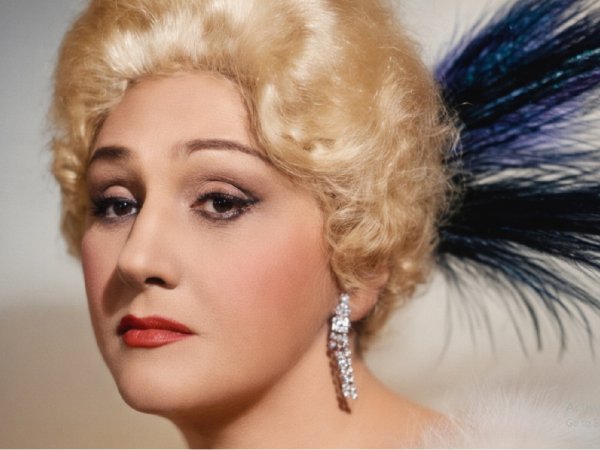
Arta Florescu remains one of the important figures of the Romanian lyrical stage of the 20th century, an artist who managed to combine vocal performance with stage intelligence, professional discipline and a vocation for teaching. The Bucharest-born soprano stood out not only through the beauty and breadth of her voice, but also through her ability to approach extremely diverse repertoires, from opera and operetta to lied, oratorio and contemporary musical creation. Born in Bucharest on March 10, 1921, Arta Florescu had an impressive artistic and pedagogical career that spanned several decades. She was a soloist and principal soloist of the Romanian Opera, sang on prestigious stages in Europe, Asia and South America, and, in parallel, became one of the singing teachers who decisively contributed to the training of new generations of performers.
The formation of a great soprano in Bucharest, Geneva and Vienna
Arta Florescu’s professional path began during the interwar period, in a Bucharest where musical life was extremely active. Between 1939 and 1942, the young artist attended the Bucharest Conservatory, where she benefited from the guidance of important personalities of Romanian music. Among her teachers were Elena Saghin, for singing, Ioan D. Chirescu, Constantin Brăiloiu, Mihail Jora and M. Vulpescu.
Even during her studies, Florescu began gaining artistic experience. Between 1937 and 1942, she was a soloist of the “România” Choral Society in Bucharest, an activity that gave her the opportunity to become familiar with the stage and with the demands of vocal performance before her actual consecration in lyrical theatre.
Her training did not stop, however, after graduating from the Conservatory. In 1946, Arta Florescu went to Geneva, where she studied with Anna Maria Guglielmetti, and the following year she continued her training in Vienna, working with Kurt Masur, Balzer and Josef Krips. These periods of advanced study contributed to strengthening her technique and broadening her artistic horizons, during a period when the European stage was undergoing important transformations.
The debuts that announced a spectacular career
An important moment in Arta Florescu’s rise was her debut at Radio Broadcasting, on March 20, 1939. The artist presented a program consisting of lieder by Henri Duparc, Robert Schumann and Alfred Alessandrescu. Her appearance on the radio represented one of the first public confirmations of her vocal qualities.
Three years later, on March 29, 1942, Arta Florescu appeared for the first time on the stage of the Romanian Athenaeum. She was accompanied on piano by Nicolae Rădulescu and performed works by Hugo Wolf, Henri Duparc, Ernest Chausson, Richard Strauss, Joseph Marx, Reynaldo Hahn, Igor Stravinsky and George Enescu. The diversity of the chosen repertoire already demonstrated her openness to very different styles and composers.
At the Athenaeum, the artist would also approach the vocal-symphonic repertoire. On March 29, 1942, under the direction of conductor Ionel Perlea, she took part in the performance of the oratorio “Stabat Mater” by G. Clari. The experience accumulated during these appearances paved the way for the debut that would permanently change her professional path.
On December 5, 1942, Arta Florescu made her debut on the stage of the Romanian Opera in “Lucia di Lammermoor”, the famous opera by Gaetano Donizetti, under the direction of conductor Jean Bobescu. Lucia was an extremely demanding role from both a vocal and interpretive point of view, and its choice for her debut on the Opera stage demonstrated the confidence placed in the young soprano.
More than 70 characters and a repertoire without boundaries
Arta Florescu would remain connected to the Romanian Opera for several decades. Between 1942 and 1945 she worked as a soloist, and from 1945 to 1968 she was a principal soloist. During this period, her repertoire reached more than 70 roles, creating a true portfolio of the great female characters in universal lyrical literature.
She performed works by Wolfgang Amadeus Mozart, including “The Abduction from the Seraglio”, “The Marriage of Figaro” and “Don Giovanni”, as well as creations by Christoph Willibald Gluck, such as “Iphigenia in Aulis”. Her Verdi repertoire was equally rich, including “Il Trovatore”, “La Traviata”, “Aida”, “Rigoletto”, “Don Carlos” and “Otello”.
The Puccini universe offered her other important characters, from operas such as “La Bohème”, “Madama Butterfly” and “Tosca”. She also approached “Der Rosenkavalier” by Richard Strauss and “William Tell” by Gioachino Rossini, demonstrating great stylistic flexibility.
Musicologist Viorel Cosma, one of the important voices in Romanian music research, emphasized precisely this rare ability of the artist to move naturally from one genre to another. In his view, Arta Florescu possessed broad vocal possibilities and did not see rigid boundaries between classical and contemporary music, between Romanian and universal repertoire, or between opera, operetta, lied and oratorio.
Her vocal qualities were complemented by stage presence, artistic intelligence and professional seriousness. It was precisely this combination that allowed her to create memorable characters and establish herself not only through her voice, but through the power of her interpretation.
From the great European stages to tours around the world
Arta Florescu’s success was not limited to Romania. Throughout her career, the soprano sang on some of the most important lyrical stages internationally, becoming one of the Romanian artists who successfully represented the country’s vocal school abroad.
Among the institutions where she performed were the Bolshoi Theatre in Moscow, the Staatsoper in Berlin, the Royal de La Monnaie in Brussels, the Municipal Theatre in Rio de Janeiro, the Staatsoper in Leipzig, the Champs-Élysées in Paris and the Kirov Theatre in Saint Petersburg. Her presence on such stages is one of the most important testimonies to the prestige she had acquired.
Her international activity included numerous artistic tours. Arta Florescu travelled to France, Japan, Austria, Hungary, the Soviet Union, Poland, Italy, Great Britain, Bulgaria, China, Brazil, Germany, Belgium, Israel, Switzerland and Turkey. For a Romanian artist active in the decades following the war, such international exposure represented a remarkable achievement.
The experience gained on these stages also contributed to her artistic maturity. Contact with different interpretive traditions, orchestras, conductors and singing schools enriched the repertoire and style of a soprano who was already established in Romania.
The teacher who trained entire generations of singers
An essential part of Arta Florescu’s legacy lies not only in her recordings and performances, but also in her pedagogical activity. From 1950 to 1989, the artist worked at the Bucharest Conservatory, where she was lecturer, professor and head of the Singing Department.
For Arta Florescu, teaching does not appear to have been merely an administrative continuation of her stage career, but a new form of transmitting experience. After decades spent on stage, she had the opportunity to offer young singers the technical and artistic knowledge she had acquired before audiences.
Among the performers trained in the singing department under the influence of her school were Maria Slătinaru-Nistor, Eugenia Moldoveanu, Cleopatra Melidoneanu, Viorica Cortez, Lucia Țibuleac, Angela Gheorghiu, Leontina Ciobanu-Văduva, Bianca Ionescu and Iulia Isaev. The list is much longer, and the names of her students demonstrate the extent of Professor Arta Florescu’s influence on Romanian singing.
In 1976, her pedagogical experience once again went beyond the country’s borders, as the artist became a guest professor at the Istanbul Opera. She also served as a member of the juries of numerous national and international singing competitions, thus contributing to the assessment and promotion of new generations of performers.
Distinctions for an exceptional career
Arta Florescu’s artistic value was officially recognized as early as the first years of her career. By Royal Decree No. 1,886 of June 14, 1946, the lyrical artist was awarded the “Cultural Merit” Order, First Class, for her creations in the field of the arts and for the moral and artistic support she offered to the development of culture.
This distinction was followed by other important recognitions. In 1964, Arta Florescu received the title of Artist of the People, for outstanding merits in her activity in the fields of theatre, music and visual arts. In 1971, she was once again awarded the “Cultural Merit” Order, First Class.
Beyond titles and decorations, however, the true measure of her prestige remains the influence she exerted on the Romanian lyrical stage. She was an artist who combined the technical demands of the great singing school with stage expressiveness and a desire to explore diverse repertoires.
Arta Florescu, the name that remained in the history of Romanian opera
Arta Florescu died in Bucharest on July 6, 1998, after more than half a century devoted to music. She was buried in the “Reînvierea” Cemetery in Bucharest, the city where she had been born and where she had built an important part of her artistic destiny.
Her story, however, is much more than the biography of a soprano who performed more than 70 roles and sang on international stages. It is the story of an artist who connected several generations of Romanian music. She performed on the great stages of the world, brought fundamental opera characters to life, performed lieder and oratorios and, later, trained singers who would carry forward the tradition of the Romanian singing school.
Through her voice, her vast repertoire and her pedagogical activity, Arta Florescu became one of the representative personalities of the Romanian lyrical stage. The Bucharest woman born in 1921 left behind not only the memory of a soprano with a remarkable voice, but also a genuine artistic school. And the fact that the names of important Romanian singers are connected to her teaching activity is perhaps the strongest proof that her legacy did not end when she left the stage.
For the history of Romanian music, Arta Florescu thus remains an essential name: a soprano who achieved international recognition, a teacher who shaped artistic destinies and a personality who decisively contributed to the affirmation of the value of the Romanian lyrical school throughout the world.
We also recommend: The stars of interwar Bucharest: Floria Capsali, Romania’s greatest ballerina, fled the war to build the first ballet school in our country