The stars of interwar Bucharest: Niki Atanasiu, the most talented Ștefan Tipătescu in the history of Romanian theatre
- Articles
- 25 MAR 26
Bucharest at the beginning of the 20th century was a vibrant city, in continuous cultural transformation, where theatre occupied a central place in intellectual life. In this context, the actor Niki Atanasiu was born on May 20, 1907, one of the most refined interpreters of Romanian comedy. Coming from an urban environment that encouraged contact with art and literature, the future actor was to discover from an early age his vocation for the stage.
The beginnings of an artistic destiny in the capital
His path to recognition began with his studies at the Conservatory of Dramatic Art in Bucharest, an elite institution in the training of Romanian actors. He graduated in 1928, being a student of the famous Lucia Sturdza Bulandra, one of the most influential personalities of Romanian theatre. Under her guidance, Atanasiu learned the rigor of the acting craft, but also the subtleties of stage interpretation, which were to define his entire career.
His training in a demanding artistic environment decisively contributed to the development of a personal style, characterized by naturalness, stage intelligence, and a fine understanding of comedy. These traits were to turn him into an actor appreciated both by the public and by critics.
The debut on the stage of the national theatre and artistic affirmation
After graduating from the Conservatory, Niki Atanasiu made his debut in 1929 on the stage of the National Theatre in Bucharest, in a play by George Bernard Shaw, “Major Barbara.” This debut marked the beginning of a remarkable career, carried out largely on the stage of the National Theatre, where the actor had the opportunity to interpret a wide range of roles.
The National Theatre was, at that time, the center of Romanian theatrical life, and Atanasiu’s presence on this stage brought him into contact with the most important dramatic texts of the era. His versatility allowed him to approach both classical repertoire and contemporary dramaturgy, adapting easily to the requirements of each role.
Over the years, the actor became a constant and appreciated presence, building a solid reputation. His performances were characterized by balance and finesse, avoiding exaggerations and relying on authenticity.
The encounter with the universe of caragiale
A defining moment in Niki Atanasiu’s career was his encounter with the work of Ion Luca Caragiale. Caragiale’s dramaturgy, with its subtle humor and sharp social observation, offered the actor the ideal ground to capitalize on his comic talent.
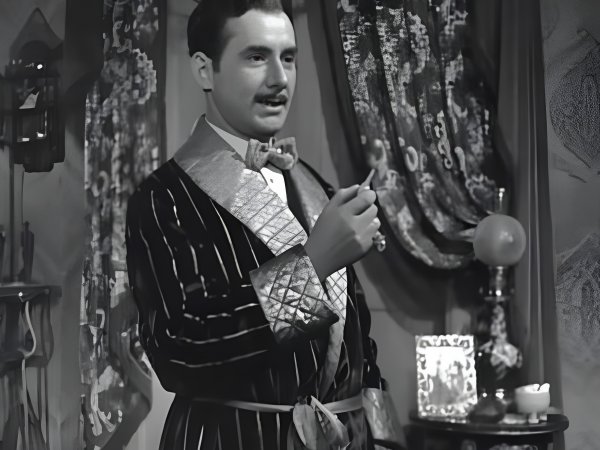
Atanasiu performed roles in plays such as “D’ale carnavalului,” “A Stormy Night,” and especially “A Lost Letter.” Among all these creations, the role of Ștefan Tipătescu in “A Lost Letter” was to remain emblematic for his career.
The character Tipătescu, the elegant and impulsive prefect, is a complex figure, situated at the boundary between comedy and drama. Niki Atanasiu’s interpretation managed to capture the nuances of this character, avoiding caricature and highlighting his humanity. It is precisely this balanced approach that made his interpretation considered, by many critics, the most accomplished in the history of Romanian theatre.
An impressive and diverse repertoire
Niki Atanasiu’s career was not limited to Caragiale’s theatre. On the contrary, the actor demonstrated a remarkable capacity for adaptation, performing roles from a vast and varied repertoire.
He played in the comedy “The Boors” by Carlo Goldoni, where he highlighted situational humor and the fast rhythm of the play. He also performed roles in the works of William Shakespeare, such as “Much Ado About Nothing” and “The Taming of the Shrew,” demonstrating that he could also approach universal classical texts.
His repertoire also included modern or contemporary plays, such as “The Last Hour” by Mihail Sebastian or “Mitică Popescu” by Camil Petrescu. These roles highlighted the actor’s ability to render the psychological complexity of characters, beyond the comic dimension.
At the same time, he performed in plays inspired by Romanian historical and social dramaturgy, such as “Sunset” by Barbu Ștefănescu Delavrancea or “The Broken Citadel” by Horia Lovinescu. This diversity contributed to consolidating his status as a complete actor.
Presence in cinematography and memorable roles
Although theatre remained his main passion, Niki Atanasiu also had notable appearances in cinematography. Film offered him the opportunity to preserve his performances for posterity, in an era in which theatre was, traditionally, an ephemeral art.
One of his most important appearances is in the screen adaptation of the play “A Lost Letter,” made in 1953 by Sică Alexandrescu and Victor Iliu. In this film, Atanasiu reprised the role of Tipătescu, offering a reference performance that can still be watched today.
He also acted in films such as “The Broken Citadel” (1957), “Telegrams” (1959), “The Boors” (1960), and “Porto-Franco” (1961). These productions, made during a period of development of Romanian cinematography, benefited from the actor’s experience and talent.
Through film, the image of Niki Atanasiu was preserved and transmitted to future generations, contributing to the perpetuation of his artistic memory.
Official recognition and consecration
The artistic value of Niki Atanasiu was also officially recognized, through the awarding of important distinctions. In 1964, he received the title of Artist of the People, one of the highest distinctions granted to artists in that period.
Later, in 1967, he was awarded the Order of Cultural Merit, first class, for his long-standing activity and significant contribution in the field of dramatic art. These recognitions confirmed his status as a leading personality of Romanian theatre.
The distinctions were not just a formality, but a reflection of the real impact that the actor had on the Romanian stage. Through his professionalism and dedication, Atanasiu became a model for future generations of actors.
The final years and the artistic legacy
Niki Atanasiu passed away on November 24, 1967, in Bucharest, the city where he was born and where he built his entire career. His disappearance left a void in the world of Romanian theatre, but his artistic legacy continued to endure.
After his death, the image of the actor remained alive especially through films made after theatre performances, such as “A Lost Letter” and “The Boors,” directed by Sică Alexandrescu. These productions represent valuable documents of Romanian theatrical art and offer a faithful image of Atanasiu’s talent.
Today, his name is inevitably associated with the role of Tipătescu, which has become a benchmark for any actor who approaches this character. His interpretation is considered a standard, due to the balance between comedy and seriousness.
A symbol of interwar and postwar theatre
Niki Atanasiu remains one of the representative figures of Romanian theatre of the 20th century, an actor who went through complex historical periods and managed to preserve his artistic integrity.
He is part of the golden generation of the Bucharest stage, alongside other great actors who contributed to defining the identity of Romanian theatre. Through his refined style and his ability to bring characters to life, Atanasiu influenced the way comedy theatre is perceived in Romania.
His legacy does not consist only in the roles he performed, but also in the standards of professionalism that he imposed. For the contemporary audience, he remains an example of artistic elegance and respect for the stage.
In conclusion, Niki Atanasiu was not only a talented actor, but a true symbol of Romanian theatre. His interpretation of Ștefan Tipătescu continues to inspire and fascinate, demonstrating that authentic art transcends the limits of time and remains relevant for every generation.
We also recommend: The stars of interwar Bucharest: Elvira Godeanu - the child abandoned by her father, Zoe Trahanache, the duchess of Romanian theatre