The stars of interwar Bucharest: Fory Etterle left law and seafaring to become one of the greatest Romanian actors
- Articles
- 24 MAR 26
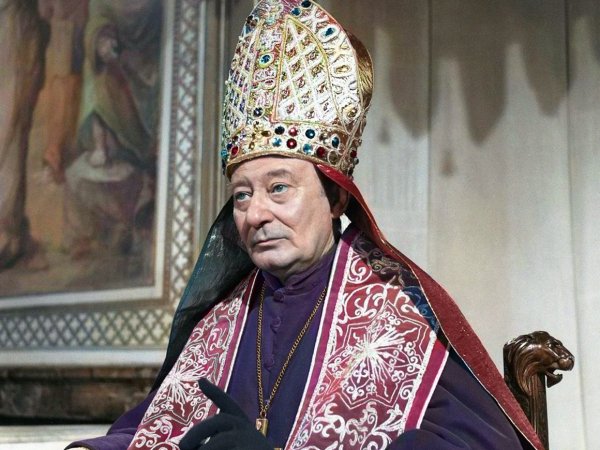
In the history of Romanian theater there are destinies that seem written especially to prove that vocation cannot be stopped either by the expectations of the family, or by the paths considered respectable in the era. Such a destiny was that of Cristofor Etterle, known to the wider public under the name of Fory Etterle, the actor who abandoned the safe road of a legal career and also left behind the fascination for seafaring, choosing the stage, the microphone and, in the end, artistic glory. His story is all the more interesting as it speaks not only about talent, but also about the courage to change the direction of life when the inner calling becomes too strong to be ignored any longer.
Who was actor Fory Etterle
Fory Etterle was born on May 24, 1908, in Ploiești, in a period in which Romania was still defining its modern cultural landmarks, and theater was beginning to gain a central place in urban life. He grew up in a lively city, with tradition and personality, where he first attended primary school, then the courses of the “Saints Peter and Paul” High School, also known through its later association with the name of I.L. Caragiale.
He graduated from high school in 1926, and his adolescence stood under the sign of a more complex formation than the simple listing of study years would suggest. He was attracted to music, studying piano, violin and guitar, which says a great deal about his early artistic sensitivity, but also about an inner discipline that would later be useful to him in acting.
At the same time, the young Etterle was also seduced by the idea of a naval career. There is something deeply revealing in this attraction to seafaring: it suggests not only a taste for adventure, but also the desire for movement, for stepping out of fixed patterns, for the exploration of a wider world.
Still, his parents had another plan for him. As in many families of the era, a legal career seemed a safe, prestigious one and suitable for an educated young man. Thus Fory Etterle was pushed toward the Faculty of Law, following the path that the family considered most suitable for his future. Only, in his case, this path was to be doubled by another, less predictable, but infinitely more important for Romanian culture.
Between Law, the Conservatory and the calling of the stage
Between 1926 and 1929, Fory Etterle simultaneously attended the courses of the Faculty of Law and of the Conservatory of Dramatic Art in Bucharest. This double training is one of the most significant stages in his biography. On the one hand, it shows the pressure of a conventional road, oriented toward the legal profession.
On the other hand, it clearly says that the attraction to the stage was not a simple secondary passion, but a serious choice, sustained through work, discipline and commitment. Not many young people would have been able to carry in parallel two forms of training so demanding, and this detail already speaks about the tenacity of the future actor.
At the Conservatory, Fory Etterle had the essential chance to be the student of one of the greatest personalities of Romanian theater, Lucia Sturdza-Bulandra. Her influence on the generations of actors formed in that era was immense, and the fact that Etterle studied under her guidance says much about the rigor of the school he went through.
The class of 1929 of which he was part was a remarkable one. He was a fellow generation colleague with Lucia Demetrius, Mihai Popescu, Emil Botta and Tanți Cocea, names that were to leave strong marks on Romanian culture. The presence of these personalities in the same generation shows that Etterle was formed in an environment of great artistic intensity, in a competitive, fertile and demanding climate.
More than that, his stage debut took place from his very first year of studies. This detail is essential for understanding his path. He did not wait for the completion of his studies in order to confront the stage, but quickly entered into direct contact with the public and with the rigors of acting.
Therefore, the calling of the stage was not for him a late revelation, but an active presence already during his training. Fory Etterle did not become an actor by accident and not as the effect of a last-minute change of mind either. His whole course from those years shows a man who, although divided between the obligations imposed by family and his own passions, was already clearly heading toward theater.
This choice also had a symbolic dimension. To leave behind law and the seafaring dream in order to remain faithful to the stage meant, in fact, accepting a more uncertain life, but a more authentic one. In place of a respectable and stable profession, Etterle preferred the world of theater, with its instabilities, emotions and risks. From this tension between the destiny desired by the family and the inner vocation there is born, in fact, one of the most beautiful stories of the Romanian stage.
Fory Etterle and the generation that marked Romanian theater
The years of his youth coincide with an effervescent period for Romanian theater, and Fory Etterle belongs to a generation that gave our culture major names. The fact that he was a colleague with Lucia Demetrius, Mihai Popescu, Emil Botta and Tanți Cocea is not a simple biographical detail, but a reading key for his entire evolution.
It was the generation of cultivated, serious artists, with great ambitions and with a profound understanding of the role of theater in society. Not merely a group of graduates was being formed, but a true nucleus of future cultural personalities.
In this context, Fory Etterle stood out through a particular presence, through rigor and through the capacity to approach complex roles. He was not only a talented actor, but also an interpreter capable of sustaining heavy, demanding parts, which required not only expressiveness, but also scenic intelligence, refinement and endurance. Precisely for this reason, his name did not remain linked to an easy career or to superficial successes, but to a path built through serious work and through the assumption of difficult roles.
In theater, one of the great confirmations came in 1956, when he stood out in the role of Richard II. Such a character is never within the reach of an ordinary actor. It presupposes inner strength, psychological complexity and a good mastery of dramatic resources.
The fact that Etterle was noticed precisely through such a part says everything about his artistic stature. We are not speaking about an actor of circumstance, but about one who could carry on his shoulders texts and characters of great difficulty.
But, beyond his strictly scenic career, the way in which Etterle was part of an interconnected artistic world must also be observed, one in which actors, directors, playwrights and theater directors built a culture together.
He did not exist in isolation, but as part of a living cultural Bucharest, in which the stage represented a center of prestige and influence. In this universe, prestige was not gained easily. Solid schooling, discipline, work and endurance over time were needed. Fory Etterle met all these conditions.
“Our Theater”, an artistic wager in a restless era
One of the most important initiatives in his path was the founding, in 1941, together with Dina Cocea, the sister of the actress Tanți Cocea, of the company “Our Theater”, which functioned in the basements of the “Comedy” hall. This initiative speaks about his constructive spirit and about the desire to participate actively in theatrical life, not only as an interpreter, but also as a man involved in the organization and support of an artistic company. In a complicated time, marked by historical and social tensions, such a project meant courage and faith in the power of theater.
“Our Theater” was more than a simple administrative formula. It represented a space of artistic affirmation and an attempt at cultural autonomy. Within this company there was staged, in 1945, the social drama “Canalia”, in an impressive cast, of which Jules Cazaban, Lia Șahighian, George Calboreanu, Gheorghe Storin, Mărioara Voiculescu and Lucia Sturdza Bulandra were part. Such a cast shows that “Our Theater” was not a marginal adventure, but a serious project, capable of attracting great names of the Romanian stage.
There is in this stage also a broader meaning. Fory Etterle was not only an actor seeking his place in an already established institution, but also an artist willing to create new structures, to take risks, to build. This is a sign of professional maturity and commitment. A great actor is not defined only through his roles, but also through the way in which he contributes to the cultural ecosystem of which he is part.
Unfortunately, the glory of this company was short. Once with the establishment of the communist regime and with the triggering of the nationalization of theater companies, “Our Theater” went bankrupt, in 1949. It is an episode that brutally shows how much politics can change the destiny of cultural projects.
What had been built through enthusiasm, collaboration and artistic energy was crushed by the new order imposed on society. For Fory Etterle, however, this collapse did not mean the end. He went further, and his career continued to assert itself through the force of personal talent.
The fascination for radio theater and the power of the voice
Besides his scenic activity, Fory Etterle was passionate about radio theater, which was then in its beginnings. This detail is extremely important, because it shows his openness toward new forms of expression and toward the modern means through which theater could reach the public.
For an actor trained in the rigor of the classical stage, interest in radio was not a banal gesture. Radio theater required another type of expressiveness, in which the voice, rhythm, breathing and nuance became essential instruments.
His first notable step in this field took place on February 15, 1946, together with the performance “Where the cross is”, by Eugene O’Neill. The cast included Beate Fredanov, Emil Botta, Alexandru Demetriad and George Manu, and the direction was signed by Marietta Sadova.
The fact that Etterle appears in such a formula shows once again that he was part of the circle of serious actors, requested for important and innovative projects. The choice of a text by Eugene O’Neill also says something about the artistic level of the initiative and about the orientation toward high-caliber dramaturgy.
Only two weeks later, the listeners could also hear on the radio the play “Rocket to the Moon” by Clifford Odets, in which Clody Berthola, Radu Beligan, Mihai Popescu and Fory Etterle played, also under the direction of Marietta Sadova.
This quickness of his involvement in radio theater proves not only a punctual interest in an experiment, but a real passion for this type of art. He understood very early that theater no longer meant only physical presence on stage, but also the capacity to move through the invisible, through sound, through the intensity of an utterance.
In an era in which radio was becoming a huge cultural force, Etterle’s participation in such performances placed him in an area of artistic modernity. It was, in a way, proof that the actor was not living in the past of theatrical conventions, but was capable of understanding the new media and adapting to them. This availability to explore and to reinvent himself contributed decisively to the longevity of his career.
The man behind the actor and the last decades of life
Beyond the stage and the microphone, Fory Etterle also had a discreet personal life, but an important one for his public image. He was married to Marie-Jeanne Etterle, forming a couple known in the era. Around him there was woven the image of a respected, elegant artist, well integrated into the worldly and cultural life of the time. Even the small biographical details that connect him to other great people of the era are revealing. The famous comic duo Stroe and Vasilache had as its starting point the recommendation that Vasilache received from Fory Etterle. Such a gesture may seem minor, but it shows that the actor had professional authority, intuition and a certain generosity in relation to colleagues of the guild.
These bridges between artists say a great deal about the cultural world of that period. Relationships were not built only on rivalry, but also on recommendations, support and mutual recognition. Fory Etterle thus appears not only as a valuable interpreter, but also as a presence of weight in the artistic environment, someone whose opinion mattered and who could influence professional destinies.
Time passed, and the actor carried his name and prestige further in a culture that crossed dramatic historical changes. He knew interwar Romania, the war, the years of forced transformations of the communist regime and the decades in which Romanian theater had to find formulas of survival and affirmation in a difficult context. Fory Etterle, however, remained a figure of endurance, a respected actor associated with the great Romanian theatrical school.
At the age of 75, Fory Etterle passed away on September 16, 1983, in Bucharest. His death closed the biography of an artist who had left Ploiești with multiple dreams, had gone through the temptation of law and seafaring and had reached, through a decisive choice, one of the great Romanian actors. His story is, in the end, also a story about the cultural Bucharest of the 20th century, about theater schools, troupes, independent projects, radio experiments and great roles.
Fory Etterle remains one of those figures who fully justify the expression “star of interwar Bucharest”, even if his artistic scope far exceeded the limits of a single era. He demonstrated that true vocation cannot be buried under family plans or under professions considered safer. He chose the stage and won, through talent and perseverance, a stable place in the memory of Romanian theater. In his case, giving up law and seafaring did not mean an abandonment, but the true beginning of the real road.
We also recommend: The stars of interwar Bucharest: Elvira Godeanu - the child abandoned by her father, Zoe Trahanache, the duchess of Romanian theatre