The Stars of Interwar Bucharest: Actor Ion Finteșteanu, from Opera to Becoming a Student of the Great Lucia Sturdza Bulandra
- Articles
- 26 AUG 26
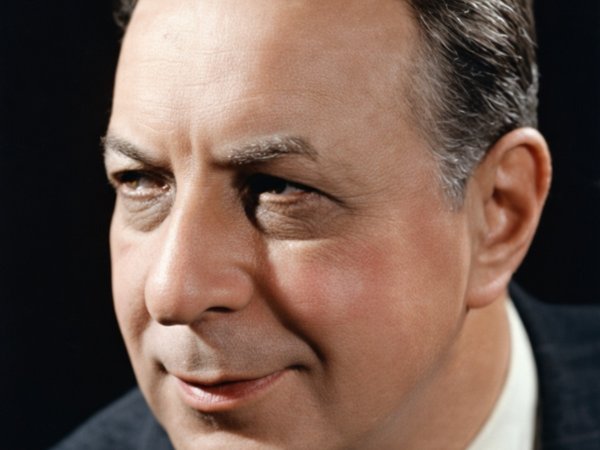
In the history of Romanian theater, there are actors whose careers go far beyond the boundaries of a single generation. Ion Finteșteanu was one of them. Actor, lyric artist, professor and film performer, he crossed more than six decades of Romanian stage history, becoming an emblematic presence of the Bucharest National Theater. He had a powerful voice, diction developed with patience, and an artistic discipline about which those who knew him spoke with admiration. His story, however, begins in a less usual way. During the First World War, teenager Ion Finteșteanu became a refugee in Iași and entered the world of opera, where he sang as a tenor. The musical experience was to give him special training, but the young man wanted more. He had discovered his vocation for theater since childhood and was about to take the step that would definitively change his destiny: studying at the Conservatory of Dramatic Art in Bucharest, in the class of Lucia Sturdza Bulandra. Radio Romania presents him as one of the legendary personalities of Romanian theater and confirms his graduation from the Conservatory in 1921, in the class of the great actress.
Childhood and the first steps toward the stage
Ion Finteșteanu was born on March 18, 1899, in Bucharest, being the first of the four children of George Finteșteanu and Florica Comșa. The family had its origins in the village of Fințești, in present-day Buzău County, the family name being connected to this origin. From childhood, the future actor was attracted to the world of theater. He recited poems, took part in small school performances and transformed childhood games into genuine acting exercises.
During his high school years, his passion for art became stronger. Finteșteanu participated in the activities of the cultural and musical societies “Carmen,” “Petre Maior” and “Enăchiță Văcărescu,” while his interest in music was to be essential in his subsequent development. He was therefore not a young man who discovered theater by chance, but one who gradually built an artistic vocation.
In the spring of 1916, he was preparing for admission to the Conservatory, studying with Radu Demetrescu-Cluceru. His plans were, however, changed by the war and by the occupation of Bucharest. He left for Moldavia, and in Iași he was to find his first concrete opportunity to enter the world of performance.
From tenor to actor in Iași
In the autumn of 1917, Ion Finteșteanu took the examination to become a tenor of the Romanian Opera Society in Iași. He was only 18 years old, but his voice and musical training allowed him to enter a professional artistic environment.
The experience was not limited to opera. Finteșteanu was also recruited into the troupe of the Iași National Theater, where he came to play in “Marșul nupțial,” by Henri Bataille. It was an important moment, because the young man who had approached the stage through music began to discover his true artistic identity in theater. In that performance, he had important stage partners, including Maria Ventura, Tony Bulandra and Florica Alexandrescu.
His first contact with professional theater was not without emotions. Later, Finteșteanu recalled that he was so overwhelmed by his debut that he could no longer even remember for certain whether he had delivered his line or not. Precisely this experience shows how different the world of the stage was for a young man who, until then, had approached art mainly through music.
After the end of the war, he returned to Bucharest and continued his training. Choosing the Conservatory of Dramatic Art and, above all, meeting Lucia Sturdza Bulandra were to represent the turning point of his career.
The student of Lucia Sturdza Bulandra
Ion Finteșteanu attended the Conservatory of Dramatic Art in Bucharest in the class of Lucia Sturdza Bulandra, one of the strongest personalities of Romanian theater. He graduated in 1921, as a prize-winning student, thus confirming that his talent was accompanied by serious professional training.
Bulandra gave him more than technical knowledge. For the young actor, her school meant discipline, rigor and respect for the profession. Finteșteanu learned to control his voice, gestures and stage presence and to regard every role as a construction requiring work.
His musical training remained an advantage. His tenor voice and the experience accumulated in opera gave him an unusual capacity for vocal control for an actor. At the same time, he worked on diction problems and speech defects that had concerned him since the beginning of his artistic journey.
The Bulandra Company and entry into the world of great actors
Even during his student years, Finteșteanu began working with the company led by the Bulandras. After graduation, the collaboration became stronger, and one of his first important roles was in “Berg-op-Zoom,” Bernard Zimmer’s play. A recollection published in the magazine “Flacăra” in 1984 mentions that, after the period spent with Bulandra, the actor later arrived at the National Theater, in December 1921.
The period of the Bulandra Company represented a true practical school. Finteșteanu had the opportunity to work alongside established actors and directly observe the mechanisms of a professional stage. He did not limit himself to performing the roles he was given, but constantly sought to improve his technique.
An important episode is connected to actor Nicolae Soreanu, who took him on tour with “The Wild Duck” by Henrik Ibsen and helped him enter the Bucharest National Theater. Thus, in December 1921, Finteșteanu stepped into an institution with which he would associate his name for more than six decades.
Six decades on the stage of the National Theater
Joining the National Theater troupe marked the beginning of the longest and most important stage of his career. Finteșteanu would remain associated with the Bucharest National Theater from 1921 until 1984, and this longevity is one of the most impressive achievements in the history of Romanian theater.
Over the decades, the actor played extremely different characters, demonstrating a versatility that allowed him to move from tragedy to comedy and from universal drama to Romanian dramatic literature. Among his roles were Karenin in “Anna Karenina,” Polonius in “Hamlet,” the Fool in “King Lear,” Doctor Dorn in “The Seagull,” Farfuridi, Pristanda and the Drunken Citizen in Caragiale, as well as Ianke in “Take, Ianke and Cadâr.”
One of the roles that Finteșteanu himself considered particularly important was Charly in “The Clown” by Serck Rogers. The actor considered it “my Hamlet,” and for this character he prepared for almost six months, working even with circus artists to construct the clown act. His performance was so highly appreciated that he was even offered the opportunity to learn the text in Italian and participate in a world tour.
“Reverence for theater,” the principle that defined his career
Those who knew him spoke not only about Ion Finteșteanu’s talent, but especially about the seriousness with which he treated his profession. Gaby Michailescu described him as a man who devoted his entire existence to theater and who prepared every appearance with extraordinary meticulousness.
For Finteșteanu, the stage was not simply a workplace. It was a space to which respect had to be given. Every word, every gesture and every detail of a character had to be thought through and rehearsed. This attitude also explains why he, in turn, became a reference point for younger generations.
In the 1960s, the actor continued to be an energetic presence on stage. He appeared in the street performance “Se caută o vedetă,” created by Aurel Felea and Sadi Rudeanu, with music by Temistocle Popa, alongside artists such as Vasile Tomazian, Nae Lăzărescu and Horia Căciulescu. For an actor who had already reached artistic maturity, the appearance demonstrated that Finteșteanu continued to adapt to new forms of performance.
The professor who trained other generations of actors
An essential dimension of Ion Finteșteanu’s legacy is his teaching activity. After building an impressive career on stage, the actor began passing on what he had learned from his own masters.
He became a university professor at the Faculty of Theater of the Institute of Theater and Cinematographic Art and headed the Acting Department. Among his collaborators and assistants were Sanda Manu and Dem Rădulescu, while the UNATC archive confirms the existence of acting classes coordinated by Professor Ion Finteșteanu.
His influence on students was considerable. Among those who studied under him was also Dorina Lazăr, one of the great Romanian actresses of her generation. She graduated from the Faculty of Theater in the class of Professor Ion Finteșteanu, with Sanda Manu and Dem Rădulescu as assistants.
Thus, Finteșteanu transmitted not only acting techniques, but also his conception of the profession. For him, an actor had to be rigorous, punctual and deeply involved in constructing a character. The lesson he passed on to the next generations was the same one he had received from his great predecessors: the stage must be treated with respect and responsibility.
Ion Finteșteanu and his encounter with cinema
His activity was not limited to theater. Finteșteanu also had a film career spanning several decades. Sources dedicated to his filmography mention his appearance in “Țigăncușa de la iatac,” in 1923, followed by “Năbădăile Cleopatrei” and “Datorie și sacrificiu.”
Another documentary source mentions that he played in “Datorie și sacrificiu” without receiving a fee, a fact that illustrates his willingness to support artistic projects even when the conditions were not necessarily advantageous.
After a period in which his film appearances were rarer, Finteșteanu returned to the big screen in the 1950s. He appeared in “Bulevardul Fluieră Vântu,” “O scrisoare pierdută,” “Titanic vals,” “Haiducii,” and later in productions such as “Celebrul 702,” “Runda 6,” “Serata” and “B.D. la munte și la mare.”
The distinctions and final years of a life devoted to the stage
Ion Finteșteanu’s artistic value was also officially recognized. In January 1953, he was awarded the title of Emeritus Artist, for outstanding merits and valuable achievements in art, and in 1958 he received the title of Artist of the People. In 1971, he was decorated with the Order of the Star of the Socialist Republic of Romania, 3rd Class.
In the same year, the National Theater recognized him as an honorary member, a natural recognition for an actor who had spent almost his entire artistic life within this institution.
Ion Finteșteanu died in Bucharest on October 21, 1984, at the age of 85, and was buried in Bellu Cemetery. His death meant the departure of a personality who belonged to another era of Romanian theater, an era in which the stage was built around actors trained patiently, through study and through an almost sacred relationship with the profession.
Ion Finteșteanu thus remains one of the representative figures of interwar and postwar theatrical Bucharest. He began with opera, became a student of Lucia Sturdza Bulandra, joined the Bulandra Company and then the National Theater troupe, where he was to remain for more than six decades. He played Shakespeare, Tolstoy, Chekhov and Caragiale, worked in film, taught acting and trained actors who would themselves become important names in Romanian culture.
More than a long-lived actor, Finteșteanu was a true transmitter of a tradition. He received from his masters a respect for theater and passed it on to his students. This is precisely why his image cannot be separated from that “reverence for theater” of which his contemporaries spoke: the conviction that the stage is not merely a place where roles are performed, but a space in which talent must be supported by work, discipline and respect for the audience.
This, ultimately, is the story of Ion Finteșteanu: a Bucharest-born man who discovered art through music, entered theater during the turbulent years of the First World War, was trained by Lucia Sturdza Bulandra and became one of the great servants of the National Theater. A career spanning more than six decades that connected generations of artists and explains why the name of Ion Finteșteanu continues to belong to the great history of Romanian theater.
We also recommnend: Stars of interwar Bucharest: Gheorghe Timică, from the operetta chorister to the legendary actor of the Capital