The military doctor who became one of the most avant-garde writers of Bucharest. The story of the rebel Sașa Pană
- Articles
- 19 MAR 26
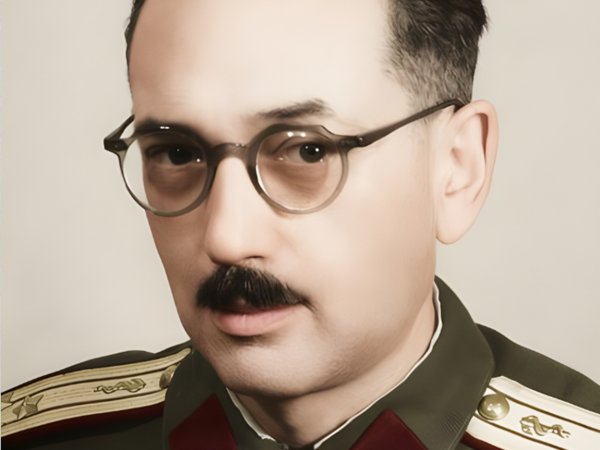
In the history of Romanian literature, there are figures who do not necessarily impress through works considered “canonical”, but through the energy, influence, and decisive role they had in shaping an artistic movement. Such a character is Sașa Pană, born Alexandru Binder, a restless, contradictory spirit deeply involved in the avant-garde movement in interwar Romania. A military doctor by profession, but an artist by vocation, Sașa Pană lived a life between two seemingly incompatible worlds: the rigid discipline of the army and the total freedom of artistic experimentation. From this tension was born not only an original writer, but also one of the most important promoters of the Romanian avant-garde.
Origins, formation and a life marked by contradictions
Sașa Pană was born on August 8, 1902, in Bucharest, into a Jewish family, his father being a doctor. The choice of a medical career was not accidental, but rather a natural continuation of the family tradition. Thus, he became a military doctor, a profession that would deeply influence his existential path and even his ideological options.
However, from a young age, a strong attraction toward literature and artistic experimentation took shape within him. This calling was not superficial or temporary, but an authentic vocation, which he would follow consistently throughout his entire life. In addition, his existence was marked by dramatic episodes, such as a failed suicide attempt, which he would later transform into a mythologized element of his own biography.
This duality – between doctor and artist, between rigor and freedom – largely defines the personality of Sașa Pană. It explains both his caution in certain political contexts and the courage manifested on the artistic level.
The animator of the Romanian avant-garde and the magazine “unu”
Although he is often considered an avant-garde writer, Sașa Pană’s major contribution does not lie so much in his literary creation itself, but in his role as organizer, supporter, and archivist of the avant-garde movement in Romania.
Between 1928 and 1932, he led the magazine “unu”, one of the most important avant-garde publications of the interwar period. The magazine had a favorable orientation toward surrealism and represented a launching platform for numerous young authors or already established ones in experimental circles.
Around the magazine “unu” a true artistic community was formed. Sașa Pană did not limit himself to the role of editor, but became a genuine cultural manager. He also established a publishing house associated with the magazine, through which he published essential texts for the Romanian avant-garde.
Among the notable achievements is the publication, for the first time, of the “bizarre pages” of Urmuz, in 1930. Also, under the aegis of this publishing house appeared the first booklets of important authors such as Tristan Tzara, Geo Bogza, Ilarie Voronca or Stephan Roll. Thus, Sașa Pană contributed decisively to the consolidation and visibility of the local avant-garde.
The literary debut and poetic evolution
Sașa Pană’s editorial debut took place in 1926, with the volume “Răbojul unui muritor”. As in the case of many avant-garde writers, his beginnings are marked by the influence of late symbolism, already in a stage of maturity.
Subsequently, his poetic activity materialized in a considerable number of volumes published in the interwar period. Among these are “Diagrame”, “Echinox arbitrar”, “Viața romanțată a lui Dumnezeu”, “Cuvîntul talisman”, “Călătorie cu funicularul”, “Iarba fiarelor”, “Vladimir” – inspired by the birth of his son – “Munții noaptea neliniștea” or “Atentat la bunele tabieturi”.
Although associated with the avant-garde, these volumes do not strictly fit into the patterns of surrealism. Rather, they reflect a delicate, fanciful, and ingenious poetic imaginary, characterized by a certain “bovarism” of the avant-garde. His imagism is subtle, sometimes playful, other times introspective, without reaching the radicalism of other authors from the same movement.
Sașa Pană experimented with various literary forms: experimental prose poems, manifestos, slogans, hybrid texts. However, despite this diversity, he remains more an explorer of the avant-garde than a radical exponent of it.
The political context and the change of direction after 1944
Sașa Pană’s life and activity cannot be separated from the political context of the time. In the interwar period, he showed communist sympathies, but kept them in a discreet form, because of his position as a military doctor and the risks involved.
At the same time, he was a convinced antifascist, but forced to be cautious. The pressures exerted by the Siguranța ultimately led to the closure of the magazine “unu”. This episode marks an important rupture in his publishing activity.
After 1944, with the major political changes in Romania, Sașa Pană aligned himself with the new ideological direction. He became involved in promoting engaged art and led publications such as “Orizont”. During this period, he continued to write and publish, but the level of his creations is considered inferior to that of the interwar period.
The volumes of poetry and short prose from this stage, such as “Plecări fără ancoră”, “Poeme fără de imaginație” or “Teatru mic”, are marked by conformism and do not manage to exceed the status of minor literature.
The essential contribution: promoter, editor and archivist
If his literary work remains uneven, Sașa Pană’s contribution to the development and preservation of the Romanian avant-garde is undeniable. He stands out first of all as a promoter of this movement.
His volume of essays “Sadismul adevărului”, published in 1936, represents an important landmark for understanding the avant-garde. Through these texts, Sașa Pană offers a coherent and well-argued perspective on the artistic phenomenon he supports.
Another fundamental role is that of anthologist. In 1969, he published a large anthology dedicated to the interwar avant-garde, bringing back to public attention authors and texts forgotten or marginalized. This initiative contributes decisively to the recovery of an essential chapter of Romanian literature.
In addition, Sașa Pană is a passionate archivist. His personal archive becomes a valuable source for researchers. Critics and literary historians such as Ion Pop or Marin Mincu base their first studies on the avant-garde on the documents preserved by him.
After 1970, he continued his editorial activity, republishing the works of important authors such as Tristan Tzara and Urmuz. He also produced the most complete edition of M. Blecher’s work, including for the first time the text “Vizuină luminată”.
“Născut în 02” – a fundamental testimony
Probably Sașa Pană’s most important contribution remains the memoir volume “Născut în 02”. This massive book, of over 700 pages, also includes rewritten journal fragments, offering an insider’s perspective on the avant-garde movement.
The work is not only an autobiography, but also a true history of the Romanian avant-garde, seen through the eyes of a direct participant. The details, portraits, and context presented make this volume a document of invaluable importance for researchers and literature enthusiasts.
Its importance is amplified by the fact that the author was both witness and actor in the events described. Thus, “Născut în 02” becomes not only a book of memories, but also an essential historical source.
It is considered that a possible uncensored edition, currently in preparation, could bring additional revelations and complete the image of an extremely dynamic era.
Sașa Pană remains a complex figure, difficult to place into a single category. Although he was not the most radical or innovative writer of the avant-garde, his role in supporting and promoting this movement is fundamental.
Through the magazine “unu”, through his editorial activity, through his archive, and through his memoir writings, he contributed decisively to defining and preserving the Romanian avant-garde. His life, marked by contradictions, adaptations, and difficult choices, perfectly reflects the tensions of a changing era.
In the end, the story of Sașa Pană is that of a discreet rebel, who chose to build, support, and preserve the memory of an artistic movement that would redefine Romanian literature.
We also recommend: The drama of poet Ion Vinea, the “prince of Romanian poetry”: five wives, hundreds of lovers, thousands of controversies