The drama of poet Ion Vinea, the “prince of Romanian poetry”: five wives, hundreds of lovers, thousands of controversies
- Articles
- 18 MAR 26
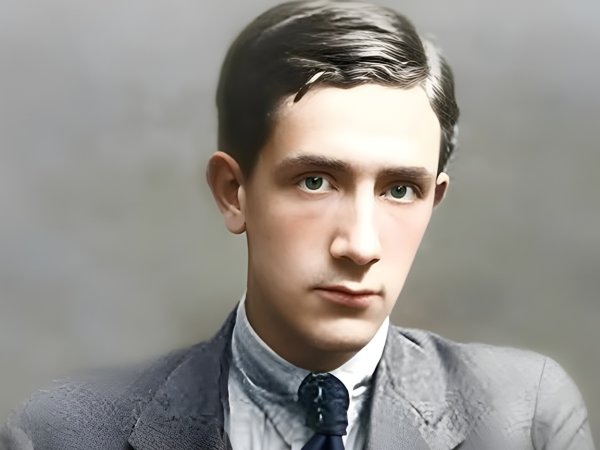
The destiny of Ion Vinea remains one of the most fascinating and contradictory in Romanian literature of the 20th century. Considered by his contemporaries a true “prince” of poetry, Vinea combined exceptional talent with a tumultuous personal life, dominated by intense passions, scandals, sentimental dramas, and harsh political confrontations. He was a modern spirit, an innovator of poetic language, but also a restless man, constantly searching for the absolute — whether in art or in love. His magnetic personality, extravagant lifestyle, and appetite for amorous adventures fueled numerous legends. Five marriages, countless passionate relationships, and ideological conflicts transformed him into a controversial figure, admired and detested in equal measure. The life of Ion Vinea cannot be separated from his work: every disappointment, every ecstasy, and every trauma were transformed into poetry.
An aristocrat of the spirit and pioneer of the avant-garde
Born in 1895, in Bucharest, into a wealthy family, Ion Vinea benefited from a refined education and access to the cultural circles of the time. His university studies in the Capital brought him into contact with modern intellectual environments, where the ideas of the European avant-garde were taking shape. Initially influenced by symbolism and modernism, he quickly evolved toward an original poetic formula, characterized by refinement, introspection, and formal freedom.
Vinea was not only a poet, but also a respected essayist and literary critic. He published constantly in prestigious magazines, contributing decisively to shaping a new artistic sensibility in Romanian literature. An independent and polemical spirit, he supported the modernization of poetic language and the detachment from rigid traditionalism.
His personal charisma was as powerful as his talent. Elegant, cultivated, and seductive, Vinea attracted attention wherever he appeared. This aristocratic aura of the spirit turned him into a central character of interwar social and literary life. But the same brilliance concealed a deeply restless nature, prone to excess and self-destruction.
Marriages, passions, and sentimental scandals
Ion Vinea’s love life was almost as famous as his work. The poet was married five times and maintained countless passionate relationships, each leaving deep traces in his biography and writing.
His first wife was the poet and writer Ana Maria Oardă, known under the pseudonym Tana Quil. Their relationship began under the sign of intellectual enthusiasm but deteriorated quickly due to misunderstandings and incompatible temperaments. Vinea, unable to tolerate conjugal routine, soon sought new emotional experiences.
His second marriage, with actress Dida Solomon, seemed to offer him the desired stability. Fascinated by her energy and talent, the poet believed he had found his soulmate. However, the marriage disintegrated as quickly as it had begun. After the separation, Dida Solomon remarried the left-wing aristocrat Scarlat Callimachi, nicknamed the “Red Prince.”
The third marriage was no more fortunate. Vinea fell in love with writer Nelly Cutava, but their relationship ended in another painful rupture. Later, she married the communist journalist Radu Popescu, and a year afterward their son was born, the future novelist Petru Popescu.
For Vinea, love was not a refuge but an intense, often devastating experience. His relationships were not simple affairs but bonds that profoundly influenced his artistic sensitivity. His poetry is traversed by themes such as desire, abandonment, nostalgia, and the impossibility of lasting happiness.
Henriette Yvonne Stahl — the great impossible love
Of all the women in his life, the one who most deeply marked the poet’s destiny was writer Henriette Yvonne Stahl, who became his fourth wife. Their love story was incandescent but unstable, perfectly symbolizing the relationship between passion and suffering.
The two met at the beginning of the 1920s, in an effervescent artistic environment. Both were part of the literary avant-garde and shared the same aesthetic ideals. The attraction was instantaneous and devastating. Vinea was captivated by her intelligence and refinement, while Yvonne discovered in the poet a spirit tuned to the same creative wavelength.
Their relationship was characterized by rare intensity. Together they explored existential themes — identity, the fragility of love, the meaning of art — mutually influencing each other. From this communion were born literary works of great depth.
However, passion was not enough for stability. Both needed freedom, and external temptations generated jealousy, frustrations, and repeated separations. Each breakup threw Vinea into a state of deep melancholy, reflected in increasingly introspective verses.
Eventually, they understood that their love, although authentic, could not survive under real-life conditions. The separation was painful but allowed each to continue an independent artistic path. For Vinea, Yvonne Stahl remained the absolute feminine ideal — the woman he loved most and could not keep.
The last wife and late tranquility
After numerous sentimental storms, Ion Vinea found a form of stability alongside his last wife, Elena Oghină. She was his companion until the end of his life, offering support during a period marked by physical fatigue and disillusionment.
This final stage was no longer dominated by devastating passions but by relative calm. The poet, worn by extreme experiences, seemed finally to accept the idea of peace and resignation. However, the past could not be erased: memories of lost loves and political traumas continued to haunt him.
Confrontation with political violence and the Legionary trauma
Ion Vinea’s life was marked not only by sentimental dramas but also by violent political events. In the 1930s, the poet entered into conflict with the Legionary movement, an extreme right-wing organization rising in popularity.
This confrontation had devastating consequences. Vinea was arrested and tortured, subjected to inhumane treatment that seriously affected his physical and psychological health. The experience of detention left deep scars, transforming him into a more withdrawn and skeptical man.
The trauma was immediately reflected in his writing. The poetry of this period becomes darker, dominated by despair, revolt, and the sense of absurdity. Vinea became a fervent supporter of freedom of expression and humanist values, considering that art must be a refuge against barbarity.
The literary legacy of a restless spirit
Ion Vinea died in 1964, leaving behind a complex body of work and a biography that continues to fascinate. He published volumes of poetry, essays, and critical articles demonstrating a special sensitivity and a rare capacity for introspection.
Although his life was full of contradictions, his artistic integrity was never questioned. Vinea refused major aesthetic compromises, remaining faithful to his own vision. His verses explore not only personal experience but also the human condition in general — loneliness, desire, fragility of existence.
Critics emphasize his versatility and his ability to transform intimate experiences into universal themes. For later generations, Vinea became a model of the artist who lives intensely and creates without concessions.
A destiny in which love and suffering become poetry
Ion Vinea’s story is, in essence, the story of a man who loved excessively and suffered accordingly. The women in his life were not simple biographical episodes but catalysts of creation. Each relationship added a new nuance to his poetic universe.
At the same time, the social and political context of the era shaped his worldview. Traumatic experiences, sentimental disappointments, and the feeling of marginalization were transformed into literature of great intensity.
Ion Vinea remains a symbol of the power of art to sublimate pain. His life demonstrates that genius does not necessarily bring happiness but often amplifies emotions to the limit of what can be endured.
Today, the “prince of Romanian poetry” continues to fascinate through the contrast between the refinement of his work and the chaos of his personal existence. His destiny is proof that, sometimes, the most beautiful verses are born from the deepest wounds.
We also recommend: Grigore Alexandrescu, the orphaned poet who went insane four days after his own wedding, has a street named after him in Bucharest