The legacy of Alexandru Vaida-Voevod: from the “architect of the Union” to the first head of government of Greater Romania
- Articles
- 03 FEB 26
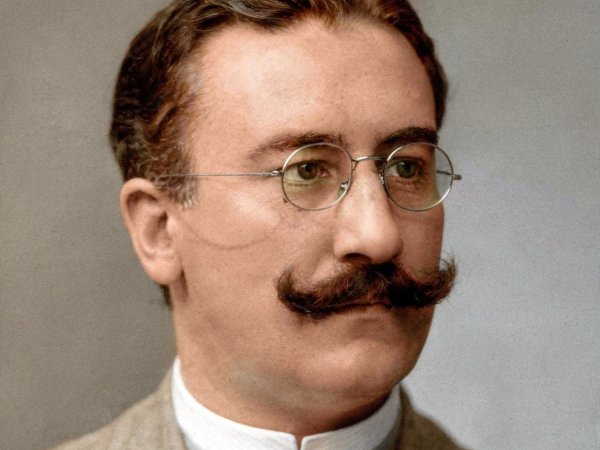
Alexandru Vaida-Voevod was born on 27 February 1872 in Olpret, a locality known today as Bobâlna, into a family with old Romanian traditions from Transylvania. His father, Dionisie Vaida, came from a wealthy and influential lineage, being one of the few Transylvanian Romanians who enjoyed a solid material position and social respect within an empire dominated by other nationalities. His mother, Ana Bohățiel, was the daughter of a revolutionary of 1848, and this detail left a deep imprint on the education and values instilled in the child.
The roots of a Transylvanian family and the beginnings of a remarkable destiny
Unfortunately, Ana Bohățiel died shortly after the birth of the second son, Ioan, and Dionisie Vaida was forced to raise the children alone. Even so, their education was carefully supervised, the father being aware that schooling represented the main weapon of Transylvanian Romanians in the struggle for political rights and national recognition.
Alexandru and his brother attended Romanian, Hungarian, and German schools, acquiring not only solid knowledge, but also a deep understanding of the ethnic and cultural diversity of the Austro-Hungarian Empire.
Intellectual formation and the Viennese experience
The strict education in Saxon schools, sometimes marked by corporal punishment, hardened the young Alexandru Vaida. Although the beginnings were difficult, especially because of the German language, he managed to adapt quickly and to stand out through discipline and intelligence. These early experiences shaped his character and developed a psychological resilience essential for his future political career.
His academic path continued in Vienna, where he enrolled in the Faculty of Medicine. At the end of the 19th century, the imperial capital was a vibrant center of political, cultural, and national ideas.
Here, Vaida-Voevod came into contact with other Romanian students, alongside whom he began to actively involve himself in the Transylvanian national movement. From an early age, he understood that his destiny would not be limited to medical practice, but would be tied to the political struggle for the rights of Romanians.
The doctor who frequented European cultural elites
After completing his studies and obtaining the title of doctor of medicine, Alexandru Vaida-Voevod married Elena Safrano, with whom he had four children. For a short period, he practiced medicine in Karlsbad, a spa resort frequented by European elites, including many Romanians.
This stage of his life was marked by memorable meetings with great cultural personalities. George Coșbuc, I.L. Caragiale, and Barbu Ștefănescu Delavrancea were part of his circle of acquaintances, and the discussions held with them enriched his intellectual horizon.
Although medicine ensured him a comfortable living, political involvement became increasingly pronounced, and Vaida-Voevod was gradually preparing to give up his medical career in favor of a public one.
Entry into politics and the struggle in the Parliament of Budapest
At only 20 years old, Alexandru Vaida-Voevod joined the Romanian National Party, and in 1906 he was elected deputy in the Parliament of Budapest. This was the stage on which he asserted himself as one of the most vocal and consistent defenders of the rights of Romanians in Transylvania.
A defining moment of his parliamentary career was his firm opposition to the education laws promoted by Count Apponyi in 1907. Vaida-Voevod denounced these laws not only as unjust from a national point of view, but also as anti-democratic and anti-social, since they aimed at marginalizing non-Hungarian populations.
Until 1918, he consistently opposed initiatives that harmed Romanian interests and advocated for the democratization of the Empire, including the extension of voting rights to disadvantaged categories and to women.
1918 and the key role in achieving the Great Union
The year 1918 brought Alexandru Vaida-Voevod to the forefront of history. In the context of the collapse of the Austro-Hungarian Empire, he was designated to read in the Parliament of Budapest the resolution by which the Romanians of Transylvania asserted their right to self-determination. The gesture had enormous symbolic impact and established him as one of the political architects of the Union.
Returning to Transylvania, Vaida-Voevod became actively involved in organizing national guards and local councils, contributing decisively to avoiding violence during an extremely tense period.
He participated in the Great National Assembly of Alba Iulia and became vice-president of the Ruling Council, the structure that administered Transylvania in the first years after the Union.
From the enthusiasm of the Union to physical and moral exhaustion
Although the events of the Great Union were marked by collective enthusiasm, for Alexandru Vaida-Voevod they also meant extreme physical strain.
The episode that took place in Sibiu, immediately after drafting the proclamation addressed to King Ferdinand, when he felt close to death, illustrates the enormous pressure to which he was subjected.
Nevertheless, after a difficult night and a short period of recovery, he left for Bucharest to continue his political work.
The first year of Greater Romania and the shock of Bucharest politics
Immediately after the Union, Alexandru Vaida-Voevod was appointed minister of state for Transylvania. The elections of 1919, held on the basis of universal suffrage, brought the Romanian National Party to the forefront, but political fragmentation imposed the formation of a coalition. His arrival in Bucharest was a real shock: backstage games, fragile alliances, and political cynicism contrasted sharply with the idealism of the Transylvanians.
Even so, in December 1919, after the refusal of Iuliu Maniu, Vaida-Voevod was appointed the first prime minister of Greater Romania. At the same time, he also became the first president of the Chamber of Deputies, assuming enormous responsibilities in an extremely complicated internal and external context.
The Paris Peace Conference and the loss of power
As a member of the Romanian delegation to the Paris Peace Conference of 1919, Vaida-Voevod negotiated with major world leaders, contributing to the international recognition of the Union. His prolonged absence from the country was, however, politically exploited, and upon his return he found that he had been removed from the leadership of the government.
The alliance with Carol II and the rupture with Iuliu Maniu
The return of Carol II to the throne, in 1930, triggered a major political crisis. Unlike Iuliu Maniu, who refused the restoration, Alexandru Vaida-Voevod chose to support the new king. This decision led to the definitive rupture between the two former allies and marked a profound change in his political trajectory.
The interwar governments and the major crises
His terms as prime minister in 1932–1933 were marked by political scandals, the Grivița strike, and the effects of the Great Economic Crisis. The violent repression of workers’ protests and the “Škoda affair” severely affected the image of his government, culminating in his resignation in November 1933.
The final political years and the approach to authoritarianism
After breaking away from the National Peasants’ Party, Vaida-Voevod founded the Romanian Front and politically supported the regime of Carol II, including the establishment of the royal dictatorship in 1938.
He was appointed royal adviser and president of the Assembly of Deputies, becoming one of the central figures of the regime.
Communist persecution and the end of a destiny
After 1940, the fall of Carol II cast him into disgrace. Taking refuge in Sibiu, Vaida-Voevod spent his final years writing his memoirs. His arrest in 1945 and the smear campaign orchestrated by the communist press represented a tragic end for a man who had contributed decisively to the making of Greater Romania.
Released, but kept under forced domicile, he lived in isolation until his death, which occurred on 19 March 1950. Buried in secret, Alexandru Vaida-Voevod remains a complex figure of Romanian history: visionary of the Union, statesman of Greater Romania, and controversial character of the final interwar years.
We also recommend: