The History of the Famous Cico, the Romanian Dream of Communism. Who Created the Most Popular Domestic Beverage of the 20th Century
By Bucharest Team
- Articles
- 23 JUN 26
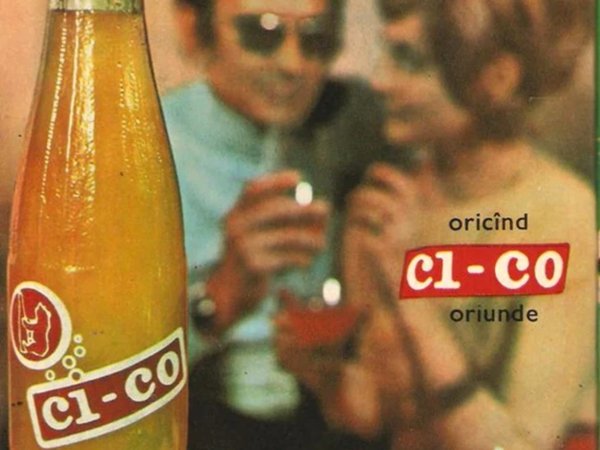
For the generations who spent their childhood in communist Romania, few products evoke as many memories as Cico. During a period when the range of soft drinks was limited and Western products were more of a rarity than a common presence in stores, this citrus-flavored beverage became one of the most beloved domestic food products. For many Romanians, its sweet-and-sour taste and distinctive effervescence are associated with summer holidays, outings in the city, and special moments spent with family. Although it can no longer be found on supermarket shelves today, Cico continues to occupy a special place in the collective memory. Its story is closely linked to the communist period, to the economic ambitions of the regime, and to the attempt to create Romanian products capable of competing with those conquering Western markets. More than just a soft drink, Cico became a symbol of an era and one of the best-known Romanian brands of the 20th century.
How the idea of a Romanian soft drink appeared
In the 1960s and 1970s, the communist authorities were trying to develop the national food industry and reduce dependence on foreign products. In this context, the idea emerged of creating a soft drink capable of competing with major international brands.
Contrary to a widespread perception, the initiative did not belong to Nicolae Ceaușescu. The person who supported the development of a national network of factories for processing fruits and vegetables was Ion Ceaușescu, the brother of the communist leader. He believed that Romania had significant agricultural resources that should be used more efficiently.
The goal of the project was simple: to transform the fruits produced in the country into juices and canned products that could be distributed nationwide. Within this program, the idea of a carbonated fruit-based beverage also emerged, offering consumers a domestic alternative to Western drinks.
The result was Cico, a beverage that would quickly surpass the status of a simple food product and become a social phenomenon.
The origin of the name and the secret of its popularity
The name Cico was short, easy to remember, and had a direct meaning. The designation came from the combination of two elements: “CI” from citrus fruits and “CO” from cola.
This choice reflected the creators’ intention to produce a beverage that borrowed certain characteristics from Western soft drinks while maintaining its own identity. The name was modern for that period and sounded attractive enough to the general public.
However, the drink’s popularity was not due only to its name. Its flavor was considered pleasant and well balanced. The citrus aroma was complemented by moderate acidity and a sweetness that made it appealing to all categories of consumers.
At a time when options were limited, Cico offered a different experience and quickly became the preferred choice of many Romanians. Even though a bottle cost one leu, a far from insignificant amount for that era, demand remained very high.
A natural product in an era of industrial production
One of the aspects that distinguished Cico from many other beverages was its composition. The drink was made exclusively from fruit concentrates and contained no chemical preservatives.
Today, in a period when natural products are highly sought after, this characteristic seems like an obvious advantage. During communism, however, it represented both an asset and a challenge.
The absence of preservatives meant that the shelf life was very short. A bottle of Cico could be stored for only about seven days. After this period, the beverage began to lose its properties and characteristic taste.
This limitation, however, helped build a unique reputation. Consumers knew that the product was fresh and had to be consumed quickly in order to be enjoyed under the best conditions. Thus, the idea was born that Cico was an authentic beverage, close to the natural taste of fruit.
How the famous drink was produced
The manufacturing process was organized on a national scale and involved numerous institutions and industrial facilities.
The concentrates used for producing the beverage were made at the Institute for Horticultural Products in Bucharest. The institute’s specialists developed the recipes and prepared the base required for the production of the drink.
These concentrates were then distributed to approximately 70 factories throughout the country. Each facility received the raw material and locally produced the beverage intended for consumers in its respective region.
This system allowed for the rapid distribution of the product and reduced transportation costs. In addition, it contributed to maintaining the freshness of the beverage, an essential aspect given its short shelf life.
Thanks to this organization, Cico became one of the most widespread soft drinks in communist Romania.
The factories in Bucharest and the almost artisanal work
In the Capital, production was coordinated by the Food Products Enterprise, known as IPA. It operated six factories that produced Cico for the Bucharest market.
Although the beverage was manufactured on an industrial scale, a large part of the process was carried out in a manner that today could be considered almost artisanal.
In five of the six facilities, bottles were washed using wire brushes. After cleaning, the beverage was poured into the containers manually with the help of special funnels.
The caps were attached using foot-operated presses, while the labels were glued one by one by workers. These operations required considerable attention and involved a significant amount of manual labor.
Despite the relatively simple conditions, the factories managed to produce impressive volumes of beverages, sufficient to satisfy the high demand throughout the country.
The modern factory in Militari and Western technology
There were, however, exceptions. The most modern production facility was the factory located in the Militari district, which benefited from an automated production line imported from France.
This investment represented an important step toward the modernization of the Romanian food industry. The bottling process was much faster and more efficient than in the other factories.
The automated line reduced human intervention and made it possible to increase production capacity. For that period, the Militari factory was considered one of the most advanced facilities of its kind in Romania.
The difference between this factory and the others illustrated the contrast between traditional methods and the modernization efforts promoted by the authorities during the final decades of the communist regime.
The ingredients and international partnerships
Although Cico was perceived as a typically Romanian product, its production also involved foreign collaborations.
According to information provided by the former director of the Cico factory, Ion Stamanichi, the beverage was produced exclusively from fruit concentrates. Some of these originated in Romania, while others were obtained through trade agreements with foreign partners.
In Brașov, for example, concentrates were produced from apples, grapes, and sea buckthorn. Some recipes were developed with the support of the Institute of Food Chemistry, which contributed to improving the product.
An important role was also played by the Greek businessman Arvanidis, one of the Romanian state’s commercial partners. He supplied fruit concentrates through barter agreements, receiving various Romanian-made products in return.
Thanks to these collaborations, Cico benefited from diverse raw materials and was able to maintain a consistent quality appreciated by consumers.
The peak of a legend of Romanian communism
During the height of its popularity, Cico reached impressive production figures. Approximately 600,000 bottles were manufactured daily, a clear indicator of the beverage’s success.
Its presence was almost ubiquitous. It could be purchased in restaurants, pastry shops, grocery stores, and kiosks. For many children and teenagers, a bottle of Cico represented a small treat and a source of joy.
Its popularity continued even after the fall of the communist regime. In the first years after the Revolution, the beverage could still be found in some bars and cafés, sought by those who wished to relive the taste of their childhood.
However, with the massive entry of major international brands into the Romanian market, Cico gradually began to disappear.
Why Cico is still so loved
Today, Cico is no longer available in stores, yet its name continues to be spoken with nostalgia by millions of Romanians. For those who lived during the communist period, the beverage represents much more than a simple soft drink.
It evokes a vanished world, with its customs, tastes, and memories. It is associated with summer vacations, walks through the city, and the pastry shops and restaurants of another era. At the same time, Cico remains an example of the Romanian industry’s ability to create products that managed to win public appreciation and become part of the identity of an entire generation.
Decades after its appearance, the legend of Cico continues to survive through the stories of those who drank it. More than a soft drink, it was a symbol of childhood for millions of Romanians and one of the most famous domestic products of the 20th century. In the collective memory, its taste remains associated with an entire era, and its name continues to evoke smiles and pleasant memories even today.
We also recommend: 10 cafés in Bucharest where you can go with your pet