The history of the Clinical Ophthalmology Hospital in Bucharest, the largest eye hospital in Southeast Europe
- Articles
- 11 DEC 25
The Clinical Ophthalmology Hospital in Bucharest traces its origins to January 1, 1949, when the ophthalmology unit from Vatra Luminoasă was moved to a new structure created specifically for the needs of patients with eye diseases. From the very beginning, the hospital was designed as a facility dedicated both to medical pathology and to ophthalmic surgery, an innovative concept for its time. In the post-war context, the need for a specialized ophthalmology hospital was particularly high, as eye disorders were common and access to treatment was limited.
The beginnings of a medical center dedicated to vision
At its founding, the hospital had 125 beds and a total of 33 employees. The staff structure reflected the challenges of that period: only four physicians, one pharmacist, and five mid-level staff members attended to the patients, while the remaining employees were administrative personnel, care staff, and laborers. Even in this modest configuration, the hospital quickly became a point of reference for Romanian ophthalmology, offering specialized services at a time when such care was scarce.
Development of infrastructure and growth of the medical staff
Expanding the medical activity soon became a necessity. In 1950, the second ophthalmology clinic was established, allowing the hospital to treat more patients and diversify the range of medical procedures performed. With the opening of this new clinic, the number of employees increased to 55—an important step that improved the quality of care and strengthened the institution’s role within the national healthcare network.
Over the following decades, the growing demand for ophthalmic services led to the hospital’s continuous expansion. By 1965, the number of staff members had reached 111, a figure that reflected not only the increasing workload but also the heightened interest in the development of ophthalmology as a medical specialty. This period marked a moment of institutional maturity, during which the hospital became both a training center and a leading institution for treating eye diseases across the country.
Relocation to the new building in Piața Cosmonauților
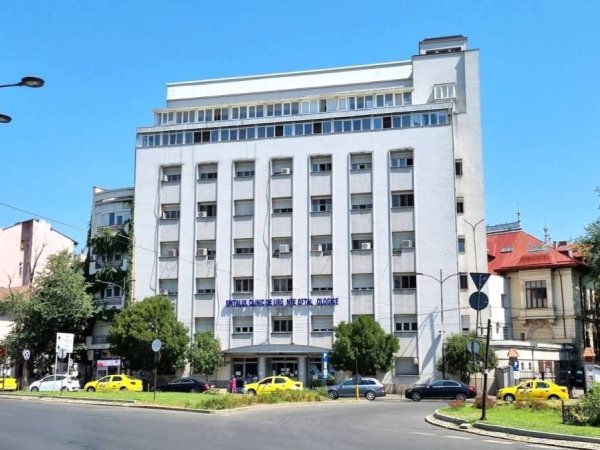
A crucial moment in the hospital’s evolution occurred in 1976, when the institution moved to the building located at Piața Cosmonauților no. 1, known today as Piața Alexandru Lahovari. The building, previously the headquarters of the ASCAR Cardiology Center in Bucharest, offered larger, more adaptable spaces suitable for a specialized medical unit and easier to modernize according to the standards of that time. The relocation allowed for the reorganization of medical activity, the creation of additional surgical areas, and the improvement of patient pathways.
This move represented not only a physical shift but also the beginning of a new phase of modernization. Once settled in the new facility, the hospital gained the capacity to expand further, implement new technologies, and create improved treatment conditions.
Identity changes and major modernization efforts
In 1996, the Clinical Ophthalmology Hospital changed its name to the Clinical Emergency Ophthalmology Hospital, a recognition of its role as the primary national center for ophthalmic emergencies.
This new designation underscored the hospital’s mission to provide rapid and specialized care for acute eye conditions, trauma, and other situations requiring immediate intervention.
In 2000, extensive consolidation and refurbishment works began. These projects strengthened the building’s structural resistance, improved medical pathways, reorganized interior spaces, and introduced European-standard finishes.
At the same time, the hospital acquired state-of-the-art equipment, enabling the performance of advanced ophthalmic procedures aligned with those used in major international medical centers.
These investments profoundly transformed the institution, reinforcing its status as a center of excellence and expanding its capabilities across both general ophthalmology and highly specialized subspecialties.
Expansion to outpatient services and reorganization of the emergency unit
Continuous modernization led to a diversification of services. In 2002, the hospital established its specialized outpatient clinic, designed to offer consultations and treatments for patients who did not require hospitalization.
Through this new department, the hospital could serve a larger patient population and reduce the pressure on inpatient units. In 2008, the Emergency Room and the Ophthalmology Emergency Unit were renamed “CPU-S,” standing for Specialized Emergency Receiving Unit.
This reorganization aimed to optimize the flow of patients presenting with acute conditions and to strengthen the hospital’s ability to act quickly in critical situations. The processes of triage, evaluation, and intervention became more structured, helping preserve vision in numerous cases where every minute matters.
The hospital today: a unique center in Romania and the largest in Southeast Europe
Today, the Clinical Emergency Ophthalmology Hospital in Bucharest operates with 175 employees and 142 beds. The complex consists of three buildings—A, B, and C—of which building B is classified as a historic monument, highlighting its architectural and heritage significance.
The hospital is monoprofiled in ophthalmology, making it the only institution of its kind in Romania. This uniqueness transforms it into the main referral center for complex cases across the country, as well as a key institution for specialists seeking advanced training.
The high patient volume, variety of medical conditions treated, and access to cutting-edge technology create ideal conditions for continuous professional development and research.
Moreover, the hospital has become the largest eye hospital in Southeast Europe, both in terms of treatment capacity and the number of specialists, as well as through its modern equipment and the complexity of the procedures performed.
The institution continues to stand as a central pillar of Romanian ophthalmology, widely recognized for the quality of care it provides, its long-standing tradition, and its ongoing contribution to the advancement of eye medicine.
Throughout more than seven decades of activity, the Clinical Emergency Ophthalmology Hospital in Bucharest has evolved with each historical stage, adapting to patient needs and international standards. Today, it remains one of the region’s most important medical institutions, a center of excellence dedicated to preserving and restoring sight, one of life’s most precious gifts.
We also recommend: Ioan Cantacuzino, the hospital and the legacy. The story of the microbiologist who founded the Romanian school of immunology