The bohemian poet of interwar Bucharest, caught between love for his wife and his mistress. The tumultuous life of Ion Minulescu
- Articles
- 15 JAN 26
Ion Minulescu remains one of the most fascinating figures of Romanian interwar literature, not only through his unmistakable Symbolist poetry, but also through his intensely lived personal life, marked by the same passion and theatricality that defined his verses. The bohemian poet of old Bucharest was a free, seductive, and contradictory spirit, caught for years between the stable love for his wife and a consuming passion for a much younger woman. His sentimental destiny reflects, in many respects, the effervescent and restless atmosphere of Romania’s capital in the first decades of the 20th century.
Bohemian soirées and love for Claudia Millian
In the eyes of the world and in his official biography, Ion Minulescu’s great love was his wife, Claudia Millian, a poet and visual artist, a refined and intelligent presence in Bucharest’s cultural life. The two formed an emblematic couple of the literary bohemia before the First World War, and their home became a true meeting place for writers, artists, and intellectuals.
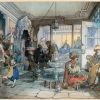
The soirées organized by Minulescu and Claudia were famous for their eclectic and lively atmosphere. Here, the most diverse subjects were discussed, from literature and art to politics and the problems of Romanian society, without ever reaching definitive conclusions. Turkish coffee, prepared either by the poet himself or by the maid, flowed generously, while cigarette smoke, improvised music, and passionate conversations created an intimate setting, different from the agitation of Bucharest’s terraces.
In Claudia Millian’s recollections, these gatherings were described as a true stopover of the nomadic bohemia, a place of intellectual comfort, where writers felt freer and more authentic than in public spaces. For Ion Minulescu, these evenings represented not only a refuge, but also a constant source of inspiration.
The meeting of destiny: Minulescu and Claudia Millian
Claudia Millian was a young student at the School of Fine Arts when she met Ion Minulescu. Enchanted by his poetry, she saw him as an exceptional artist, a chosen spirit whom she admired deeply. Their meeting took place at a ball organized by “Tinerimea artistică” (“Artistic Youth”), an event that was to change their lives forever.
Years later, Claudia described Minulescu as a medieval knight, seemingly sprung from his own verses, with a romantic and slightly theatrical air. Their marriage, in 1914, marked the beginning of a golden period, in which love, creation, and friendship intertwined harmoniously, despite the troubled times.
War and the change of marital destiny
The First World War brought dramatic changes to the life of the Minulescu couple. Although death and uncertainty were omnipresent, the two continued to live intensely, finding emotional shelter in their relationship. Ion Minulescu, appointed head of cabinet at the Ministry of the Interior, was forced to remain in Bucharest, a fact that altered the dynamics of family life.
After the war, their path led them to Iași, where they endured and shared the hardships and disappointments of the postwar period, alongside Romanian society as a whole. Claudia observed, however, with lucidity, that “that golden age never returned,” and that Minulescu was no longer the same man as in his youth.
The portrait of the mature poet and the world around him
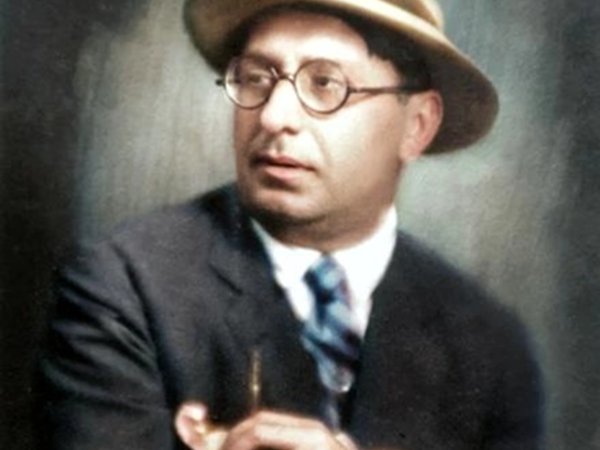
In her recollections, Claudia Millian draws a detailed portrait of Ion Minulescu in his mature years. The poet wore thin glasses with a vermeil frame, had a neatly trimmed reddish mustache, and a round, rosy face. Correctly and freshly dressed, but never “tiré à quatre épingles,” he wore a lavallière, and from the left pocket of his jacket he let the corner of a linen handkerchief hang freely, with initials embroidered in black. He never parted with his leather gloves or his cane, which he valued as a necessary attribute of a man’s street attire, just as he regarded the hat that slightly covered his forehead, from under which a thick lock of hair escaped, constantly wrapping around one temple.
Around him gathered young people from “Our Group” and other writers, and also came the “muses” and the “unfaithful bohemians,” lovers of fresh air and literature. This world, full of fascination and temptation, was to prepare the ground for a new and disturbing love story.
The meeting with Rose Kritzmann and the beginning of a forbidden love
In 1926, while holding the position of director of the National Theatre in Bucharest, Ion Minulescu experienced an event that profoundly changed his sentimental life. During a performance, his gaze was drawn to a beautiful red-haired woman in the audience. He was 45 years old at the time, and the encounter was, as his letters would later reveal, love at first sight.
The poet sent her a note, a gesture that marked the beginning of his relationship with Rose Kritzmann, a mysterious young Jewish woman, small in stature but with immense emotional force. This bond would last no less than 20 years, until Minulescu’s death.
Love, guilt, and discretion
Although known for his small romantic escapades, Ion Minulescu treated his relationship with Rose Kritzmann with unusual care and discretion. Claudia Millian herself recounts how she once saw him in the city with a “female friend,” but chose not to confront him. This silence says much about the complexity of the relationship between the spouses and about the fragile balance Minulescu tried to maintain.
The letters addressed to his mistress, published many years later, reveal a passionate, contradictory, and sometimes painfully lucid side of the poet. In them, Minulescu describes himself as a victim of a devastating love, caught between desire and fear, between attraction and the need for self-preservation.
The letters of a consuming love
In his correspondence with Rose Kritzmann, Ion Minulescu uses a harsh, metaphorical language, full of violent and tender images at the same time. He calls her “beast,” “ogress,” “ladybug,” alternating irony with despair. The poet admits his inability to detach himself from this love, even though he perceives it as a threat to his own stability.
His metaphors, in which he compares himself to a “patient ox” and her to an “eagle,” acquire symbolic meanings, reflecting not only personal drama, but also a bitter vision of the human condition and the impossibility of absolute happiness.
A bohemian destiny, between poetry and inner turmoil
Ion Minulescu’s life was, like his poetry, a succession of intense states, of exaltations and falls, of assumed loves and silent guilt. Caught between the wife who was his intellectual and emotional support and the mistress who ignited his last great passions, the poet lived to the end under the sign of excess and emotional sincerity.
His story remains emblematic for interwar Bucharest, a city of contrasts, of bohemia and inner drama. Ion Minulescu was not only a poet of words, but also a poet of life, living every feeling with the intensity of a definitive verse.
We also recommend: Oteteleșanu Terrace, the “academy” of Bucharest’s 19th-century elite, where high society attended lavish balls and intellectual debates