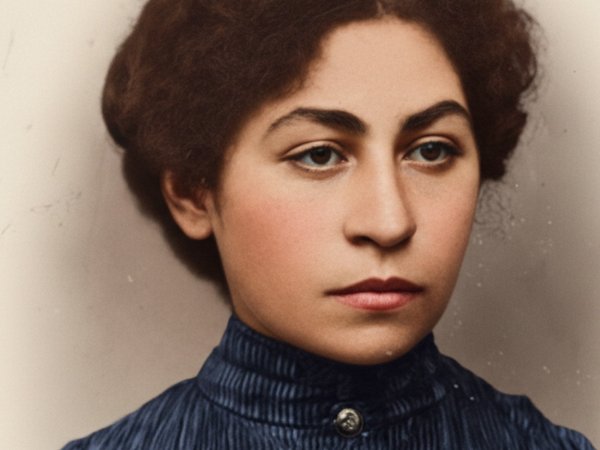
She invented artificial rain, and the Curie couple ‘snatched’ the Nobel Prize from her. The story of the scientist Ștefania Mărăcineanu”
- Articles
- 20 FEB 26
In the history of Romanian science, there are names that shone brightly but were too easily pushed into the shadows. Among them is Ștefania Mărăcineanu, a remarkable scientist who, during the interwar period, managed to make herself known in a field dominated almost exclusively by men. Her discoveries in the field of radioactivity brought her close to the Nobel Prize nearly a decade before it was awarded to others for artificial radioactivity.
A destiny marked by will and ambition
In 1935, the supreme distinction in physics and chemistry was awarded to Irène Joliot-Curie and Frédéric Joliot-Curie for the discovery of artificial radioactivity. Few people know, however, that this line of research had been opened as early as the 1920s by a Romanian woman. Ștefania Mărăcineanu had experimentally demonstrated the possibility of artificially producing radioactivity, but her contribution was not recognized at the level it deserved. Her story is one of passion for science, ambition, injustice, and a quiet struggle for recognition.
Ștefania Mărăcineanu was born on June 18, 1882, in Bucharest. Few details are known about her childhood, but biographical sources indicate that it was not without difficulties. There is mention of a tense family climate and episodes of abuse from one of her parents. In a time when girls’ education was often limited to social conventions, her desire to learn and to rise above her condition was all the more remarkable.
She pursued studies in the exact sciences and became a teacher of physics and chemistry at the Central School for Girls in Bucharest. In a conservative society, the presence of a woman in the field of science was still an exception. Nevertheless, Ștefania Mărăcineanu stood out through seriousness, intelligence, and an authentic passion for research.
The decisive moment of her career came in 1922, when she obtained a study scholarship in Paris. Her excellent academic results opened the doors of one of the most prestigious research centers in the world: the laboratories led by Marie Curie. There, the Romanian woman had the chance to work in direct contact with the elite of European scientific research.
The research in Paris and the discovery of artificial radioactivity
In the French capital, Ștefania Mărăcineanu focused her studies on radioactive phenomena, a field that was then developing spectacularly. Her research was based on the elements discovered by Marie Curie—polonium and radium—yet the Romanian scientist’s approach brought a new and original perspective.
In 1924, she obtained her doctorate in physics, a thesis appreciated by Marie Curie herself. Within this research, Ștefania Mărăcineanu observed a phenomenon that would become essential for the history of nuclear physics: the intensity and half-life of polonium seemed to be influenced by the metal on which it was deposited. She issued the hypothesis that the alpha rays emitted by polonium partially transformed certain atoms of the support metal into radioactive isotopes.
According to the work “A devotion to their science: Pioneer women of radioactivity,” signed by Marlene Rayner Canham and Geoffrey Rayner Canham, Mărăcineanu was the one who formulated the idea that radioactivity could be artificially induced through the interaction of radiation with other substances. This conclusion essentially represented the foundation of artificial radioactivity.
The Romanian scientist remained in France until 1930, during which time she continued to carry out research and publish important scientific results. In European academic circles she was regarded as a promising researcher, with innovative ideas and remarkable experimental rigor.
The return to Romania and the establishment of the first radioactivity laboratory
Although she had opportunities abroad, Ștefania Mărăcineanu chose to return to Romania. Homesickness and the desire to contribute to the development of Romanian science weighed more heavily than Western prestige. After 1930, once back in Bucharest, she laid the foundations of the first radioactivity laboratory in Romania.
Within the University of Bucharest, she collaborated with Professor Dimitrie Bungețianu and initiated systematic research in the field of nuclear physics. It was a huge step for the Romanian scientific environment, which thus began to connect to the major research directions of the time.
Her activity, however, was not limited to the study of radioactivity. In 1934, Ștefania Mărăcineanu once again astonished the scientific world through her experiments related to the production of artificial rain. With the support of the French government, she carried out tests through which she attempted to influence the formation of precipitation by intervening in atmospheric factors.
The concept of artificial rain was revolutionary at that time. The idea that humans could intervene in natural processes to trigger precipitation had major implications for agriculture and the economy. Although her experiments were considered promising, the official recognition of her merits did not come in proportion to the importance of the discovery.
The year 1935 and the Nobel Prize controversy
In 1935, the scientific world was shaken by the announcement of the Nobel Prize in Chemistry being awarded to Irène and Frédéric Joliot-Curie for the discovery of artificial radioactivity. For Ștefania Mărăcineanu, the moment was a deeply painful one.
The discoveries for which the French couple were being awarded had been experimentally demonstrated by the Romanian scientist nearly ten years earlier. In her correspondence, Mărăcineanu expressed her disappointment that a considerable part of her work, especially that related to artificial radioactivity, had allegedly been used without being properly mentioned.
In 1936, she wrote to the physicist Lise Meitner, expressing her bitterness that Irène Joliot-Curie had used the results of her research without making reference to them. Even if Irène reportedly acknowledged that the phenomenon had been known for about a decade, this fact did not lead to any official redress.
Ștefania Mărăcineanu did not insist on receiving the Nobel Prize. She did not initiate public campaigns and did not provoke scandals. Her wish was more modest, yet essential for a researcher: to be cited, to have her scientific priority recognized, to have a clear reference to her contribution. This recognition never officially came.
A discreet life and an end shrouded in mystery
Although her scientific activity is documented, Ștefania Mărăcineanu’s personal life largely remains unknown. There is not much information about her relationships, possible family ties, or her intimate circle. She seems to have been a spirit devoted almost exclusively to research.
In 1944, in the midst of the Second World War, Ștefania Mărăcineanu passed away. The cause of her death has not been fully clarified to this day. Some historians have suggested that prolonged exposure to radiation may have contributed to the deterioration of her health, but there is no definitive medical evidence.
Her death went almost unnoticed in a period marked by conflicts and major political changes. Her name did not benefit from the international recognition it would have deserved, and her contribution to the development of artificial radioactivity was overshadowed by the glory of others.
The legacy of a wronged scientist
Today, looking back, it is difficult not to see in Ștefania Mărăcineanu’s story an example of talent and perseverance confronted with historical injustice. She was a woman who opened paths in a new and dangerous field, who intuited the mechanisms of artificial radioactivity, and who dared to dream of controlling natural phenomena such as rain.
Her contributions to nuclear physics and experimental meteorology remain important landmarks for the history of Romanian science. Even if the Nobel Prize was not awarded to her, her role in laying the foundations of the concept of artificial radioactivity is today increasingly recognized in specialized works.
Her story is also a lesson about the fragility of collective memory. In the absence of strong institutional support, achievements can be forgotten or attributed to others. Ștefania Mărăcineanu nevertheless remains a symbol of intellectual courage and dignity in the face of injustice.
She invented artificial rain and laid the foundations of artificial radioactivity years before the world acclaimed someone else for the same ideas. Even if official history did not grant her the rightful place at the proper time, today we have the moral duty to restore her name to the gallery of the great scientists of the twentieth century.
We also recommend: Maria Cuțarida Crătunescu, the first woman doctor in Romania, pioneer of social assistance, founded the first nursery in Bucharest