Princess Mignon of Romania, the curse of an unhappy queen. Her husband was assassinated, she was exiled far from home
- Articles
- 24 FEB 26
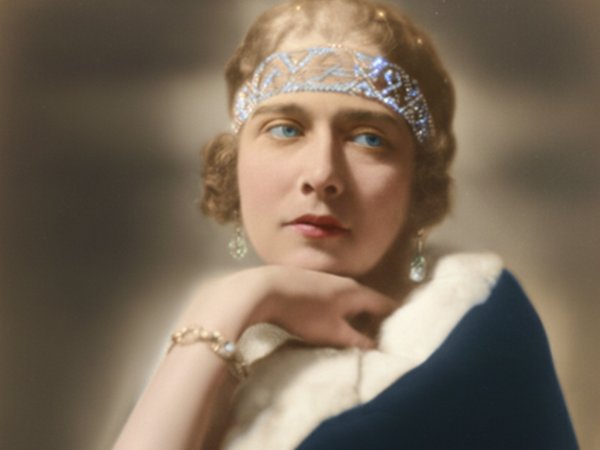
The life of Princess Maria of Romania, known in the family as Mignon and to Romanians as Mărioara, was marked by strong contrasts: affection and tragedy, glory and suffering, power and exile. The second daughter of Queen Maria, she became Queen of Yugoslavia, but fate reserved for her an existence troubled by dramatic losses and definitive separations.
The childhood of a beloved princess
Princess Maria was born in the German city of Gotha, during a period when her mother, Queen Maria, had temporarily withdrawn from Romania because of tensions and intrigues at the royal court. The birth of the little girl was surrounded from the very beginning by an aura of mystery, because the queen would later describe her in her memoirs as “the child of my flesh,” a wording that gave rise to different interpretations.
Some historians considered that the expression used by the queen was nothing more than an emotional metaphor meant to emphasize the deep bond between mother and child, especially since the princess had been born in the home of the royal family in Germany. Others questioned the paternity of King Ferdinand, suggesting that the little girl might have been the result of an extramarital relationship. Among the names mentioned was that of Boris Vladimirovich Romanov, the queen’s cousin.
Despite the rumors, King Ferdinand personally went to Gotha after the child’s birth and officially recognized her as his daughter. It is even said that the princess became his favorite child and that there was an obvious physical resemblance between them.
Raised at the royal court in Romania, Mignon benefited from a careful and refined education. Her mother described her as a kind and generous being for whom nothing was more important than helping those she loved. In her memoirs, Queen Maria emphasized the sensitivity and altruism of her daughter.
Mignon was especially close to her brother, Prince Nicholas, with whom she shared passions and games. Unlike other princesses of the time, she was not excessively concerned with fashion and elegance, being rather simple, friendly, and sometimes boyish in nature.
The marriage that made her queen
After the end of the First World War, the royal family of Romania strengthened diplomatic relations through a series of marital alliances. In this context, the marriage of Princess Mignon to King Alexander of Yugoslavia was also arranged.
Queen Maria had met Alexander during a conference in Paris and had been impressed by his personality. Considering him suitable for her daughter, she invited him to spend Christmas of 1921 in Romania. The visit proved decisive, because it was then that Mignon met her future husband.
On January 9, 1922, during an official dinner organized at Peleș Castle, the engagement of the two was publicly announced. The religious ceremony of the engagement took place on February 20, 1922, and the wedding was celebrated with great pomp in Belgrade.
Princess Maria sincerely loved her husband. In her letters she confessed that Alexander was for her a good, just, and honest man, and that the feelings she had for him were deep and sincere.
After the marriage, the princess left Romania and settled in Serbia, where she became Queen of Yugoslavia. The adaptation to her new life was not easy. She had to learn the Serbian language and assume official responsibilities, becoming the first lady of a complicated and diverse country.
She admitted that sometimes she felt fear in front of her responsibilities, wondering whether she would have enough strength to face the tasks awaiting her. In time, however, Queen Mignon managed to win the sympathy of the population.
From her marriage to King Alexander three sons were born. The first, Peter, the heir to the throne, was born in September 1923. Later the other two boys were born, Tomislav and Andrei.
The queen devoted herself to her family and to her public role, becoming a respected figure. In Yugoslavia, Mignon was loved almost as much as her mother had been in Romania.
The assassination of King Alexander
The queen’s happiness, however, was to be brutally destroyed. In October 1934, King Alexander left on an official visit to France, a journey that would turn into a historical tragedy. Princess Mignon was supposed to accompany her husband, but because of health problems she gave up the sea voyage and decided to reach Paris by train.
This change of plan was to save her life. In Marseille, King Alexander was assassinated by a Croatian extremist who advocated the dismemberment of Yugoslavia. The attack shocked all of Europe.
Queen Maria of Romania noted in her diary that her son-in-law had died on the spot and that her daughter would have had the same fate if she had been with him. The thought that she had survived only because of a coincidence deeply marked Mignon.
By his will, King Alexander established that the regency should be exercised by his cousin Paul until his eldest son, Peter, would come of age. After her husband’s death, Princess Maria became queen mother, a role she carried with dignity, but also with constant fear for the safety of her children.
The exile of a queen without a country
After the tragedy of 1934, Mignon’s life was dominated by worries and responsibilities. The queen mother constantly feared that the enemies of the monarchy might attempt to assassinate her son as well, the future king.
During this period, she became intensely involved in charitable activities. She frequently visited hospitals and orphanages, helping children and needy families. She was passionate about gardening, loved jewelry and reading, but above all she was devoted to people in suffering.
Later, she left Yugoslavia and settled in Great Britain. She lived first in Kent and later in London. Far from the country she had ruled alongside her husband, she continued to advocate for the unity of Yugoslavia.
In 1941, in the middle of the war, she sent a message to her compatriots through the BBC radio station, asking them to remain dignified and united and reminding them of the last words of King Alexander: the desire to keep Yugoslavia united.
After the country was occupied by Germany, the entire royal family was forced to remain in exile. Mignon devoted her following years to promoting the image of Yugoslavia and supporting Yugoslav refugees.
After the establishment of the communist regime led by Tito, the former queen was no longer allowed to return to her country. This prohibition represented one of the greatest sorrows of her life.
Princess Mignon lived for more than two decades in exile, without ever seeing Yugoslavia again. She died in London, on June 22, 1961, far from the adoptive country she had loved. In her will, she left an important part of her fortune to charitable institutions that supported the Yugoslav community in Great Britain.
The destiny of Princess Mignon remains one of the most dramatic in the history of European royal families. Although she was a queen and knew glory, her life was overshadowed by tragedies, losses, and exile.
Her story seems marked by the curse of an unhappy queen: a murdered husband, a lost homeland, and years spent far from the places she loved. Princess Mignon was not only a queen, but also the symbol of a generation of aristocrats driven away by history, forced to live their lives far from the thrones they had represented.
We also recommend: Princess Elisabeth, the most unhappy and isolated child of Queen Marie. She divorced the King of Greece and earned her living by giving piano lessons