Marina Știrbei and the story of the White Squadron. How the princess of Romanian aviation saved thousands of lives in the Second World War
- Articles
- 03 FEB 26
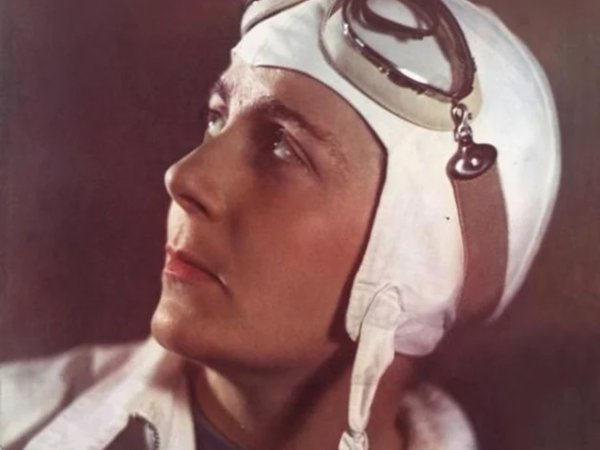
Marina Știrbei, rightly nicknamed “the princess of Romanian aviation”, is one of the most impressive female figures in modern Romanian history. Born on March 19, 1912, in Vienna, into an aristocratic family with deep connections to the political and cultural history of the country, Marina Știrbei seemed destined for an elegant, discreet life of salons and high society.
Aristocratic roots and the destiny of an extraordinary life
She was the daughter of Prince George (Iorgu) Știrbei, the niece of Prince Barbu Știrbei and of George Valentin Bibescu, and the cousin of the famous pilot Bâzu Cantacuzino. However, her destiny would follow a completely different path.
Instead of the comfort offered by her noble rank, Marina chose a life of risk, passion, and sacrifice. From early childhood, she showed an unusual interest for a young woman of noble origin: mechanics, physics, the functioning of engines, and above all, airplanes. Her fascination with flight was not a passing whim, but a deep calling that would define her entire life.
The difficult road to the skies and her rise as an aviator
The dream of becoming a pilot was not easy to fulfill. In an era when aviation was an almost exclusively male domain, Marina Știrbei encountered numerous refusals and prejudices. Her courage, perseverance, and firm belief that her place was in the cockpit of an aircraft helped her overcome all obstacles. Eventually, she was accepted at the School of Air Tourism, founded by Mircea Cantacuzino, a decisive step in her future career.
Graduating from the courses in 1932 marked the beginning of a rapid ascent in Romanian aviation. In 1935, she obtained her pilot’s license, and a year later she participated in her first aerial piloting competition, where she represented Romania and won first place. This achievement turned her into a well-known and respected figure in aviation circles, confirming that talent and discipline can overcome any gender barrier.
Marina Știrbei thus joined the ranks of Romanian aviation pioneers, becoming a symbol of modernity and female emancipation. She was not content, however, with sporting achievements or demonstration flights, but constantly sought to push her limits and put her passion at the service of a higher purpose.
Historic flights and northern inspiration
A defining moment of her career was represented by long-distance flights, true aerial adventures for that period. Marina Știrbei was the first woman in Romania to pilot the Bucharest–Stockholm route, a difficult journey that required not only exceptional technical skills, but also extraordinary mental endurance. The aircraft with which she accomplished these feats was personally ordered by her and built in Romania, being symbolically named “Icarus”.
With this airplane, Marina flew as far as Finland, in a tense international context, the Nordic country having already been invaded by the Soviet Union in 1939. The journey to the “Land of a Thousand Lakes” was not only an aviation achievement, but also a profound human experience. Here, the princess was deeply impressed by the organization and involvement of Finnish women within the Women’s Aviation Society of Finland, known as “Lottasvärd”.
The discipline, solidarity, and active role of women in supporting the war effort left a lasting mark on her. Marina Știrbei understood that aviation could be more than a sport or a display of courage: it could become an instrument of rescue, aid, and hope.
The birth of the White Squadron and the beginnings of Romanian air medical services
Inspired by the Finnish model, Marina Știrbei decided to bring this idea to Romania. In 1939, she laid the foundations of Romanian air medical services, known as the “White Squadron”, headquartered at the Băneasa airfield. This initiative was an absolute premiere, not only in Romania, but also at the European level.
The White Squadron was a special unit, made up of medical aircraft piloted exclusively by women, tasked with evacuating the wounded from the front lines and transporting medical supplies and healthcare personnel to war-affected areas. The airplanes, painted white and marked with Red Cross insignia, became symbols of hope in the midst of the devastation of war.
By 1940, the squadron was equipped with ten aircraft, and the female aviators held the rank of second lieutenant, wore military uniforms, and received salaries, just like soldiers. Among the most well-known members of the White Squadron were Nadia Russo, Mariana Drăgescu, Smaranda Brăescu, and Virginia Duțescu, women who, like Marina Știrbei, demonstrated extraordinary courage.
Courage, sacrifice, and the saving of thousands of lives
The role of the White Squadron during the Second World War was essential. Under extremely difficult conditions, constantly threatened by enemy fire, the female pilots carried out thousands of medical evacuation missions, saving countless lives. Flights were often conducted at low altitude, in unfavorable weather, with fragile aircraft, turning each mission into an act of heroism.
Marina Știrbei did not limit herself to organizing and coordinating the squadron. After the outbreak of military operations against the Soviet Union, she continued to serve her country in another way: she maintained a sanatorium in the family manor at Dărmănești, where aviators wounded on the front received top-quality medical treatment and care.
In September 1941, Realitatea magazine noted the spirit of sacrifice of the princess, emphasizing that Marina Știrbei had not ceased for a single moment to work for the advancement of Romanian aviation and that the organization of air medical services was entirely due to her. The image of her, exchanging the aviator’s helmet for a white veil to watch over wounded comrades, became emblematic of that era.
Personal life and the trials of the communist regime
In 1942, Marina Știrbei married Prince Constantin Bibescu Basarab Brâncoveanu, himself a pilot. Their wedding took place at Domnița Bălașa Church, and the reception was hosted by Martha Bibescu, their wedding sponsor, at her luxurious residence in Mogoșoaia. Personal happiness, however, was short-lived, overshadowed by the dramatic changes brought about by the establishment of the communist regime.
After the war, Marina Știrbei was stripped of all her properties and forced to move into a modest studio apartment on Popa Tatu Street in Bucharest, where she lived for a period under house arrest. For a woman accustomed to the freedom of the skies, this restriction was one of the harshest trials of her life.
Eventually, thanks to the interventions of her husband and the British state, she managed to emigrate, leaving behind a Romania that had given her both glory and suffering. Exile, however, did not mean a definitive break from her homeland.
The final years and the legacy of an exemplary life
In 1992, Marina Știrbei returned to Romania to attend the canonization service of Prince Constantin Brâncoveanu and his sons, a moment of profound symbolic significance. From 1997 onward, her health began to deteriorate, and the last six months of her life were spent in a nursing home, a few kilometers from the town of Bouloc.
She passed away on July 15, 2001, at the age of 89, leaving behind an impressive legacy. Marina Știrbei remains the only female war pilot in Romania during the Second World War, a pioneer of air medical services and an example of devotion, courage, and altruism.
Her life stands as a testimony to the struggle for ideals in a period marked by conflict and dramatic transformations. More than an exceptional aviator, Marina Știrbei was a woman who proved that passion, determination, and the desire to serve society can change destinies and save lives. Her legacy continues to inspire future generations of aviators and all those who believe in the power of courage and responsibility toward others.
We also recommend: Who was Smaranda Brăescu and why a street in Bucharest bears her name. The tragic story of Romania’s first female parachutist