Ioana Radu, the queen of Romanian romances. Ceaușescu’s favorite loved motorcycles and reached the altar five times
- Articles
- 15 DEC 25
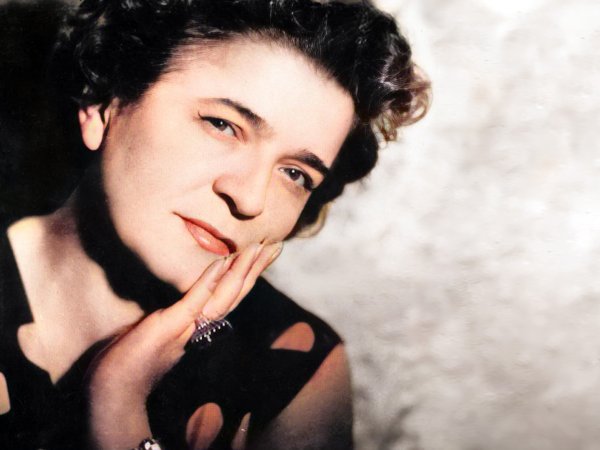
The name Ioana Radu is inseparably linked to the Romanian romance, the musical genre that moved entire generations and that, through her voice, gained a depth rarely encountered. For decades, the artist was one of the most respected and beloved singers in Romania, being considered, rightly so, the queen of romances.
A legendary artist, with a life worthy of a film
Beyond her stage success and the applause of the audience, her personal life was, however, far more complex and spectacular than the melancholic songs she performed might have suggested.
Few people know that Ioana Radu was a nonconformist woman, passionate about speed, motorcycles, and powerful cars, in an era when such passions were rare, especially among women.
At the same time, she was a passionate nature in sentimental terms as well, reaching the altar no fewer than five times, each time out of conviction and with all legal papers. All these contrasts turned her into a fascinating personality, difficult to fit into a single pattern.
Childhood and the beginnings of a unique voice
Ioana Radu was born on February 17, 1917, in Craiova, into a numerous and modest family. At baptism she received the name Eugenia Braia and was the daughter of Constantin Braia, a simple tavern keeper, without direct connections to the artistic world.
Even so, music was to play an essential role in the destiny of the family, especially through the two sisters, Maria and Eugenia, later known as Mia Braia and Ioana Radu.
Paradoxically, Eugenia was not considered, at first, the one destined for the stage. All eyes were turned toward her sister Maria, who already had a clearly outlined artistic path. No one anticipated that Eugenia would follow the same road and that she would become, over time, one of the emblematic voices of Romanian culture.
Moreover, her vocal timbre did not fit the standards of the time and was regarded with skepticism, precisely because it was different.
This very difference, however, was to become her main asset. The grave, emotionally charged voice separated her from other singers and offered her a distinct place in the musical landscape. Ioana Radu was to prove that authenticity and feeling can matter more than strict conformity to rules.
The road to affirmation and first loves
She completed her high school studies in Craiova, where teachers noticed her musical inclination and advised her to become a music teacher and to devote herself to romance songs. In the same period, her personal life began to intertwine closely with her professional path. Ioana Radu married for the first time Romeo Rădescu, a composer and music teacher from Târgu Jiu.
This first marriage did not last long. The desire for affirmation and artistic ambition pushed her to make a courageous decision for those times: to leave her husband and go to Bucharest, determined to try her luck in music. The capital was the place where she could truly assert herself, and Ioana Radu was aware that her talent needed a wider audience.
Success on the radio and life as a freelance artist
Once in Bucharest, Ioana Radu enrolled in a competition organized by the Romanian Radio Broadcasting Society. The contest was fierce, with around 800 competitors, but she managed to stand out, winning together with Eugenia Nedelea. This success represented an essential step in her career and opened the doors to broader recognition.
Even so, fame did not automatically bring financial security. In order to ensure a stable income, Ioana Radu began singing in restaurants and venues, a common practice for artists of the time. She commuted between Bucharest and Ploiești, where she sang at the Azuga restaurant three times a week.
Soon, however, her talent was noticed in the capital as well, and offers from well-known venues such as Motanul Negru, Potcoava, or Princiar led her to give up the exhausting trips.
Artistic consecration and an intense sentimental life
After the end of the Second World War, Ioana Radu’s career entered a new stage. She was invited to sing at the “Constantin Tănase” Theatre, at the State Circus, and within the “Barbu Lăutaru” folk music orchestra, thus confirming her status as a top-tier artist. The romances she interpreted became increasingly popular, and the public definitively associated her with this musical genre.
On a personal level, the artist made no compromises. Ioana Radu married every time she truly loved, believing that love must be assumed and made official. She herself confessed, without hesitation, that she had been married five times, twice even to the same man.
She never believed in relationships without legal papers and preferred to follow her principles, even if this made her different in a conservative society.
Motorcycles, speed, and a rebellious spirit
Perhaps the most surprising aspect of Ioana Radu’s life was her passion for engines and fast automobiles. At a time when women were rarely seen behind the wheel, she became the second woman in Romania to obtain a motorcycle driving license.
This passion turned her into an almost legendary character, surrounded by stories and anecdotes. An urban legend says that, during the war, the singer dressed in a motorcyclist’s outfit and set off toward Transylvania, traveling dangerous roads amid bombardments.
Even if the complete truth remains unclear, the story perfectly reflects the image of a courageous, fearless, and independent woman. Ioana Radu used to say that, if she had not loved music so much, she would have become a professional driver.
The final years and a discreet departure
Ioana Radu passed away in 1990, in Bucharest, in painful discretion. Although she had been one of Romania’s most beloved voices, the end of her life found her alone, without close people by her side. Her artistic legacy, however, remains alive, and the romances she interpreted continue to move listeners even today.
Ioana Radu’s life was a rare combination of sensitivity and strength, of tradition and modernity, of art and adventure. Beyond the title of queen of Romanian romances, she remains a symbol of the courage to live intensely, by one’s own rules, regardless of the era.
We also recommend: The story of the fiddler Fărâmiță Lambru, the accordionist whom artist Maria Tănase “adopted” and “made a man”