“I Know You by Your Plaque”: What the “Naționala Bucuresci” Signs on Old Bucharest Houses Once Meant
- Articles
- 15 SEP 26
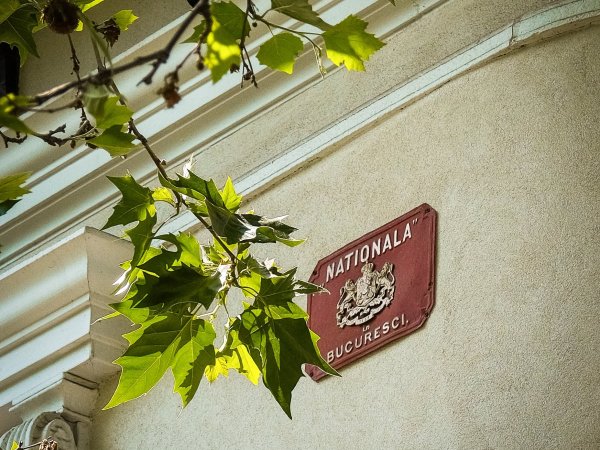
Look closely at the façades of Bucharest’s old houses and you may occasionally spot a small metal plaque, darkened by age and almost swallowed by layers of paint and plaster. A few faded letters may still be visible: “Naționala – Bucuresci.” Today, such a plaque can easily be mistaken for a forgotten architectural ornament. More than a century ago, however, it carried a very practical message. It indicated that the building was insured, most notably against fire, by Naționala General Insurance Company, one of the leading Romanian insurance companies of its time. These small signs were part of a much larger transformation taking place in Bucharest at the end of the 19th and beginning of the 20th century. As the capital modernized, insurance companies, banks, commercial firms and other financial institutions became increasingly important in everyday life. The plaque on a house was therefore more than an advertisement. It was evidence that the owner had entered the emerging world of modern financial protection. It could also suggest something about the owner’s economic standing, sense of responsibility and determination to protect valuable property in a city where fire remained a very real threat. Today, a handful of these plaques survive on historic buildings. They are easy to overlook, but each one offers a glimpse into a vanished Bucharest and the beginnings of the modern Romanian insurance industry.
A small plaque with a very important message
In late 19th-century Bucharest, fire was one of the greatest dangers faced by property owners. The city was expanding rapidly, and houses, workshops, shops and warehouses were often built close to one another. Construction standards varied considerably, while firefighting infrastructure was still developing.
For a homeowner, a major fire could be financially devastating. Losing a house or commercial property could mean losing an entire family fortune or years of investment. Insurance offered a new way of dealing with this risk. In exchange for a premium, the insurance company agreed, under the terms of the policy, to compensate the owner for specified losses.
The plaque made this invisible financial relationship visible. It identified the insurance company that had covered the property and served as a recognizable mark on the building.
One surviving example of a “Naționala” plaque is preserved in a museum collection and is catalogued as a fire insurance mark. Such plaques were part of an international practice. Insurance companies in many European and American cities used distinctive metal signs to identify properties covered by their policies.
For the people of Bucharest, therefore, seeing “Naționala – Bucuresci” on a façade conveyed information that today might be found in an insurance certificate or a digital policy: the building was protected by an insurance contract.
The rise of Naționala in a rapidly modernizing Romania
Naționala appeared in 1882, at a crucial moment in Romania’s economic development. The country had recently become a kingdom, and Bucharest was undergoing a dramatic process of modernization.
The first major Romanian insurance companies had already appeared during the 1870s. “Dacia” was established in 1871, while “România” followed in 1873. In 1881, the two companies merged to form Dacia-România, another major name in the history of Romanian insurance. The following year, Naționala entered the market.
Documents and advertisements from 1882 provide a picture of a company that was intended to compete at the highest level. The company had been authorized by Royal Decree No. 225 of January 29, 1882, and its early leadership included prominent figures from Romania’s political and economic establishment.
From the beginning, Naționala sought to build public confidence by emphasizing its capital, financial resources and ability to pay claims. This was crucial for an insurance company operating in a market where public trust was essential.
Over the following decades, Naționala became one of the major players in Romania’s insurance industry. Its history reflects the growth of a modern financial sector in which insurance was no longer an unfamiliar foreign concept but an increasingly common part of economic life.
Fire insurance was only the beginning
Although the surviving plaques are particularly associated with fire insurance, Naționala’s business was far more extensive.
Advertisements from the company’s early years show that it offered protection against several types of risk. These included fire, hail and transport-related losses, as well as insurance for valuables, broken windows and mirrors and life insurance.
By the interwar period, the range of products had expanded considerably. Naționala offered insurance covering fire, hail, transportation, accidents, automobiles, civil liability, burglary and life. This diversification tells us something important about the society in which the company operated.
Romania’s economy was becoming increasingly complex. Bucharest had factories, commercial establishments, warehouses, offices, automobiles and expanding residential districts. Businesses and individuals were acquiring assets that needed protection against a growing variety of risks.
Insurance companies became part of this new urban economy. A house with a Naționala plaque was therefore not simply a protected building. It was a small piece of evidence of Bucharest’s integration into a modern financial system.
What did the plaque say about the owner?
It would be tempting to assume that every house bearing a Naționala plaque belonged to a wealthy aristocrat or businessman. The reality was more complicated.
The plaque primarily indicated that the property was insured. Yet at a time when private insurance was still a relatively new financial practice, having a policy could also say something about the owner’s approach to property and money.
Insurance required the payment of regular premiums. It represented a conscious decision to protect an asset against potentially catastrophic losses. For a shopkeeper, factory owner or homeowner, this could be a sensible financial precaution rather than a luxury. A fire could destroy property accumulated over decades in a matter of hours.
The plaque consequently had both a practical and symbolic function. It identified the insurer, but it also showed that the owner was participating in a modern economic system based on contracts, financial planning and risk management. In that sense, the small piece of metal was a surprisingly visible symbol of modernity.
Why “Bucuresci” is written with a “c”
For modern readers, one detail on these plaques immediately stands out: “Bucuresci” rather than “București,” the spelling used today. This is not an error. It reflects the Romanian orthographic conventions of the period.
The spelling can also be found in contemporary documents issued by the company. An 1882 publication associated with Naționala’s life insurance department, for example, uses “Bucuresci” when referring to the city.
For historians, such details are valuable. A seemingly insignificant spelling can help place a document or object within a particular period and can reveal how commercial and administrative language evolved over time.
The plaque is therefore more than a corporate sign. It is also a tiny surviving document from the linguistic and administrative history of Bucharest.
From Carol I Street to the company’s “Palace”
Naționala’s own history can also be traced through its Bucharest addresses. An advertisement published in 1882 listed the company’s headquarters at 9 Carol I Street. Several decades later, the company was based at 12 Paris Street, in a building referred to in period advertising as the company’s “Palace.” The change of address reflected the company’s growing importance.
By the interwar period, Naționala was no longer simply a Bucharest-based insurer. It had developed a network of agencies and representatives throughout Romania and offered a broad portfolio of insurance products. Period advertisements emphasized the company’s nationwide presence, its financial resources and the wide range of risks it covered.
This was the era when insurance was becoming an established part of everyday economic life. The same period also saw the rapid expansion of banking, modern commerce and large Romanian corporations. The plaques attached to houses were the visible traces of this transformation.
The end of an era after 1948
The story of Naționala and its plaques took a dramatic turn after the Second World War. On June 11, 1948, Romania adopted Law No. 119, which nationalized a wide range of industrial, banking, insurance, mining and transportation enterprises. Naționala was among the insurance companies taken over by the state.
The measure marked the end of Romania’s pre-war private insurance industry. Companies that had spent decades building their businesses and reputations were absorbed into the state-controlled economic system. For the plaques on Bucharest’s houses, this meant that the original context in which they had been installed gradually disappeared.
Some plaques were removed. Others vanished when buildings were demolished or renovated. Still others survived simply because nobody bothered to take them down. As Bucharest changed, these small metal signs became increasingly disconnected from their original purpose.
The forgotten plaques that still tell Bucharest’s story
Today, a “Naționala – Bucuresci” plaque can be remarkably easy to miss. A passer-by may notice an elaborate doorway, a decorative cornice or an old wrought-iron balcony, while completely overlooking a small piece of metal attached to the wall nearby. Yet the plaque may tell a different kind of story.
It can reveal the existence of a long-forgotten insurance contract, the name of a company that once played an important role in Romania’s economy, the spelling conventions of another era and the changing relationship between Bucharest’s residents and their property.
The building itself may have changed owners several times. Its plaster may have been repaired repeatedly, its windows replaced and its interior completely remodeled. The city around it may have been transformed beyond recognition.
And still, the plaque remains. That is what makes these objects fascinating pieces of urban history. They are not grand monuments. They were never designed to commemorate anything. They were commercial signs, installed for a practical purpose and expected to be forgotten once their usefulness ended.
Instead, some survived. Today, they offer a glimpse into a Bucharest in which modern insurance was still a relatively new idea, fires could destroy fortunes, and private financial companies were becoming essential parts of urban life.
The words “Naționala – Bucuresci” may no longer identify an active insurance policy, but they still carry a message. They tell us that the house once belonged to a different economic world — one in which protecting a building from disaster was becoming a sign of modernity, responsibility and financial prudence.
And perhaps that is the most remarkable thing about these tiny plaques: they no longer insure the buildings on which they survive, but they continue to preserve a small piece of the city’s memory.
We also recommend: Mircea Eliade’s Bucharest: Mântuleasa District, the Cultural Mosaic, the Manta Family, and the Birthplace of the Famous Writer