How Tram and Metro Construction Works Affect Traffic in Bucharest
- Articles
- 05 JUN 26
Bucharest is currently undergoing a major transformation of its public transport infrastructure. In recent years, the local administration and central authorities have accelerated projects aimed at modernizing tram lines and expanding the metro network, investments considered essential for reducing pollution and improving urban mobility. However, until these works are completed, construction sites generate significant effects on road traffic, influencing the daily travel of hundreds of thousands of Bucharest residents. Although in the long term these investments are intended to improve traffic flow and provide faster alternatives to traveling by private car, in the short term they create restrictions, detours, and traffic jams that are felt in numerous areas of the Capital.
The rehabilitation of tram lines is changing traffic in several districts
One of the most important directions of investment focuses on the modernization of tram infrastructure. A large part of Bucharest’s tram network was built decades ago, and the accumulated wear and tear has affected both the travel speed of trams and passenger comfort.
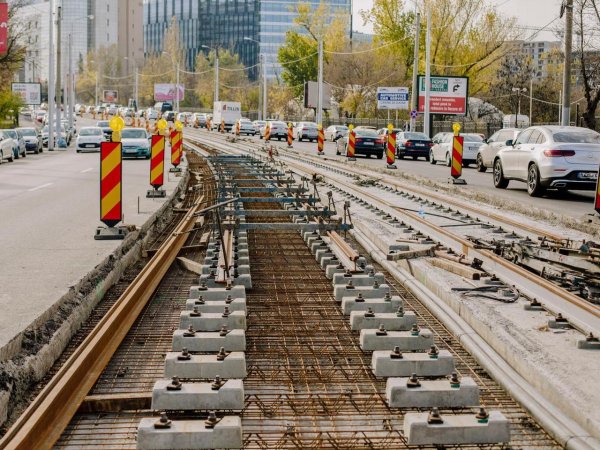
Within the ongoing programs, the Bucharest City Hall is modernizing several sections of tram lines, including those on Theodor Pallady Boulevard, Basarabia Boulevard, Calea Călărașilor, and other important areas of the city. The projects involve replacing rails, modernizing switches, rebuilding the electrical network, and constructing new passenger platforms. Some of these works target approximately 18 kilometers of tram infrastructure, one of the largest programs of this kind in recent years.
The impact on traffic is inevitable. In many cases, traffic lanes are occupied to allow the works to proceed, temporary restrictions are introduced, or the routes of some public transport lines are modified. In areas where tram tracks are located in the middle of the roadway, the works reduce the road’s capacity to handle vehicle traffic and generate congestion, especially during peak hours.
A relevant example is the rehabilitation of the infrastructure in the Expoziției area and the adjacent streets, where works on the tramway and utility networks have led to significant traffic changes and increased congestion in the Chibrit and Piața Presei Libere areas.
In many situations, the effects are not limited to the street where the intervention takes place. Traffic jams spread to secondary roads, and drivers try to avoid construction areas by using alternative routes that, in turn, become overloaded.
Magistrala M6, one of the largest construction projects influencing traffic
If tram works mainly affect certain boulevards and neighborhoods, the construction of the M6 metro line produces effects on a much larger scale.
The new metro line will create a direct connection between Gara de Nord and Henri Coandă International Airport, one of the most important urban infrastructure projects in Romania. The construction of stations, galleries, and tunnels requires extensive worksites in the northern part of the Capital, which means long-term traffic restrictions.
Areas such as 1 Mai, Pajura, Gara Băneasa, Piața Presei Libere, and Aeroport Băneasa have been affected by partial road closures, nighttime restrictions, and traffic reorganization. At certain points, traffic has been reduced to fewer lanes, and drivers have been forced to use alternative routes.
In the 1 Mai area, for example, certain streets have been closed during the night to allow construction activities, while traffic has been redirected through secondary roads. In other sections of the project, restrictions have been extended until the completion of construction phases, some of which have deadlines extending beyond 2025.
For residents of the northern part of the city, these changes have meant longer travel times and additional pressure on an already congested road infrastructure.
Why traffic jams and delays occur
The effects of construction sites on traffic are explained by the reduction of the existing infrastructure’s capacity. When one or more lanes are occupied by machinery, construction materials, or site barriers, the flow of vehicles must operate within a more limited space.
In Bucharest, where many major roads already function near their maximum capacity during peak hours, even a temporary reduction in available space can generate significant traffic jams. The phenomenon is amplified by the lack of efficient alternative routes and by the high number of vehicles that travel through the city every day.
In addition, transport infrastructure works often involve simultaneous interventions on water, sewage, gas, and telecommunications networks. This extends the duration of construction projects and may lead to additional restrictions beyond those initially planned.
Another factor is the modification of public transport routes. When certain tram lines are temporarily suspended, some passengers choose to travel by car, which contributes to the increase in traffic volume.
The long-term benefits of these investments
Although the immediate effects are felt by drivers and passengers, urban mobility specialists consider infrastructure modernization essential for Bucharest’s development.
The new tram lines allow modern vehicles to operate at higher speeds, reduce noise and maintenance costs, and increase the attractiveness of public transport. Modern trams can carry a large number of passengers and help reduce the use of private vehicles.
In the case of the M6 metro line, the benefits are even more significant. The new metro route will connect the city center with Otopeni Airport and provide a fast alternative to road traffic on DN1, one of the most congested roads in the metropolitan area. According to Metrorex data, the line will include 12 stations and will serve both Bucharest residents and airport passengers.
In the long term, the expansion of the metro network and the modernization of tram infrastructure can contribute to reducing traffic congestion, lowering pollutant emissions, and improving the quality of life in the city.
A temporary inconvenience for a modern infrastructure
Tram and metro construction works represent one of the main causes of traffic restrictions in Bucharest during this period. Construction sites affect road circulation, generate delays, and temporarily change the way residents move around the city.
However, the investments currently underway address problems that have accumulated over decades and are necessary for the modernization of the public transport system. Although the construction period may create frustration and difficulties for road users, the final result could significantly transform urban mobility in the Capital.
In a city where traffic congestion has become a chronic problem, the development of tram and metro networks remains one of the few solutions capable of delivering lasting benefits and reducing dependence on private automobiles.
We also recommend: Tips and tricks. Public transport in Bucharest: how to get around on the metro, buses and trams