How to Choose Between a Car, the Metro, STB, and Ride-Sharing in Bucharest in 2026
- Articles
- 14 MAY 26
Bucharest is a dynamic, crowded city that is continuously evolving. With more than two million residents in the metropolitan area and traffic that frequently ranks among the heaviest in Europe, choosing the right means of transportation can make the difference between an efficient trip and a frustrating one. Depending on the time of day, distance, budget, and destination, residents of the capital have several options available: a personal car, the metro, surface public transport operated by STB, and ride-sharing services such as Uber or Bolt. Each option has advantages and disadvantages. Sometimes, a personal car offers comfort and flexibility. At other times, the metro is the fastest solution. In certain situations, buses and trams are sufficient, while ride-sharing can be the most convenient option for occasional trips. The right choice always depends on the context.
Personal Car: Maximum Comfort, but Also High Costs
For many Bucharest residents, the automobile remains the preferred means of transportation. A car offers the freedom to leave at any time, transport luggage, and arrive directly at the destination without changing routes. It is especially useful for families with children, trips outside the city, or journeys to areas that are poorly connected to public transport.
In neighborhoods such as Pipera, Băneasa, or Prelungirea Ghencea, where distances are large and connections may be less efficient, a car is often considered indispensable.
However, these advantages come with significant drawbacks. Traffic in Bucharest is notorious, especially in the morning and evening. Routes that would normally take 20 minutes can turn into trips lasting more than an hour. In addition, total costs are substantial: fuel, insurance, maintenance, taxes, and parking.
Parking is one of the greatest challenges. In central areas such as Victory Square, University Square, or Calea Victoriei, available spaces are limited and parking fees can be high.
The Metro: The Fastest Option for Many Routes
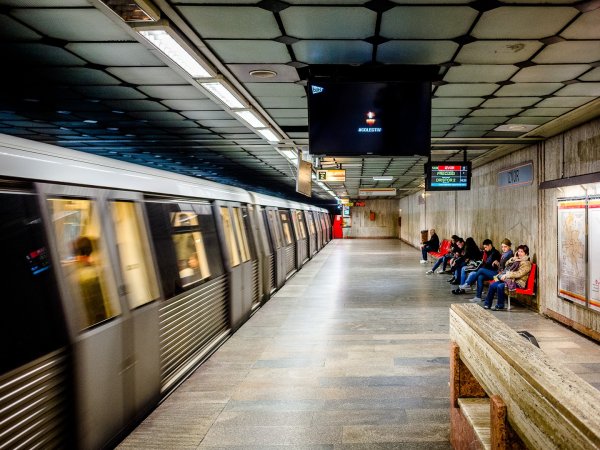
Metrorex operates one of the most efficient forms of transportation in Bucharest. The metro is, in most cases, the fastest option for crossing the city because it is unaffected by surface traffic.
The metro lines connect important neighborhoods such as Drumul Taberei, Militari, Titan, Berceni, and Pipera with the main business centers and shopping areas.
A trip between Union Square and Victory Square takes only a few minutes, regardless of congestion above ground. This is one of the metro's greatest advantages: predictability.
The cost of travel is low compared with the other options, and train frequency is generally good. During rush hours, however, stations and trains can become very crowded. For people who prefer comfort or who are carrying bulky luggage, this can be a disadvantage.
STB: The Most Extensive Public Transport Network
STB provides surface transportation through buses, trolleybuses, and trams. The network is very extensive and reaches almost all neighborhoods of the city, including areas where the metro is not available.
For short trips or for connections between metro stations and the final destination, STB is an efficient and affordable solution. Modern trams, such as those on Line 41, offer a level of comfort comparable to that of other European systems and are appreciated for their relatively good speed.
An important advantage is the low cost. Monthly passes are affordable, and integration with other forms of transportation makes the system even more attractive for commuters.
The main disadvantage is dependence on traffic. Buses and trolleybuses can be significantly delayed during rush hours, especially at busy intersections such as Roman Square or South Square.
Ride-Sharing: Flexibility and Comfort on Demand
Ride-sharing services, especially Uber and Bolt, have become extremely popular in Bucharest. They offer a convenient, fast, and easy-to-use solution through mobile applications.
The main advantage is comfort. The car arrives directly at the user's location and drops the passenger off exactly at the destination. There is no need for parking, navigation, or changing between several means of transport.
Ride-sharing is ideal for nights out, trips to Henri Coandă International Airport, late-night journeys, or situations in which time is limited.
However, the cost can vary significantly. During periods of high demand, fares increase, sometimes considerably. For daily use, ride-sharing can become more expensive than any other alternative.
Which Option Is Best for the Daily Commute
For people who go to the office every day, the metro is often the most efficient choice. It is fast, predictable, and relatively inexpensive. If the workplace is near a station, the time savings are substantial.
STB complements routes that are not covered by the metro very well. Many Bucharest residents use a combination of the two systems, reducing both costs and time spent in traffic.
A personal car becomes advantageous only if the route is not well served by public transport or if the schedule is highly flexible, allowing rush hours to be avoided.
Ride-sharing is recommended primarily for occasional situations rather than for everyday commuting.
The Most Suitable Option for Weekends and Going Out
During weekends, traffic is usually lighter, which makes the personal car more attractive. Families going shopping or taking part in recreational activities may appreciate the flexibility offered by the automobile.
For outings to central areas such as Old Town or Herăstrău Park, ride-sharing is often an inspired choice, especially when parking is difficult.
The metro remains an excellent option for events, concerts, and festivals, while STB can complete the route to destinations that are less accessible.
How Budget Influences the Choice of Transportation
From a financial point of view, public transportation is by far the most economical solution. A metro and STB pass costs considerably less than maintaining a personal car.
An automobile involves constant expenses, even when it is used rarely. Ride-sharing eliminates these fixed costs, but it can become expensive if used frequently.
For people who make only a few trips and do not wish to bear the costs of owning a car, the combination of public transportation and ride-sharing is often the most balanced solution.
Time, Comfort, and Flexibility
If the main priority is time, the metro is most often the winner. If the emphasis is on comfort and privacy, the personal car and ride-sharing are the most suitable options.
For those seeking to save money, STB and the metro offer the best balance between cost and efficiency. In practice, many residents of Bucharest use several options depending on the time of day and the nature of the trip.
The Smart Choice Depending on the Context
There is no single ideal solution for all Bucharest residents. The best choice depends on the route, the time, the budget, and personal preferences.
The metro is excellent for speed and predictability. STB offers the broadest urban coverage. The personal car ensures complete autonomy but involves costs and stress. Ride-sharing combines comfort with flexibility, but at a higher price.
In a crowded city such as Bucharest, efficient mobility means adaptation. Those who know how to combine the car, the metro, STB, and ride-sharing intelligently succeed in saving time, money, and energy, turning daily travel into a much easier experience to manage.
We also recommend: How the public transport system works in Bucharest — a comparison between STB, Metrorex, and urban trains