How the Romanians betrayed Horea, Cloșca and Crișan, the leaders of the 1784 Revolt
- Articles
- 02 MAR 26
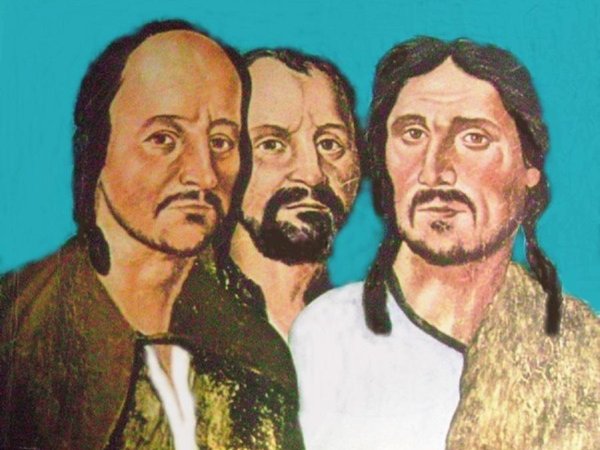
At the end of December 1784, Horea and Cloșca, the two leaders of the peasant revolt in the Apuseni Mountains, were to be captured as a result of a betrayal by some Romanians. The exact date of the event was December 27, 1784. The Austrian authorities called on the help of peasants who knew well the labyrinth of the Gilău Mountains to capture the leaders of the revolt. To convince them, the Austrians offered cash rewards and promised liberation from serfdom for those who would denounce Horea, Cloșca, and Crișan. The plan to capture Horea and Cloșca was conceived by the forestry brigadier Anton Meltzer from Abrud, who received the task of identifying “the cross-brothers of Horea.” Initially, the proposal was that a troop of Austrian soldiers be stationed in Horea’s native village, at the foot of the mountains where the captains of the rebels were hiding.
The traitorous peasants and their mission
The execution of the plan was entrusted to Romanian peasants from the commune of Râu Mare, fellow villagers of Horea, who chose to betray him. They had two essential qualities: they knew the mountains and the surroundings very well, and they could approach Horea under the guise of friendship.
The “team of traitors” was composed of the brothers Nutu (50 years old) and Ion (32 years old), together with Gheorghe, Vasile, and Simion Matieș, Simion, Iacob, and Dumitru Neagu, and Ștefan Trif. Each received a passport to pass unhindered by the military posts and the promise of a reward of 300 gulden at the end of the mission, as well as liberation from serfdom.
On December 27, 1784, the third day of the search, the peasants followed the fresh tracks in the snow and reached Cristea Nicolae, the guard of Horea and Cloșca, whom they forced to reveal the hiding place of the captains.
The capture of Horea and Cloșca
Historian Gheorghe Anghel describes the scene: “Approaching the hut, Horea received them as friends. He asked if they were perhaps hunting. They answered yes and that they were forced to hunt for the army, but could not find anything and were half frozen. Then Horea invited them to sit by the fire. Two sat by Horea, the other two by Cloșca. Cloșca immediately asked what news there was in the villages. They answered that people everywhere complained about the large number of soldiers, so that the population had to flee. Ștefan Trif and Nutu Matieș both threw themselves, one upon Horea, the other upon Cloșca, grabbed them by the neck, threw them to the ground and tied them up.”
While they were being tied, Horea took a handful of papers from his chest and threw them into the fire. “The peasants, occupied with tying, could not save the documents. Fearing being discovered by Horea’s men, the captains were hidden in a more distant sheepfold, from where they signaled the troops of soldiers,” adds historian Anghel.
The betrayal of Crișan
The third leader of the revolt, Crișan, managed to remain hidden, disguised, for almost a month. However, on January 30, 1785, he was also captured through betrayal in the mountain area of the commune of Lupșa. According to the official reports of the time, the traitors were: priest Moise, his son Moise the younger, Ion Clisaru from Abrud, Ion, Todor, and the bugler Irimie Soil, Lazăr Latea from Cărpiniș, Todor and Ion Holobut from Șasa-Lupșa, Todor Momen from Lupșa, and priest Simion from Șasa-Lupșa.
The rewards of the traitors
The reward of the traitors of Horea and Cloșca took place on February 5, 1785, at Zlatna, on a market day. The seven peasants who captured the captains received diplomas of liberation from serfdom and the sum of 600 ducats. The forester who conceived the betrayal plan received 100 ducats. The traitors of Crișan were also financially rewarded.
Incarceration and sentencing of the revolt leaders
After capture, the leaders of the revolt were taken to Alba Iulia. Horea and Cloșca were imprisoned at the III and IV gates of the fortress built by the Austrians on the backs of Romanian peasants. Crișan was held in the old guardhouse, a building now disappeared, until February 13, 1785, when he ended his life.
Horea and Cloșca were sentenced to death by breaking on the wheel, and their bodies were dismembered and displayed in various locations in the Apuseni Mountains, as a warning for those who would dare to revolt.
This tragic story shows how a popular revolt, led by brave leaders, was undermined by the betrayal of their own people and the intervention of Austrian authorities, who knew how to use local resources and the greed of some people to suppress the uprising.
Moral integrity and solidarity were severely tested under the conditions of the time, and the capture of the three leaders marked the end of the first great peasant revolt in Transylvania.
We also recommend: Anton Pann, the folklorist who composed the melody of Romania’s national anthem, has a street named after him in Bucharest