Halloween in Bucharest: From an American Movie Tradition 30 Years Ago to a Major Urban Celebration Today
- Articles
- 23 OCT 26
Today, as Halloween approaches, Bucharest begins to fill with carved pumpkins, skeleton decorations, costumes, and posters advertising themed parties. Restaurants prepare special menus, cinemas screen horror films, and parents look for activities to enjoy with their children. Thirty years ago, however, Halloween was hardly part of the city's entertainment calendar.
For many Romanians in the 1990s, the holiday was something they knew mainly from American films and television series. Children going door to door asking for candy, houses decorated with glowing pumpkins, and elaborate costume parties belonged to a world they watched on screen rather than experienced in their own neighborhoods.
Three decades later, Halloween has become a recognizable feature of Bucharest's urban life. It is not a traditional Romanian celebration, nor is it observed by everyone. Instead, it is an imported cultural phenomenon that the city has gradually embraced, adapted, and made its own.
The 1990s: When Halloween Was Something You Saw on Television
After the fall of communism in 1989, Bucharest experienced a rapid influx of Western popular culture. American films, commercial television, international music, and new forms of entertainment introduced customs that had previously been unfamiliar to much of the population.
Halloween was one of them. Witches, vampires, carved pumpkins, and the phrase "trick or treat" gradually became recognizable, even though the celebration had no historical roots in local Romanian traditions.
There is, however, insufficient publicly available evidence to identify the first Halloween party held in Bucharest or to claim that the celebration was already widespread in 1996. It is more accurate to describe the 1990s as a period of growing familiarity, followed by a more visible expansion during the 2000s.
The broader cultural context played an important role. Bucharest's nightlife was changing, new clubs were opening, and younger generations were experimenting with forms of entertainment inspired by Western cities.
The story of the clubs that shaped Bucharest after 1990 illustrates just how dramatically the capital's social scene evolved during those years.
Halloween would eventually find a natural place within this emerging party culture.
2005: Pumpkins, Costume Competitions, and Horror Films in Bucharest's Shopping Malls
By the mid-2000s, Halloween was no longer simply a holiday people recognized from films. It had become a commercial and entertainment event, with organized activities taking place across Bucharest.
In October 2005, Bucharest Mall and Plaza România hosted four days of Halloween-themed celebrations. Visitors encountered performers dressed as ghosts, witches, and black cats, while children enjoyed balloon activities and entertainment.
At the Movieplex cinema, a Halloween party featured a DJ, costume competitions, makeup demonstrations, and horror film screenings. Contemporary press reports also mentioned prizes for the most creative costumes.
This marked an important shift in how the holiday was spreading. Halloween was moving beyond private parties and into spaces regularly visited by families, teenagers, and everyday shoppers.
The carved pumpkin was no longer just something seen in an American movie. It was becoming a familiar sight in a Bucharest shopping center.
2006–2009: Halloween Takes Over Nightclubs and Reaches the City's Parks
If there is one period when Halloween's growing popularity in Bucharest can be clearly traced through contemporary news reports, it is the second half of the 2000s.
In 2006, Club A organized a party featuring skeletons, witches, vampires, illuminated pumpkins, and prizes for guests wearing costumes. Other venues, including Twice and Terminus Pub, prepared their own themed celebrations.
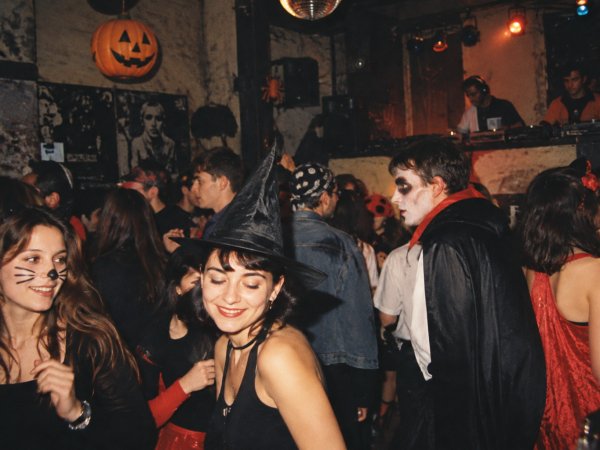
By 2007, Halloween had become popular enough for the press to report on parties at several Bucharest nightclubs, complete with DJs, elaborate costumes, and special decorations.
Among the venues hosting such events was the legendary Club A, a landmark of Bucharest's student and cultural nightlife.
By 2009, the phenomenon had grown considerably. HotNews reported that almost 50 themed parties were scheduled in the capital's clubs over Halloween weekend. The events ranged from rock and jazz nights to celebrations inspired by horror films and television characters.
Perhaps the most revealing detail from that year, however, was that Halloween had moved beyond nightclubs.
On October 31, 2009, parks in the Crângași and Drumul Taberei neighborhoods were scheduled to host activities featuring costumed participants, film screenings, and prize draws.
Halloween was beginning to occupy public spaces as well as dance floors.
How Halloween Became a Celebration for Children, Too
Halloween's transformation into a family-friendly experience significantly changed how the holiday was perceived in Romania.
For adults, it remained closely associated with costume parties and nightlife. For children, however, it increasingly became an opportunity for games, creativity, and imaginative activities.
Costumes were no longer limited to frightening characters. Superheroes, princesses, animated characters, and funny creatures became part of children's Halloween celebrations.
Pumpkins could be painted rather than carved, and many activities focused more on having fun than on being frightened.
By 2012, Romanian media were already reporting pumpkin-carving demonstrations and children's activities in Bucharest shopping centers. It was another sign that Halloween was becoming an occasion for different audiences.
Today, the range of experiences is considerably broader. Bucharest's October 2026 events calendar includes interactive children's performances, themed parties, and horror film screenings.
For example, Little Monster Boo and the Halloween Party, scheduled for October 31, 2026, presents a story about courage and friendship, followed by games, dancing, and a costume parade.
It is a considerable departure from the image of Halloween as nothing more than a night of horror films and frightening costumes.
Halloween in 2026: From Nightclub Parties to a Citywide Experience
Today, Halloween takes many different forms in Bucharest. You can attend a nightclub party, watch a horror film, organize a themed evening at home, or choose an interactive performance for children.
Between October 23 and 25, 2026, for example, Cinema Europa is hosting a Halloween horror film weekend, featuring titles such as Scream, Halloween, Alien, and The Ring.
Meanwhile, shops have expanded their seasonal offerings, and Halloween decorations have become popular enough to feature in dedicated collections.
Anyone interested in decorating their home can also explore five shops in Bucharest selling autumn and Halloween decorations.
Halloween has therefore become part of the city's experience-driven economy: not merely a date on the calendar, but an opportunity to organize activities, gatherings, and special events.
That does not mean every Bucharest resident celebrates it or that it has replaced local traditions. For some, Halloween remains a foreign holiday with little personal meaning. For others, it is simply an excuse to have fun, without any religious or ritual significance.
Why Did Halloween Become So Popular in a City Like Bucharest?
Perhaps its popularity tells us less about a fascination with ghosts and more about the way urban life has changed.
Halloween offers something that everyday routines rarely encourage: the freedom to play, dress up, and temporarily step outside our usual roles.
An adult can wear an extravagant costume without having to explain it. A child can become their favorite character. A group of friends has another reason to get together.
For event organizers, Halloween provides a recognizable theme around which to create an experience. For participants, it offers an opportunity to socialize. And for a large city where people are constantly looking for new things to do, themed celebrations naturally find their place.
Thirty years ago, Halloween was, for many Bucharest residents, an image borrowed from Western popular culture. Today, it is a recognizable part of autumn in the Romanian capital, even though it has no roots in traditional Romanian celebrations.
And perhaps this is where Bucharest's transformation over the past three decades becomes most visible: a city that has not simply imported customs, but adapted them to its own ways of celebrating, socializing, and enjoying urban life.