Great Romanian Dynasties: The Văcărescu, a Line of Bohemian Boyars, Diplomats, Writers, and People of Culture
- Articles
- 17 MAR 26
The Văcărescu family is one of the oldest and most illustrious boyar dynasties of Wallachia. Over the centuries, this lineage gave Romania figures of culture, diplomats, poets, linguists, and writers who shaped the evolution of the Romanian language, literature, and national identity. The Văcărești were notable not only for their noble rank but especially for their intellectual and artistic contributions, which left a lasting mark on Romania’s cultural history.
Origins and the First Boyar‑Poet: Ianache Văcărescu
The roots of the Văcărescu family go back to the seventeenth century in Wallachia, where the first member attested in historical sources is Ianache (Ienache) Văcărescu, a boyar holding important positions in the central administration of the principality. During the reign of Constantin Brâncoveanu, Ianache held ranks such as postelnic (a high court office) and mare paharnic (cupbearer) and influenced the political life of the era, his position reflecting the prominent status of the family among the Wallachian nobility.
Ianache’s family would continue to play a cultural and intellectual role, laying the foundations for a literary tradition that would become emblematic of Romanian literature. As literary historians note, the boyars of the Văcărescu family “were the first poets” in Wallachia.
Ienăchiță Văcărescu: Diplomat, Poet, and Grammarian
One of the greatest names in the dynasty is Ienăchiță Văcărescu (1740–1797), the son of Ștefan Văcărescu and grandson of Ianache. Ienăchiță is considered one of the cultural symbols of eighteenth‑century Wallachia, known as a poet, philologist, historian, and diplomat. His travels in Europe broadened his cultural horizons, enabling him to establish himself as a complete man of culture.
One of his most important achievements was the writing of the first printed grammar of the Romanian language, Gramatica românească (1787), an essential endeavor for affirming Romanian as a literary and scientific language. At the same time, Ienăchiță published poems inspired by Romanian folklore and contributed to consolidating the lyrical tradition in Wallachia.
Beyond his linguistic and literary contributions, Ienăchiță was also involved in diplomacy and politics, reflecting the complexity of the boyar role in that period: not just administrators, but promoters of culture.
Alecu Văcărescu and Nicolae Văcărescu: Poets of the Era
From Ienăchiță emerged a new generation of poets in the family. Among them, Alecu Văcărescu (1769–1799) and Nicolae Văcărescu (d. 1825) stand out for their lyrical contributions to Romanian culture.
Alecu, the eldest son of Ienăchiță, was recognized for his love poetry and lyrical sensibility inspired by both Greek and local traditions, although the majority of his works have been lost over time. His personality was full of drama, and his life ended tragically in the prison of Tulcea in 1799.
Nicolae, the youngest of Ienăchiță’s sons, continued the family’s poetic tradition, infusing his verses with lyrical expression and social observation. He was classically educated, with a focus on Greek and French, and played roles in the country’s administration — including as vornic and căminar — while continuing his literary activity.
Iancu Văcărescu: The Most Important Poet of the Văcărescu Line
Among all the descendants of the family, Iancu Văcărescu (1792–1863) stands out as the most important representative of the dynasty in Romanian literature. This is due not only to his poetic talent but also to his role in the modernization of Romanian literature and culture.
Iancu was a poet, playwright, and translator, bringing into Romanian foundational works of French dramatists such as Racine and Molière. Indeed, his translation of the play Britannicus by Jean Racine was one of the first plays staged in the Romanian language, decisively contributing to the development of Romanian theatre in the nineteenth century.
In addition to his artistic activity, Iancu was involved in the national awakening movements of the Phanariote era and advocated for culture and education. His works include collections of poems published in 1848, in the context of the revolutionary year, when Romania was consolidating its ideals of unity and modernization.
Through his activity, Iancu remains the central figure of the Văcărescu family’s literary tradition and is often considered “the father of modern Romanian poetry.”
Elena Văcărescu: The Female Voice of the Dynasty
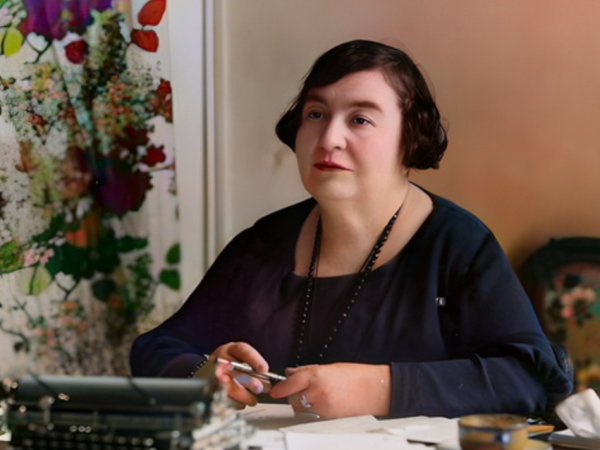
In the modern era, a distinct name in the Văcărescu family is Elena Văcărescu (1864–1947), a poet, novelist, and writer expressing herself in French. Born in Bucharest into a family with a rich cultural pedigree, Elena spent her childhood on the Văcărești estates near Târgoviște and benefited from an excellent European education.
Elena became one of the most appreciated literary figures at the end of the nineteenth century and the beginning of the twentieth. She published poetry volumes such as Chants d’Aurore (1886), which earned her awards from the prestigious French Academy, and her literary works were translated into numerous languages.
During World War I, Elena advocated for Romanian national unification, and in the interwar period she played an important cultural diplomatic role, representing Romania at the League of Nations (the precursor to today’s United Nations) with the rank of ambassador — one of the few women of her time to hold such an international position.
A distinctive episode in her life was the romantic connection with the future King Ferdinand I of Romania, a love that was opposed by the royal family and which contributed to her exile in France — part of a captivating and controversial destiny for the public of the time.
The Legacy of the Văcărescu Dynasty
The Văcărescu dynasty represents a remarkable example of how Romanian aristocratic elitism evolved, over time, into a profound cultural tradition. From Ienăchiță, who laid the groundwork for Romanian grammar and nurtured literary culture, to Iancu, the most significant poet of the line, and finally to Elena, the female voice of the modern era, the Văcărești were promoters of the Romanian language, literature, and identity.
Essentially, this boyar family was more than a mere aristocratic lineage: it was a veritable “workshop” of culture and spirit whose echoes continue to resonate in Romanian literature and cultural history to the present day.
We also recommend: Great Romanian dynasties: Golescu, the lineage of prime ministers who defined national politics