Famous Houses in Bucharest: The History of Braikoff House, from a Plot Purchased for 30,000 Lei to the Capital’s IMOD Fashion House
- Articles
- 08 JUN 26
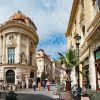
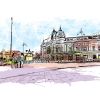
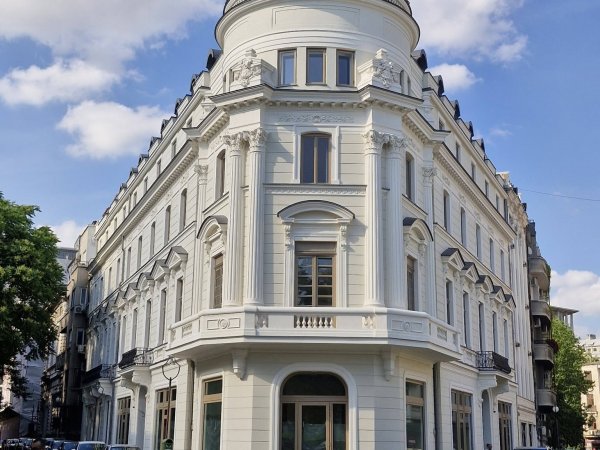
Bucharest still preserves numerous buildings that tell stories about the transformations the city has undergone over the past more than one hundred years. Some were luxurious residences of major industrialists, others became headquarters for important state institutions, while a few managed to change their purpose several times without losing their historical and architectural value. Among these monuments is Braikoff House, one of the most elegant buildings erected in the center of the Capital at the end of the 19th century. Located near the Romanian Athenaeum, in one of the most valuable historic areas of Bucharest, Braikoff House represents a remarkable example of eclectic architecture from the city’s modernization period. Its story begins with a Dutch industrialist who invested in a plot of land situated in a rapidly developing area and continues with successive transformations that made this building a landmark of the Capital’s administrative, economic, and cultural life.
Jean Braikoff and the beginning of an architectural story
The history of Braikoff House is closely linked to the personality of Jean Braikoff, an entrepreneur of Dutch origin who carried out his activities in Bucharest during a period when the city was beginning to acquire the appearance of a modern European capital.
In 1881, Braikoff purchased from Maria Slătineanu a plot of land located in Episcopiei Square, paying the considerable sum of 30,000 lei. The area was one of the most attractive in the city, situated close to the main institutions and future cultural centers of Bucharest.
The land was destined to become the site where the industrialist would build one of the most elegant residences of the era. To carry out the project, he turned to the Swiss architect Elisée Berthet, a specialist appreciated for his refined style and attention to detail.
Although Berthet started from sketches previously created by architect Henri de Wurmb, he made significant contributions to the final project. The element that would distinguish the building and give it a unique identity was the spectacular dome placed at the top of the structure, which became one of the defining characteristics of the property.
The construction of an impressive residence in the center of Bucharest
The authorization for the construction of the building was obtained in the spring of 1891. The plans provided for the construction of an imposing house with a basement, ground floor, two upper floors, and an attic, a configuration that reflected the owner’s social and financial status.
The architecture of the building was conceived in a distinctive shape resembling the letter “V.” One side faced Episcopiei Street, while the other faced Corabia Street, known today as Georges Clemenceau Street.
This architectural solution was not very common in Bucharest at the time, but it can also be observed at the Central University Library, one of the Capital’s representative monuments. The coincidence is all the more interesting because the French architect Paul Gottereau, the library’s designer, apparently lived near Braikoff House.
The new residence blended perfectly into the urban landscape of an area undergoing rapid development, dominated by elegant buildings and a cosmopolitan atmosphere typical of Bucharest at the end of the 19th century.
The elegance of the interiors and the richness of the decorations
Braikoff House impressed not only through its size and location but also through the richness of its decorative elements. From the very beginning, the owner and the architect paid special attention to both the exterior appearance and the interior design.
The façades were decorated with busts, vases inspired by classical art, and numerous vegetal motifs that emphasized the elegance of the construction. Over time, some of these ornaments deteriorated due to earthquakes, the fire that occurred in 1989, and various interventions carried out on the building.
Inside, the décor was equally spectacular. The ceilings of the apartments were painted with scenes inspired by nature and spirituality. Butterflies, birds, and angels appeared in complex artistic compositions organized around impressive central rosettes.
The ceilings were complemented by richly decorated stucco compartments, giving the rooms an aristocratic appearance. After 1957, part of the original paintings was restored and retouched, although many of the initial elements have been preserved to this day.
A house intended for family life and social gatherings
The residence was designed to accommodate several members of the Braikoff family. The industrialist reserved for himself one of the most spectacular rooms in the building: a large circular salon that represented one of the residence’s main attractions.
At the same time, the property also generated additional income. Part of the space was rented out, and among the tenants was a Jewish merchant named Weiser.
For that period, the residence benefited from modern facilities. Lighting was provided through gas supplied by the Filaret Plant, one of Bucharest’s most important public utility investments and a symbol of the city’s modernization.
These details demonstrate the high level of comfort offered by Braikoff House in an era when many homes in the Capital did not yet benefit from such amenities.
From private residence to headquarters of the Ministry of Justice
Shortly after the completion of construction, Braikoff House also began serving important administrative functions.
Between 1893 and 1899, the building housed the Ministry of Justice. The institution carried out its activities here until the completion of its own headquarters built on the banks of the Dâmbovița River.
The presence of the ministry caused significant wear and tear to the property, and at the end of the period the Romanian state granted Jean Braikoff compensation amounting to 13,600 lei to cover the damages incurred.
This stage strengthened the building’s importance in Bucharest’s public life and demonstrated its ability to host high-ranking institutions.
Changes of ownership and new purposes
In 1900, just one year before his death, Jean Braikoff decided to donate the entire property to his wife, Maria. The house remained in the family’s patrimony until the 1920s, when his sons, Jean Victor and Teodor, decided to sell it.
In the following period, the building had numerous occupants. It housed commercial companies, including the Redevența Company, as well as representative offices of airline companies and institutions from the petroleum sector.
Its excellent location and prestige made the property highly sought after by important organizations wishing to establish their headquarters in the center of the Capital.
IMOD Fashion House and the rebirth of the building
A new important chapter in the building’s history began after the devastating earthquake of 1977. With the support of investments made by the state, the building was rehabilitated and adapted to a new function.
Within its walls, the IMOD Fashion House was established, an institution subordinated to the Ministry of Light Industry. At that time, IMOD represented one of the most important centers of the fashion industry in Romania.
This transformation gave a new role to the old aristocratic residence, which became a space associated with creativity, design, and fashion presentations.
Thus, Braikoff House continued its existence, adapting to the social and economic changes that marked Bucharest in the second half of the 20th century.
From Braikoff House to One Athénée
In recent decades, interest in recovering and enhancing the built heritage of the Capital has increased considerably. In this context, the building entered an extensive process of restoration and revitalization.
The historic property, with an area of approximately 2,240 square meters, was taken over by One United Properties, which decided to give it a new identity.
The new name, One Athénée, directly references its proximity to the Romanian Athenaeum, one of Bucharest’s most representative cultural symbols.
Through the careful restoration of the original elements and the integration of contemporary functions, the project aims to bring back the former elegance of Braikoff House and contribute to the preservation of the Capital’s architectural heritage.
Today, after more than a century of existence, Braikoff House continues to be one of the most valuable historic buildings in central Bucharest. Its story reflects the transformations of a city permanently situated between tradition and modernity, between the memory of the past and the challenges of the present.
From the residence of a Dutch industrialist to the IMOD Fashion House and later to the One Athénée project, the building remains a symbol of Bucharest’s ability to reinvent its heritage without losing its identity.
We also recommend: Famous houses in Bucharest: The Ceaușescu House, from the Spring Palace to the memorial museum of the former dictator