Famous boulevard names: Tudor Vladimirescu, the orphan and courageous child who became the first revolutionary of the Romanians
- Articles
- 24 APR 26
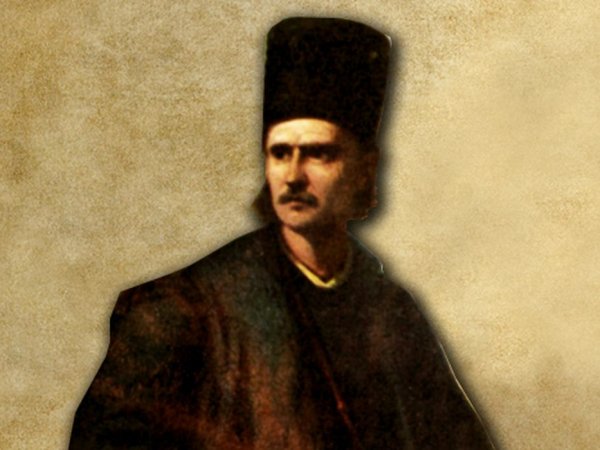
Few figures in Romanian history are as deeply engraved in the collective memory as Tudor Vladimirescu. His name is now carried by major boulevards, schools, squares, and institutions, and his image is associated with the idea of revolt, courage, and the struggle against injustice. For many, Tudor Vladimirescu is the man who first raised his voice against Phanariot domination and Ottoman influence, becoming the symbol of a new era for Wallachia.
Who was Tudor Vladimirescu
For a long time, Romanian historiography considered his 1821 movement as the beginning of the modern era in the Romanian Principalities. During the communist period, Tudor Vladimirescu’s uprising was even presented as a true popular revolution. After 1990, historians refined this interpretation and explained that, in reality, it was a carefully planned uprising against the Phanariot regime and Ottoman domination, supported by the local boyar class and connected to the Greek revolutionary movement known as the Filiki Eteria.
Beyond the 1821 uprising, less known is Tudor’s life before becoming a military leader and historical figure. He was not born a boyar or a political leader, but the son of a free peasant, a child who lost his father early and was raised with difficulty by his mother, later taken under the protection of a boyar who noticed his intelligence and potential.
Before leading the pandurs against the Turks and Phanariots, Tudor Vladimirescu was a merchant, tavern keeper, estate administrator, mercenary in the Russian army, and a man who built his own fortune and influence. This remarkable rise is what makes him one of the most fascinating figures in Romanian history.
The difficult childhood of a son of free peasants
Tudor Vladimirescu was most likely born in 1780 in the village of Vladimiri, Gorj County. His father, Constantin Ursul, came from Mehedinți, from the Cloșani region, while his mother, Ioana, was the daughter of priest Grigore Bondoc from Vladimiri.
The family settled in the maternal village, where they received land as dowry and built a house. Tudor was one of three children and grew up in a family of free peasants, known as “moșneni,” landowners respected in rural Romanian society.
However, his life changed very early. He lost his father at a young age, and his mother was left alone to raise three children in a very difficult period. For a woman without her husband’s support, life was extremely hard, and Tudor quickly learned he had to mature faster than other children.
He was described as sharp-minded, strong, and determined, qualities noticed by boyar Ioniță Glogoveanu, who took him under his protection and raised him alongside his own son, Neculai.
This decision completely changed his destiny. The boyar did not take him out of pity, but because he saw in him a future capable estate administrator and a trustworthy man for managing business affairs.
The education that changed his life
Ioniță Glogoveanu had great ambitions for the boy from Vladimiri. He wanted to turn him into a skilled administrator and a reliable intermediary in the cattle trade with Transylvanian merchants. For this, Tudor needed education, a rare privilege for a peasant child at that time.
At first, he learned to read and write from priest Pârvu Ciuhoi, and later he began studying Greek, which was extremely important in the Phanariot era. He was later sent to Craiova, to clerk Lupu, to continue his studies.
There, Tudor learned not only books but also urban life. Craiova was an important commercial center, and the young man carefully observed how merchants conducted business, negotiated, and built trade relationships.
Over time, he learned Greek, Turkish, Russian, and German, a remarkable achievement for that period. These languages later became a major advantage in trade, administration, and political relations.
Tudor thus became a man shaped between the Oltenian countryside and the world of merchants, between boyar discipline and commercial mobility.
The merchant who built his own fortune
After completing his education, Glogoveanu entrusted him with the administration of the Baia de Aramă and Glogova estates. Tudor proved highly capable, and the boyar assigned him an even more important task: cattle trading in Transylvania.
He made numerous trips across the mountains and managed to export around 2,000 heads of livestock. From commissions earned, Tudor began his own business ventures.
He invested in the trade of animals, grain, pigs, salted fish, and wax. He sold goods in Transylvania, Orșova, Craiova, and even to Turks on Ada Kaleh Island. At that time, he was not thinking about anti-Ottoman revolt, but about building his own wealth.
By the age of 35, he had already become a small landowner. He purchased estates in Cerneți, Cloșani, Purcari, Topolnița, and Baia de Aramă. He also became a church founder in Prejna and Cloșani, a sign of his growing social status.
He increased his income by opening taverns in Oltenian villages and operating water mills on his estates. His business expanded steadily, reaching the Balkans and Central Europe, including Pest and Vienna.
Tudor Vladimirescu was still not the revolutionary of history, but a pragmatic, ambitious man focused on building his social position.
The pandur and soldier of the Russian Empire
Alongside his commercial talent, Tudor also had real military abilities. He was known as an excellent horseman, skilled with pistols and curved daggers, and had a determined and disciplined nature.
At just 18 years old, drawn to military life, he joined the pandur troops, irregular military units specialized in guerrilla-style warfare. In his case, Tudor served as a pandur in the irregular army of the Russian Empire.
This position also brought privileges, including tax exemptions. During the Russo-Turkish War of 1806–1812, Tudor joined the Oltenian pandurs and entered combat.
In 1807 he left his business in the hands of trusted men and went to war, being assigned to General Isaiev’s detachment. His courage was quickly noticed, and he was appointed “commandir,” meaning pandur leader.
By 1811, he was commanding over 6,000 pandurs and fought at Cerneți, Rahova, Negotin, and Cladova, repelling Turkish raids.
For his merits he was decorated with the Order of St. Vladimir, received the rank of lieutenant, and was given a ring engraved with the tsar’s initials. After the war, he became a “sudit,” meaning a protected subject of the Russian Empire.
From wealthy sluger to leader of revolt
After the war, Tudor returned to trade and administration. He continued cattle commerce, practiced leasing of estates, and was appointed tax officer, further increasing his wealth.
During the reign of Constantin Ipsilanti, between 1802 and 1806, he received the rank of “comis.” He later became “sluger,” and in 1806 was appointed “vătaf de plai” in Cloșani, an administrator of a mountainous district. In 1815 he became “polcovnic de poteră,” responsible for policing Saac and Prahova counties with more than 30 pandurs under his command.
In 1819 he was appointed “vătaf de plai” in Câineni. By then, he was already an influential, wealthy, and respected man in Oltenia, with military experience and strong connections.
A contemporary described him as a tall, well-proportioned man with blond features, a yellow mustache, and a commanding presence. He had, the source says, “the making of a great man.”
In 1814 he was sent to Vienna by Nicolae Glogoveanu to settle inheritance matters. There he came into contact with European political debates and Russian representatives, which broadened his political horizon.
Upon returning in 1815, he learned that Turks from Ada Kaleh had devastated Oltenia and destroyed his estate in Cerneți. This personal outrage overlapped with the general dissatisfaction of the local boyar class toward Phanariot rule and Ottoman domination.
The man chosen to lead the 1821 uprising
The local boyar elite had long been searching for a capable leader. Without external support, any revolt against the Ottoman Empire would have been extremely risky, and without leadership, success was impossible.
Their attention turned to Tudor Vladimirescu. He had prestige in Oltenia, military experience, and authority among the population.
Historian Florin Constantiniu noted that his command ability and prestige were decisive reasons for entrusting him with the leadership of the emancipation movement.
At the same time, Tudor also contacted the Filiki Eteria, the secret Greek revolutionary organization. Thus, his uprising became part of a broader wave of liberation movements in Southeastern Europe.
From that moment on, Tudor from Vladimiri was no longer just a wealthy merchant or pandur commander. He became the man remembered as the first great revolutionary of the Romanians.
That is why his name today stands on one of Bucharest’s most important boulevards. Tudor Vladimirescu Boulevard is not just an urban address, but a tribute to an orphan child who, through intelligence, courage, and ambition, managed to change the destiny of an entire nation.
We also recommend: The history of Bucharest’s Drumul Taberei neighborhood, where Tudor Vladimirescu set up his camp of pandurs in 1821