Famous Boulevard Names: Banu Manta Ioniță, Great Boyar of Bucharest, Close to Prince Mihai Viteazul
- Articles
- 27 FEB 26
Who was Banu Manta? If you have ever passed through the area of Victory Square in Bucharest, you have certainly heard the name Banu Manta. The street, the square and even the boulevard preserve his memory. But who was, in fact, this mysterious character, about whom history textbooks say so little, while collective memory has transformed him almost into an urban legend?
Who Banu Manta Was
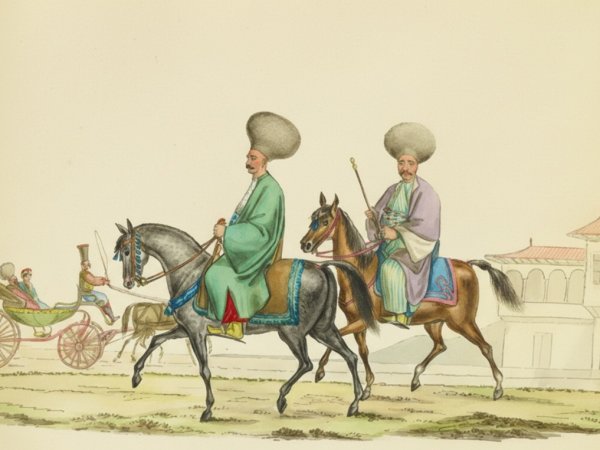
His story takes us back to the 19th century, in the time of the late Phanariote period and the beginnings of the modern era in Wallachia, when the boyar class still played a decisive role in political, social and economic life. His full name was Ioniță Banu Manta, and the title “Banu” was not a nickname, but a boyar office, inherited and passed down within the family.
In the hierarchy of the time, the “ban” was a high rank, with both administrative and judicial responsibilities, and Manta came from an old boyar family of Wallachia. Although he did not remain known through great reforms or heroic battles, Banu Manta distinguished himself through social and economic influence.
He was a large landowner, with extensive estates and imposing boyar houses in Bucharest. The documents of the time record him as a respected boyar, present in the life of the capital at the beginning of its modernization.
From historical documents and notes of the period emerges the profile of an old family, with roots in the upper ranks of the Wallachian boyar class. The Manta family was mentioned as early as the 18th century in chancery documents, being close to princely courts.
Although not as famous as the Brătianu or Cantacuzino families, Manta was a known name in the boyar world of the time. Ioniță, bearer of the title of ban, is the one who became representative, both through his wealth — extensive estates in Bucharest and Ilfov — and through the visibility of his office.
On the maternal line, there are hypotheses that the family was related to the Văcărescu lineage — poets, officials and men of culture — which would explain the connection with the capital and the social influence.
The Boyar Who Gave His Name to a Neighborhood
The area of Victory Square, today the nerve center of Bucharest, was in the 19th century a mostly rural district, with gardens, boyar houses and dirt roads. There were located the estates and houses of Banu Manta.
After his death, the authorities and the local people began to refer to the entire area by the boyar’s name. Thus, the street, the square and later even a main artery were named “Banu Manta”.
It is a typical case for old Bucharest: many neighborhoods and streets bear the names of the boyars who owned property there — from Rosetti to Brătianu and from Kogălniceanu to Mavrogheni. In the case of Banu Manta, the toponymic presence today is perhaps stronger than the historical memory.
To understand who Banu Manta was, we must look at the era. We are speaking about the first half of the 19th century, a period of transition from the Phanariote reigns to the beginnings of native rulers and, eventually, toward the Union of the Principalities.
Bucharest was a city in full transformation: the first paved roads were being built, the first modern public buildings were appearing, and the boyars had a central role in financing and influencing these projects.
Banu Manta was part of this ruling class, and his presence in the documents of the time shows a boyar who was involved, even if not necessarily a first-line political leader.
The Memory of Banu Manta Today
Today, the name of Ioniță Banu Manta survives mainly through toponymy. Banu Manta Square, located near the Sector 1 City Hall, is one of the busiest commercial areas in Bucharest. Banu Manta Street crosses a central district, with elegant interwar buildings and with the urban history of the capital inscribed in its walls.
Who was Banu Manta? A respected boyar of the early 19th century, a large landowner, a landmark of old Bucharest. Even if “great” history did not preserve many spectacular deeds about him, his memory endures in the daily life of the Bucharest residents who pass every day through the streets and the square that bear his name.
Sometimes history is written not only through princes and revolutionaries, but also through the people who left traces in cities and communities. Banu Manta was not a hero, but a boyar of a great family, whose memory transformed into an urban landmark.
In this way, his story is a lesson about how collective memory can preserve the names of otherwise forgotten people, offering them a form of immortality.
We also recommend: Famous Boulevard Names: Pavel Kiseleff, the Russian General Who Loved Romania and Gave Us the First Constitution