Dr. Iacob Felix, founder of the school of hygiene and public health in Romania, has a street named after him in Bucharest
- Articles
- 01 APR 26
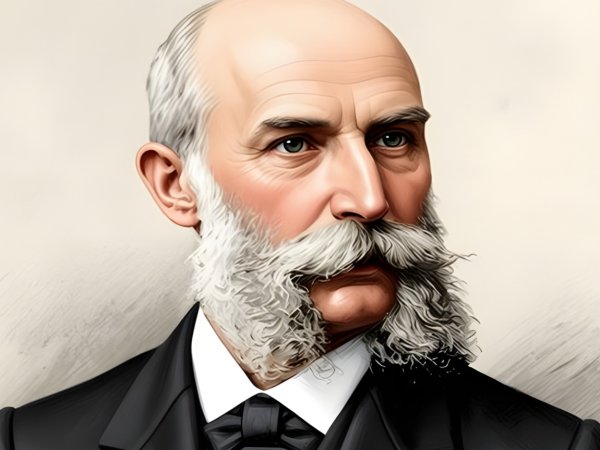
Iacob Dimitrie Felix was born on January 6, 1832, in Bohemia, a territory that today is part of the Czech Republic. Coming from a family of Jewish ethnicity, young Felix benefited from a solid education from his earliest years. He attended high school in the town of Gitschin (today Jičín), later continuing his studies in Prague, where he passed his baccalaureate exam in 1852.
Professional training and the beginnings of a remarkable physician
In the same year, he was admitted to the Faculty of Medicine of the Charles University in Prague, one of the most prestigious academic institutions in Central Europe. Eager to deepen his knowledge, in 1855 he transferred to the Faculty of Medicine of the University of Vienna, known as Alma Mater Rudolphina. Here he completed his studies in a rigorous system that required obtaining diplomas in the three fundamental branches of medicine.
Thus, on January 22, 1858, Iacob Felix became a doctor of medicine, and shortly afterward he also obtained the title of master in obstetrics (April 15, 1858), as well as that of doctor in surgery (April 20, 1858). This complex training provided him with a solid foundation for his future career, turning him into a complete specialist at a time when medicine was undergoing rapid development.
Settling in Romania and the beginning of medical activity
After completing his studies, Iacob Felix made an important decision that would define his destiny: he chose to practice his profession in a country where opportunities were more accessible. Thus, in 1858, he arrived in Bucharest, where he presented himself before the Medical Council of Wallachia in order to obtain the right to practice freely.
At the beginning of his activity in the Romanian space, he was appointed physician of the town of Oltenița (1858–1859). After the Union of the Romanian Principalities in 1859, he continued his activity as physician of Muscel County (1859–1861), and later he was called to Bucharest, where he worked for a long period, between 1861 and 1882.
His integration into Romanian society was complete, and in 1869 he obtained Romanian citizenship. Over time, Felix not only adapted to the local environment, but also contributed decisively to the modernization of the healthcare system in Romania, becoming a central figure in the development of modern medicine.
Contribution to the development of hygiene and public health
Iacob Felix is rightfully considered the founder of the Romanian school of hygiene and public health. His activity focused on prevention, health education, and the organization of the medical system in a modern and efficient manner.
One of his most important achievements is the elaboration of the work “Treatise of Public Hygiene and Sanitary Police,” published in two volumes, in 1870 and 1889. This was the first work of this kind in Romanian medical literature and represented a reference point for future generations of physicians.
In an era when contagious diseases were devastating populations, Felix promoted the idea of educating the population regarding the way these diseases are transmitted. He insisted on avoiding contact with sick individuals and on adopting strict hygiene measures. At the same time, he introduced in Romania the method of isolating contagious patients in specially designated hospitals, an essential practice for limiting the spread of epidemics.
These measures had a major impact on public health and contributed to reducing mortality caused by infectious diseases. His modern vision and scientific approach laid the foundations of a healthcare system oriented toward prevention, not only treatment.
Activity during the war and administrative role
Besides his academic and medical activity, Iacob Felix also had an important role during the Romanian War of Independence (1877–1878). During this period, he led the military hospitals in Turnu Măgurele, contributing to the organization and efficiency of medical services for wounded soldiers.
The experience gained during the war strengthened his reputation as a dedicated physician and competent administrator. Subsequently, he was appointed chief physician of the Capital, a position from which he continued to implement important reforms in the field of public health.
Felix understood the importance of institutional organization and collaboration between authorities and physicians, promoting coherent and efficient health policies. His administrative activity contributed to the sanitary modernization of Bucharest, during a period of major transformations.
Academic recognition and contribution to science
The merits of Iacob Felix were recognized at the highest level. On June 30, 1879, he was elected full member of the Romanian Academy, one of the most prestigious institutions in Romania.
Later, between March 18, 1885 and April 5, 1886, he held the position of vice president of this institution. This position reflects the appreciation he enjoyed within the scientific community and his significant contribution to the development of medicine and public health.
Through his works and activity, Felix profoundly influenced the way hygiene was perceived in society. He promoted the idea that public health is the responsibility of the entire community, not only of physicians, thus contributing to changing mentalities.
Legacy and memory of Iacob Felix
Iacob Felix passed away on January 19, 1905, in Bucharest, the city that became his second homeland and where he dedicated his entire career. His legacy remains an impressive one, both through his scientific contributions and through his impact on the Romanian healthcare system.
As a sign of recognition, his name was given to a street in Bucharest, a symbolic gesture that reflects the respect and appreciation for his activity. This street represents not only an urban landmark, but also a living reminder of a pioneer of Romanian medicine.
Today, Iacob Felix is considered one of the fundamental figures of medicine in Romania. Through his modern vision, dedication to his profession, and innovative contributions, he laid the foundations of an essential field for society: public health.
His legacy continues to inspire generations of physicians and specialists, and the principles he promoted remain relevant even today. In a world where prevention and health education are more important than ever, the example of Iacob Felix is more relevant than ever.
We also recommend: Who is Doctor Joseph Lister and why a street in Bucharest’s most beautiful neighborhood bears his name