Cella Delavrancea, a century of intense and passionate life. “Little devil” tamed the piano and conquered Caragiale, Brâncuși, Rilke and Ionescu
- Articles
- 24 MAR 26
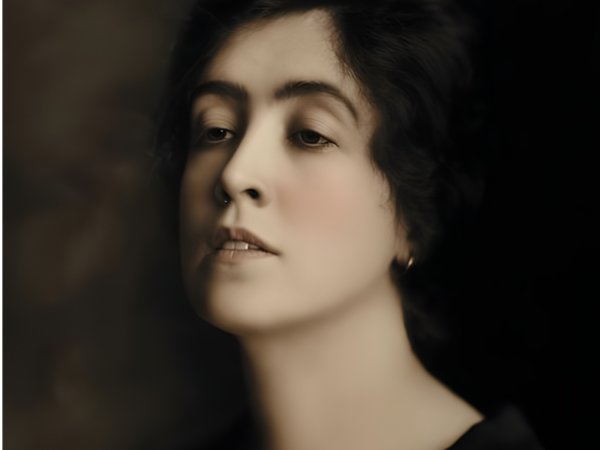
Today, few are those who still know who Cella Delavrancea was and why she is relevant for Romanian art, and this is as sad as can be, in context, though not necessarily rare. She influenced music irreversibly, through a particular style, yet around the artist there were born even a multitude of “urban legends”, each harder to believe than the other. Maria Cella Delavrancea-Lahovary was born on December 15, 1887, in Bucharest.
The great pianist Cella Delavrancea lived for 103 years
She was the eldest daughter of the writer, renowned lawyer and former mayor of the Capital, Barbu Ștefănescu Delavrancea (1858-1918), and of Maria Lupașcu, graduate in philosophy and mathematics, high school teacher and, at the same time, an admirable pianist.
Cella Delavrancea showed precocious talent and a rare sensitivity for music, being known as a good pianist from the age of eight. She benefited from a special education and instruction in the family, knowing perfectly the French and German languages.
Since her father, the writer Barbu Ștefănescu Delavrancea, was a close friend of the Caragiale family, she grew up alongside Caragiale’s sons and daughter, whom she later evoked in her books of a memorialistic character.
She studied at the Conservatory of Music in Bucharest, after which she left for Paris to perfect her interpretative art. She performed successfully throughout Europe, her talent being recognized by George Enescu himself. She made her literary debut in Tudor Arghezi’s magazine, “Bilete de papagal”, in 1929.
The pianist Cella Delavrancea occupied an important place in the evolution of Romanian interpretative art in the 20th century and greatly influenced the Romanian musical school both through the perfection of her interpretation and due to her activity as a music chronicler.
A prose writer and musician, she published articles, dramatic chronicles, music and visual arts criticism in ”Le Moment”, ”Muzică și poezie”, ”Cuvântul”, and after 1947, in the main magazines of the time.
She was a high school teacher in Bucharest (1950-1954) and from 1954 she taught piano at the Conservatory. In 1946, she made her editorial debut with the volume of short stories ”Vraja”.
In 1970, her volume ”Arpegii în ton major” appeared, and in 1974 – ”Mozaic în timp”, which includes a section of travel notes and memories about Barbu Delavrancea, I.L. Caragiale, Mateiu Caragiale and Alexandru Vlahuță.
“The chronicles and articles from ‘Arpegii în ton major’, the memories, portraits, travel notes from ‘Mozaic’ în timp are faithful transcriptions of impressions unaltered by theoretical perspectives, in which the author captures a totality of nuances, from the silky sensuality of color, to the immaterial vibration of plastic and musical structures.
In 1975 there appeared the love novel ”O vară ciudată”, and the anthology volume ”Scrieri” published in 1982, would be completed in 1984 with ”Trepte muzicale”, which groups a series of radio texts from the period 1942-1944.
In 1987 there appeared her memorialistic volume ”Dintr-un secol de viaţă”. In December 1977, Cella Delavrancea was celebrated by the Writers’ Union on the occasion of reaching the honorable age of 90 years.
She was the first artist in the history of Romanian culture who participated in the celebration of her own centenary. Cella Delavrancea wore, on that evening, a green velvet dress. It was December 9, 1987, and the pianist was to turn 100 a few days later.
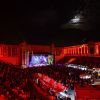
Romanian Television organized, at the insistence of journalist Marinela Rotaru, an event dedicated to the pianist’s centenary, the communist authorities did not oppose the organization and the festive evening was, thus, possible. It was held at the Radio Hall in Bucharest, with a numerous audience, far beyond the hall’s capacity, but in the most discreet way possible. Cella was by no means liked by the system. On the poster, the event was announced without too many pretensions: “The youth of classical harmonies. Guest of honor: Cella Delavrancea”. Cella then performed alongside pianist Dan Grigore, one of her favorite students, alongside Nicolae Licăreț and Radu Lupu.
As a side note, she was one of the intimate friends of Queen Marie of Romania and remained known also due to the romantic relationship she had with professor Nae Ionescu.
Cella Delavrancea was married first to the Romanian politician and diplomat, ambassador of Romania to London in the period 1938 – 1940, then to Aristide Blank, Romanian banker, economist and financier, and finally to the diplomat Philippe Lahovary.
But Cella’s great love was professor and philosopher Nae Ionescu, with whom she had a relationship begun during her last marriage, the one with Philippe Lahovary. When Nae Ionescu was imprisoned at Miercurea Ciuc, Cella sent him packages and letters, and after he was released, in 1939, Cella became a constant presence in the philosopher’s villa in Băneasa.
She was also the one who cared for him after the heart attack of 1939, and she was also the one who was by his side in the last moment of his life. Nae Ionescu died on March 15, 1940, and Cella, as she confessed in a letter sent to a friend, was the one who closed his eyes.
After his death, she made herself unseen, because due to Ionescu’s wife, Cella could not participate in the funeral. Cella Delavrancea amazed playwright Ion Luca Caragiale and would have managed to steal his heart. It happened when she was 25 years old, and he, 60.
More than that, the pianist would have known intimately also the great Austrian poet Rainer Maria Rilke, who, in turn, would have fallen in love with her. Last but not least, she had the same opportunity with Constantin Brâncuși, and testimonies show that the two would not have remained indifferent to each other at all. Cella Delavrancea died on August 9, 1991, at the age of 103, in Bucharest, being buried in Bellu Cemetery, on the Artists’ Alley.
A childhood among elites and an early musical talent
The family origin of Cella Delavrancea was essential for her formation. She grew up in an environment in which culture was not an ornament, but a living, everyday reality. Her father, Barbu Ștefănescu Delavrancea, was not only a great name of Romanian literature, but also a central figure of the Bucharest public world.
Around him gravitated a world of writers, lawyers, politicians and artists, and Cella’s childhood unfolded in direct contact with this elite atmosphere. Her mother completed this universe perfectly through her own intellectual and artistic formation, offering her a cultivated, refined and active feminine model.
A very important detail for her biography is the closeness between the Delavrancea family and the Caragiale family. Because Barbu Ștefănescu Delavrancea was close to I.L. Caragiale, Cella grew up alongside the children of the great playwright. Later, she was to evoke them in her memorialistic writings, transforming these memories into a valuable source for the reconstruction of a vanished world. The fact that she spent her childhood in the proximity of the Caragiale family is not only a biographical curiosity, but a sign of the natural way in which Cella entered, from very early on, into contact with the center of Romanian cultural life.
This privileged childhood did not however produce a superficial artist, nourished only by the social context, but on the contrary, a woman who built with seriousness and discipline her own road. The musical talent shown early was thoroughly cultivated, and Cella Delavrancea did not remain at the level of promise.
She studied at the Conservatory of Music in Bucharest, where she consolidated her technique and expressiveness, and later left for Paris to perfect her interpretative art. The choice of Paris was not accidental at all. For Romanian artists of the era, the capital of France represented the place of consecration, of refinement and of the meeting with the great European standards.
This Parisian stage mattered enormously in her artistic formation. Cella Delavrancea did not remain a valuable pianist only in the Romanian context, but became an appreciated interpreter on a European scale. She performed successfully throughout Europe, and her talent was recognized even by George Enescu, which amounted, in the era, to a confirmation of the highest level. It was not easy to be noticed by Enescu, and the fact that he appreciated her talent clearly says that Cella Delavrancea belonged to the authentic elite of Romanian music.
The pianist who shaped a school and wrote about art
The place occupied by Cella Delavrancea in the evolution of Romanian interpretative art in the 20th century is a first-rank one. She was not only a brilliant pianist, admired for virtuosity and expressiveness, but also a personality who profoundly influenced the Romanian musical school. This influence was exercised in two ways: through the perfection of her interpretation and through her activity as a music chronicler, through which she commented on, analyzed and oriented the sensitivity of the public and of the cultural environment.
In an era in which art criticism had real weight, Cella Delavrancea also stood out as a prose writer, publicist and attentive observer of the artistic phenomenon. She published articles, dramatic chronicles, texts of music and visual arts criticism in magazines such as “Le Moment”, “Muzică și poezie”, “Cuvântul”, and after 1947 she continued to write in the main publications of the time.
This intellectual dimension essentially completes her portrait. Cella was not only an interpreter who felt music, but also a critical conscience, a woman capable of translating into words the fineness of some artistic impressions of great subtlety.
Her literary debut took place in 1929, in Tudor Arghezi’s magazine, “Bilete de papagal”. It is a significant debut, because it places her from the very beginning in the proximity of one of the great Romanian writers and in a space of sophisticated literary expression. Later, her editorial activity diversified and deepened. In 1946 she made her editorial debut with the volume of short stories “Vraja”, a sign that literature was not for her a secondary whim, but an assumed direction of creation.
There followed, in the years of maturity, volumes increasingly important for defining her cultural profile. In 1970 there appeared “Arpegii în ton major”, and in 1974 “Mozaic în timp”, a book that included travel notes and evocations about Barbu Delavrancea, I.L. Caragiale, Mateiu Caragiale and Alexandru Vlahuță. These volumes are important not only for their literary value, but also for the way in which they fix a memory of an era. In them, Cella Delavrancea recovers people, places, atmospheres and impressions with a great capacity for nuance.
About the texts in “Arpegii în ton major” and “Mozaic în timp” it was said that they are faithful transcriptions of impressions unaltered by theoretical perspectives, in which the author captures the totality of nuances, from the silky sensuality of color to the immaterial vibration of plastic and musical structures.
The formula is very suitable for her style. Cella Delavrancea wrote like a person who had lived art intensely and who understood it organically, not schematically. Precisely for this reason, her chronicles, memories and travel notes preserve a particular freshness.
Teacher, mentor and witness of a century
Beyond the career of concert pianist and the journalistic activity, Cella Delavrancea also had an important pedagogical role. Between 1950 and 1954 she was a high school teacher in Bucharest, and from 1954 she taught piano at the Conservatory. This passage toward pedagogy does not mean a withdrawal from the foreground, but a natural continuation of her influence on the artistic plane. Great musical personalities are not defined only by their own performances, but also by the way in which they form other generations.
As a teacher, Cella Delavrancea transmitted not only technique, but also a certain type of artistic rigor, of profound relation to music. The fact that among her favorite students was Dan Grigore says much about her pedagogical value. She did not belong to that type of rigid teacher, emptied of sensitivity, but rather to a mentor model capable of recognizing and cultivating authentic talent.
Her literary activity continued in the following decades as well. In 1975 she published the love novel “O vară ciudată”, and in 1982 there appeared the anthology volume “Scrieri”, completed in 1984 with “Trepte muzicale”, which brought together a series of radio texts from the period 1942–1944. In 1987 there appeared her memorialistic volume “Dintr-un secol de viață”, a title that says almost everything about the amplitude of her existential experience.
Cella Delavrancea was not only a long-lived artist, but one who crossed very different eras, preserving her identity and prestige. She knew Romania from the end of the 19th century, lived the interwar modernity, the war, communism and the last years of the dictatorship. The fact that she remained active, lucid and present in Romanian culture throughout this whole course is, in itself, remarkable. She was not a simple survivor of a century, but an active and influential witness of it.
In December 1977, the Writers’ Union celebrated her on the occasion of reaching the age of 90, a sign that she had already become a heritage figure of Romanian culture. A decade later, she was to reach something entirely exceptional: she was the first artist in the history of Romanian culture who participated in the celebration of her own centenary.
The discreet centenary of a living legend
The evening of Cella Delavrancea’s centenary remained one of the memorable images of late Romanian culture under communism. It was December 9, 1987, and the pianist was to turn 100 a few days later. She wore a green velvet dress and took part, lucid and present, in an event organized by Romanian Television at the insistence of journalist Marinela Rotaru. The communist authorities did not oppose the organization of the festive evening, although Cella was not at all liked by the system. Precisely for this reason, everything unfolded in as discreet a formula as possible.
The event took place at the Radio Hall in Bucharest and enjoyed a numerous audience, far beyond the capacity of the hall. On the poster, the event appeared modestly, under the title “The youth of classical harmonies. Guest of honor: Cella Delavrancea”. The discreet formula of the announcement could not however hide the significance of the moment. The public knew that it was participating in a rare moment, in the celebration of a life that had itself become a part of the history of Romanian culture.
Cella then performed alongside Dan Grigore, one of her favorite students, but also alongside Nicolae Licăreț and Radu Lupu. It was more than a concert. It was a symbolic transmission of a musical heritage, a meeting between generations, a public consecration of a life placed entirely in the service of art. In an era suffocated by propaganda, such a moment of artistic authenticity had a particular force.
Her centenary also says much about Cella Delavrancea’s personality. She was not only a spectacular survivor, a picturesque character admired for her age. She was still a living name, a presence that imposed respect, an artist who had not faded into a museum, but continued to matter. This image of a woman almost one hundred years old, elegant, lucid, present on stage, is one of the most beautiful possible definitions of artistic dignity.
Loves, fascinations and the legend of a woman impossible to forget
If her talent and work secured her an important place in Romanian culture, the personal life of Cella Delavrancea contributed decisively to transforming her into a legendary character. She was one of the intimate friends of Queen Marie of Romania, which says much about her position in high society and in the prestigious circles of the era. At the same time, her name also remained linked to several sentimental relationships that fed public fascination and consolidated her image as a passionate, cultivated and magnetic woman.
Cella Delavrancea was married first to the Romanian politician and diplomat who was to become Romania’s ambassador to London between 1938 and 1940, then to Aristide Blank, Romanian banker, economist and financier, and finally to the diplomat Philippe Lahovary. These marriages place her in an environment of the political, diplomatic and financial elite, but this is not the emotional center of her biography.
Cella’s great love was professor and philosopher Nae Ionescu. The relationship with him began during her last marriage, the one with Philippe Lahovary, and remained one of the most intense and commented love stories in the Romanian intellectual world. When Nae Ionescu was imprisoned at Miercurea Ciuc, Cella sent him letters and packages. After his release, in 1939, she became a constant presence in the philosopher’s villa in Băneasa.
She also cared for him after the heart attack in 1939 and stayed by his side until the final moment. Nae Ionescu died on March 15, 1940, and Cella confessed in a letter sent to a friend that she was the one who closed his eyes. After his death, she withdrew discreetly, without being able to participate in the funeral because of the opposition of Ionescu’s wife. It is one of those loves that give a biography an almost novelistic tension.
Around Cella, other fascinating stories were also woven. It is said that she amazed Ion Luca Caragiale and that she would have managed to win his heart when she was 25 years old and he was 60. Also in the sphere of these legends persists the story of an intimate meeting with the great Austrian poet Rainer Maria Rilke, who in turn would have fallen in love with her. Nor would Constantin Brâncuși have remained indifferent to the charm of the pianist. Whether some of these stories were amplified by admiration and by the mythology of the era, or whether they fully reflect reality, one thing remains certain: Cella Delavrancea had an unusual force of intellectual and human seduction.
Nicknamed “Little devil”, she seems to have had not only the energy of an exceptional artist, but also that rare mixture of intelligence, temperament, femininity and freedom that disturbs and attracts at the same time. She tamed the piano, but also fascinated the world of ideas, of literature and of the great male personalities of her time. It is precisely this combination that explains why her biography continues to stir interest.
Cella Delavrancea died on August 9, 1991, in Bucharest, at the age of 103. She was buried in Bellu Cemetery, on the Artists’ Alley, the right place for a figure who fully belonged to the Romanian cultural pantheon. Her life crossed more than a century, but not as a simple succession of years, but as a continuous burning. She was pianist, writer, chronicler, teacher, muse, witness and protagonist of a world of great refinement.
Looking as a whole at her destiny, it becomes clear that Cella Delavrancea is not only a name to be recovered from oblivion, but an essential figure for understanding modern Romanian culture. She influenced Romanian music through interpretation and pedagogy, left valuable memorialistic and critical pages, and lived with an intensity that transformed her into an almost legendary character. In a culture that often remembers men more easily than women of genius, the story of Cella Delavrancea deserves to be brought back into the light. Not only for her biographical charm, but for her true stature: that of a great artist of Romania.
We also recommend: Stories of Bucharest: Henrieta Delavrancea knew she would become one of the greatest Romanian architects from the age of just 6