Architecs who shaped the city of Bucharest: Henrieta Delavrancea knew she would become one of the greatest Romanian architects from the age of just 6
- Articles
- 02 FEB 26
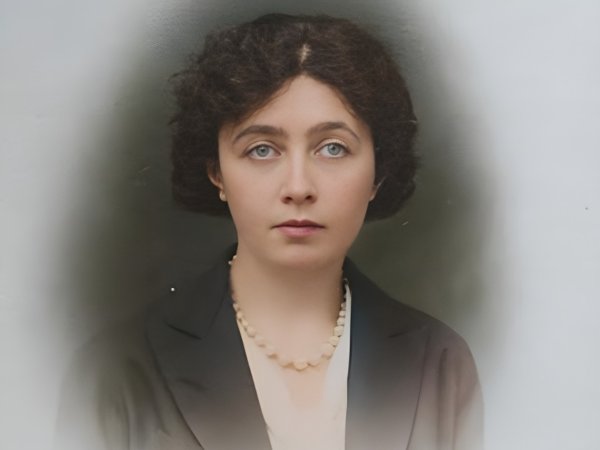
Henrieta Delavrancea, also affectionately known as “Riri,” was born in 1894 into a family that breathed culture through every pore. The youngest daughter of the writer Barbu Ștefănescu Delavrancea, one of the most powerful personalities of Romanian intellectual life at the end of the 19th century and the beginning of the 20th century, Henrieta grew up in a universe where art, literature, and music were not simple concerns, but fundamental landmarks of everyday existence.
Childhood in a home where culture was daily breathing
The Delavrancea household was a true cultural salon of Bucharest, a place where ideas met, clashed, and were refined. Alongside her three sisters – Cella, Margareta, and Niculina – Henrieta witnessed memorable conversations held by the great intellectuals of the time.
Writers, visual artists, architects, musicians, politicians, and lawyers frequently passed through the family home, drawn by the charisma and intellectual force of Barbu Ștefănescu Delavrancea.
The formative atmosphere of the Delavrancea family
In her memoirs, pianist Cella Delavrancea, Henrieta’s eldest sister, emotionally describes that privileged yet by no means rigid childhood, in which education took place naturally, through direct contact with authentic values. Literature was present in the late-night readings, music resonated daily in the house, and painting and architecture were discussed with the same passion as the great philosophical themes of the era.
Cella recalled the round tables around which remarkable personalities gathered, the teas served by their mother, and the discussions that stretched late into the night. The children were discreet yet attentive witnesses, absorbing a world that would definitively shape their professional paths. In this setting, Henrieta learned, without textbooks and without constraints, that art is a form of responsibility and that talent must be doubled by rigor and discipline.
The providential meeting with Ion Mincu and an early revelation
One of the frequent guests of the Delavrancea family was architect Ion Mincu, the central figure of modern Romanian architecture and founder of the Neo-Romanian style. His presence in the writer’s home was not distant or solemn, but warm and friendly. Mincu was welcomed even into the children’s circle, played games with them, and spoiled them with sweets and small gifts.
For Henrieta, this closeness proved decisive. At just six years old, in a moment that became emblematic in the history of Romanian architecture, Ion Mincu, playing the role of a strict examiner, asked her what she wanted to become when she grew up. The little girl’s answer came promptly and confidently: “An architect.” This statement, later recorded in Cella Delavrancea’s memoirs, was not a childish whim, but a profound intuition of her own vocation.
Choosing an unusual path for a woman of the era
While her sisters found fulfillment in fields more accessible to women at the beginning of the 20th century – Cella in music, Margareta in literature and philosophy, and Niculina in painting – Henrieta chose a difficult path, one almost exclusively reserved for men: architecture. This decision required courage, perseverance, and the ability to confront deeply rooted prejudices.
After a period of private studies, necessary to build a solid foundation in a field that was both technical and artistic, Henrieta enrolled at the Higher School of Architecture in Bucharest. Here she entered a competitive environment, in which she constantly had to prove her worth, at a time when the presence of women in architecture was viewed with skepticism.
War and the experience of the front
Her academic journey was interrupted by the outbreak of the First World War. In a gesture that speaks to the strength of her character, Henrieta chose to suspend her studies and go to the front as a volunteer nurse. This experience confronted her with suffering, human fragility, and the need for efficient organization of medical spaces—elements that would later influence an important part of her professional activity.
During the war she met Emile Gibory, a French officer, whom she married in 1918. After the end of the conflict, the two lived for a period in Paris, a city that offered Henrieta direct contact with modern Western architecture and the new European artistic currents.
Returning to studies and professional recognition
Upon returning to the country, Henrieta Delavrancea resumed her studies in 1924, with a greatly increased professional and human maturity. In 1927, she obtained her architecture diploma, thus becoming the fourth woman architect in Romania, after Ada Zăgănescu, Virginia Andreescu, and Mimi Friedman. This moment marked not only a personal achievement, but also an important step in the affirmation of women in Romanian architecture.
Her career developed steadily, and her works began to be recognized both for their functionality and for the elegance of their architectural solutions. Henrieta Delavrancea demonstrated a remarkable ability to combine technical rigor with the artistic sensitivity inherited from her family environment.
Emblematic projects and contribution to modern Bucharest
Among her important achievements is the redesign of the façade of the Capitol Cinema in 1938, an intervention that gave the building a modern air, adapted to the spirit of the time. Her activity also included numerous works carried out in Balcic between 1930 and 1940, during a period when the town was a true magnet for Romanian artists and architects.
In Bucharest, Henrieta Delavrancea’s contribution is linked to major public-interest projects. She participated in the realization of the Obor Halls and was the designer of landmark medical institutions such as the Oncology Institute, Fundeni Hospital, and Filantropia Hospital. These buildings reflect her concern for functionality, hygiene, and the adaptation of space to the real needs of patients and medical staff.
Architecture during the communist regime
The establishment of the communist regime brought radical changes to architectural practice. Private activity was banned, and architects were integrated into state structures. In this context, Henrieta Delavrancea Gibory continued to work for 19 years within the Design Collective of the Ministry of Health and the Proiect București Institute.
Although ideological and bureaucratic constraints were considerable, her vast experience and professionalism allowed her to remain a respected name in the field. She contributed to essential projects for the country’s medical infrastructure, demonstrating that vocation and professional responsibility can survive even in difficult political contexts.
The legacy of a life dedicated to architecture
Henrieta Delavrancea remains one of the essential figures of modern Romanian architecture. Her journey, begun under the sign of an early revelation and continued with perseverance in a male-dominated world, is proof of the strength of an authentic vocation. She knew from the age of six which path she would follow and never strayed from it, despite historical and social obstacles.
Today, her name is indissolubly linked to Bucharest and its modernization, to hospitals that have saved thousands of lives, and to a generation of architects who contributed to defining Romanian urban identity. Henrieta Delavrancea’s story is not only about architecture, but about courage, foresight, and fidelity to one’s own destiny.
We also recommend: Gheorghe Șincai National College, one of the oldest high schools in Bucharest, designed by Romania’s first female architect