Birlic, the ace up the sleeve of Bucharest theatre. The absolute genius of comedy, the lawyer who lost his money at the casino in Cannes
- Articles
- 09 MAR 26
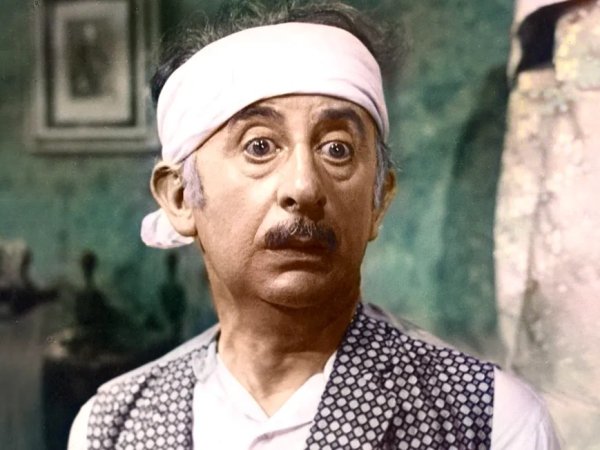
The history of Romanian theatre is full of memorable names, yet few figures managed to become as beloved by the public as Grigore Vasiliu-Birlic. The actor with an unusual physique and unmistakable facial expressions became, over the decades, a symbol of Romanian comedy. For entire generations of spectators, his name remained synonymous with intelligent laughter, with the characters of Ion Luca Caragiale, and with the charm of an artist who turned every role into a lesson in acting.
What did the great actor Radu Beligan say about Birlic
Radu Beligan described him as “the genius of Romanian comedy and humor,” and comparisons with great actors of the world soon appeared. Many critics and spectators metaphorically called him “the Charlie Chaplin of Romanians” or “the Louis de Funès of Romanian theatre.” However, success did not come easily. Behind this brilliant career stand years of ambition, repeated refusals, and a life story full of unexpected events.
Paradoxically, the flaws that initially closed doors for him later became his artistic trademark. His atypical physique and speech defect were exactly the elements that made Birlic one of the most recognizable actors on the Romanian stage.
The child from Fălticeni who dreamed of becoming a clown
Grigore Vasiliu was born on January 24, 1905, in Fălticeni, into a family of merchants. His childhood did not necessarily foreshadow the destiny of a great theatre actor. Like many children of the era, he was fascinated by the world of traveling shows and dreamed of becoming a clown at the circus.
This childhood dream was quickly shattered by his father, who believed that such a path was not suitable for the son of a respectable merchant. The family wanted for him a stable and serious profession, and an artistic career was viewed with much suspicion.
The young Grigore attended the “Nicu Gane” High School in Fălticeni, being part of the first graduating class of this institution. Here he began to stand out through his comic talent. His classmates considered him the comedian of the class, and teachers were often forced to interrupt lessons because of the bursts of laughter caused by his pranks.
The writer Eugen Dumitriu, in the volume “Orașul Muzelor” (The City of the Muses), recounted that a simple grimace made by the student Grigore Vasiliu was enough to transform a quiet class into a moment of general amusement. Teachers scolded him, but often did so with indulgence, sensing that this boy might one day reach the stage.
Sometimes, however, his pranks brought him before the school’s director, George Stino, who called him a “rascal” and threatened to punish him. It is said that when he was about to receive a correction, the young Birlic would hide under the table to escape punishment.
Law student, actor by chance
Although he was attracted to theatre, his family convinced him to pursue a career considered more serious. Thus, after finishing high school, Grigore Vasiliu enrolled in the Faculty of Law in Chernivtsi.
While studying for his degree, he began to frequent the National Theatre in the city. At first he only worked as an extra to earn a living, but his talent did not go unnoticed.
At one point, the theatre director offered him a minor role, that of a naïve and somewhat foolish character. Grigore Vasiliu’s performance aroused the enthusiasm of the audience, and his lisping accent, considered until then a defect, proved to be an extraordinary comic element.
After graduating from the Faculty of Law, the young man could have become a lawyer. However, the calling of the stage was too strong. He chose to remain in theatre and became employed at the National Theatre in Chernivtsi.
Here he began to gain the sympathy of the audience, and one of the roles that brought him the appreciation of spectators was that of Dandanache from the famous play “A Lost Letter” by Ion Luca Caragiale.
Seven attempts until the Conservatory
Although he was already performing on stage, Grigore Vasiliu desperately wanted to attend the Conservatory of Dramatic Art in Chernivtsi. The road to admission, however, was extremely difficult.
He tried to enter the Conservatory no fewer than seven times. Six times he was rejected because of his speech defect. The actor later recounted with humor that the examiners rejected him because he had a lisp and “spat when he spoke.”
For many people, six refusals would have been enough to abandon the dream. But Grigore Vasiliu had extraordinary ambition. He continued trying, and eventually he was admitted. In 1933 he moved to the Conservatory in Bucharest, where his artistic destiny would change forever.
How he became “Birlic”
Shortly after arriving in Bucharest, the young actor stepped onto the stage of the Teatrul Vesel (The Merry Theatre), where he was cast in numerous comedies.
Here he received the leading role in a French boulevard comedy entitled “Birlic.” The character he played was the clerk Costache Perjoiu, nicknamed Birlic.
The show was a huge success, and the audience began to identify the actor with the character. The nickname “Birlic” remained with him for the rest of his life.
The word comes from Turkish and means “the ace up the sleeve,” that is, a decisive surprise in a game. Symbolically, the name suited the actor’s destiny perfectly, as he became one of the most valuable “cards” of Romanian theatre.
Birlic and the universe of Caragiale
The career of Grigore Vasiliu-Birlic was closely connected to the work of Ion Luca Caragiale. Over the course of his life, the actor played no fewer than 13 characters from the plays of the great playwright.
He considered the roles from Caragiale a true school of acting. In more than 35 years of theatre, these characters gave him the opportunity to perfect his style and explore the nuances of Romanian comedy.
On the stage of the National Theatre in Bucharest, under the direction of Sică Alexandrescu, Birlic played memorable characters: Crăcănel and The Candidate from “D-ale carnavalului,” Spiridon and Rică Venturiano from “O noapte furtunoasă,” and Brânzovenescu and Dandanache from “O scrisoare pierdută.”
He also played the role of Coana Efimița from “Conu Leonida față cu reacțiunea,” Lefter Popescu from “Două loturi,” and Costăchel Gudurău from “Telegrame.”
Each of these roles became emblematic, and his interpretations are still considered among the most successful in the history of Romanian theatre.
The actor between tragedy and comedy
Radu Beligan said about Birlic that he had “a physique against all professional canons.” He was a short man, with a face that seemed almost taken from a caricature.
In the middle of this comic face, however, there were two deeply sad eyes, “two beaten dog eyes,” as Beligan described them. Precisely this combination of comedy and melancholy was the essence of his art.
Birlic acted like a tightrope walker, always maintaining a delicate balance between laughter and drama. His characters made the audience laugh, but at the same time conveyed a profound humanity.
Success in cinematography
Although he was primarily a theatre actor, Birlic also had an important career in cinematography. His debut on the big screen took place in 1934, in the film “Bing-Bang,” alongside the famous comic duo Stroe and Vasilache.
However, his real popularity in film came only in the 1950s. At that time several productions appeared that would become classics of Romanian cinema.
Among his best-known roles are Lefter Popescu in “Două lozuri,” Crăcănel in “D’ale carnavalului,” Costăchel Gudurău in “Telegrame,” Spirache Necșulescu in “Titanic vals,” Jupân Canciano in “Bădăranii,” and Brânzovenescu in “O scrisoare pierdută.”
Birlic in Cannes and the casino adventure
A spectacular moment in Birlic’s career took place in 1960, when the film “Telegrame” was nominated for the prestigious Palme d’Or at the Cannes International Film Festival.
The actor then stepped onto the red carpet of the famous festival, representing Romanian cinema at a moment of great international visibility.
Director Gheorghe Naghi later recounted an amusing story from that period. Birlic was a great fan of roulette and could not resist the temptation of the casinos on the Croisette.
Every evening he went to the casino to try his luck at roulette. However, the enthusiasm of the game cost him dearly: he lost all his money.
To save his honor, his colleagues had to send him money so that he could return home. The actor came back from France completely “broke,” but the incident became one of the most delightful stories from behind the scenes of his life.
The legacy of a genius of comedy
Grigore Vasiliu-Birlic remains one of the most important figures of Romanian theatre and cinema. His career demonstrates that authentic talent can overcome any obstacle.
The actor who had been rejected six times by the Conservatory eventually became one of the greatest comedians of the Romanian stage. The speech defect that had closed doors for him paradoxically became his artistic signature.
Through his memorable roles, through the energy and naturalness of his performances, Birlic managed to conquer audiences and remain in the collective memory as a symbol of Romanian humor.
Today, his name continues to be spoken with admiration. For lovers of theatre and film, Birlic remains that “ace up the sleeve” of Romanian comedy — the actor who, regardless of the role, always knew how to bring laughter and emotion out of the hearts of spectators.
We also recommend: The stars of interwar Bucharest: Ion Talianu, from the arrogant Nae Cațavencu to the most beloved Romanian actor