Ana Aslan, the brilliant scientist who discovered the secret of longevity. The history of the first institute of geriatrics and gerontology in the world
- Articles
- 22 DEC 25
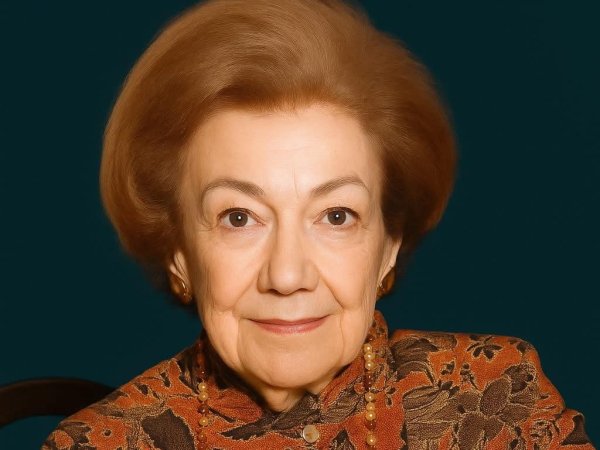
Ana Aslan has remained in history as the woman who dared to challenge one of humanity’s greatest fears: old age. More than a physician or researcher, Ana Aslan was a complex personality, driven by a profound belief, expressed simply and firmly: “People do not die of old age, but of disease.” This conviction became the axis around which she built her entire career and personal life.
An exceptional personality and a creed that changed medicine
Elegant, rigorous, and extremely disciplined, Ana Aslan worked up to 12 hours a day, deliberately sacrificing her personal life for her profession. She never regretted this path, considering the present and the future more important than the past.
Her discoveries revolutionized world geriatrics, and her inventions turned Romania into an international landmark in the fight against aging.
Childhood, adolescence, and the struggle to become a physician
Ana Aslan was born in Brăila on January 1, 1897, the youngest child of Sofia and Margarit Aslan. The death of her father, when Ana was only 13 years old, led to the family’s move to Bucharest, where she continued her studies. In 1915 she graduated from the Central School, and during adolescence she dreamed of a career unusual for a woman of that era: becoming a pilot. She even flew in a small Bristol–Coandă-type aircraft, an experience that strengthened her daring spirit.
Her decision to attend the Faculty of Medicine was met with strong opposition from her mother, who believed medicine was not a suitable profession for a woman. To convince her, Ana resorted to an extreme form of protest: a hunger strike. In the end, she followed her vocation and studied medicine between 1915 and 1922, a period marked by the harsh realities of the First World War.
Professional training and the first medical research
During the war, Ana Aslan cared for wounded soldiers in military hospitals behind the front in Iași, an experience that strengthened her psychological resilience and empathy for human suffering. After the war, she returned to Bucharest, worked alongside neurologist Gheorghe Marinescu, and became a preparator at Clinic II, where she prepared her doctoral thesis.
Her medical career included work at major hospitals such as Filantropia Hospital, the Clinical-Medical Institute of the Faculty of Medicine in Bucharest, the Medical Clinic in Timișoara, and the CFR Hospital. In 1949, she was appointed head of the Physiology Section at the Institute of Endocrinology, where she began research that would fundamentally change geriatrics.
The discovery of procaine and the birth of Gerovital H3
Ana Aslan’s research initially focused on the use of procaine in rheumatic diseases. A particular case—that of a student bedridden due to a severe arthrosis crisis—demonstrated spectacular treatment effects. The studies were later extended to a nursing home, where the results confirmed the role of procaine in alleviating age-related dystrophic disorders.
The conclusions were remarkable: the aging process could be slowed by nearly 40%. In 1952, Ana Aslan invented Gerovital H3, a biotrophic product of Romanian origin that quickly became famous worldwide. Gerovital was approved in the form of tablets, therapeutic cream, and hair lotion, and was distributed through the official pharmaceutical network.
The first institute of geriatrics and gerontology in the world
Also in 1952, on January 22, at Ana Aslan’s initiative, the first institute of geriatrics in the world was founded in Bucharest, with the purpose of conducting clinical gerontology research and providing medical care for the elderly. Ana Aslan became the director of the Institute of Geriatrics and Gerontology, a position she held until the end of her life.
The institute was a model of organization and efficiency and was later recommended by the World Health Organization as an example for similar institutions worldwide. It was here that the innovative concept of “prophylaxis of aging” was developed, emphasizing prevention and the maintenance of quality of life at advanced ages.
International recognition and new medical inventions
The research results were published in 1955 in the paper “Novocaine – eutrophic and rejuvenating factor,” co-authored with C. I. Parhon. Starting in 1958, Gerovital began to be produced on a large scale and was patented in more than 30 countries. Its effects on the autonomic nervous system and on psychological disorders associated with aging were confirmed by international studies.
In 1974, Ana Aslan was elected a member of the Romanian Academy. Two years later, she obtained the patent for Aslavital, a product intended for therapy of the nervous system and cardiovascular apparatus, developed together with pharmacist Elena Polovrăgeanu. In 1984, Aslavital was approved for children as well, with significant results in treating nervous deficiencies.
The institute, famous patients, and the conflict with the communist regime
Ana Aslan’s clinic became a place of pilgrimage for world personalities: Pablo Neruda, Salvador Dalí, Charlie Chaplin, Charles de Gaulle, Indira Gandhi, Marlene Dietrich, and Jacqueline Kennedy were among her patients. At the same time, her inventions were bringing the Romanian state estimated revenues of 15–17 million dollars annually.
Despite this, her popularity disturbed the communist regime, especially Elena Ceaușescu. Ana Aslan was sanctioned for refusing to charge fees to abandoned elderly people hospitalized in the “Long-Term Care Ward,” a nursing home she had founded. Huge sums were imputed to her, and the legal battle with the authorities lasted seven years.
The final years and the legacy of a legend
Ana Aslan was acquitted only in December 1987, just a few months before her death. She died in 1988 at the age of 90, convinced that it was not old age, but illness that caused her end. Her wish to be buried according to Christian rites was denied, and the funeral took place in silence at Bellu Cemetery.
Ana Aslan’s legacy, however, remains alive. Through her discoveries, the institute she founded, and the global impact of her research, the Romanian scientist proved that science, passion, and courage can radically change the way humanity understands aging and longevity.
We also recommend: Who was Mina Minovici, the doctor who founded Romanian forensic medicine and the institute that today bears his name