Alexandru D. Xenopol, the mentor of Nicolae Iorga, one of the greatest historians of the Romanians, has a street bearing his name in Bucharest
- Articles
- 30 JUL 26
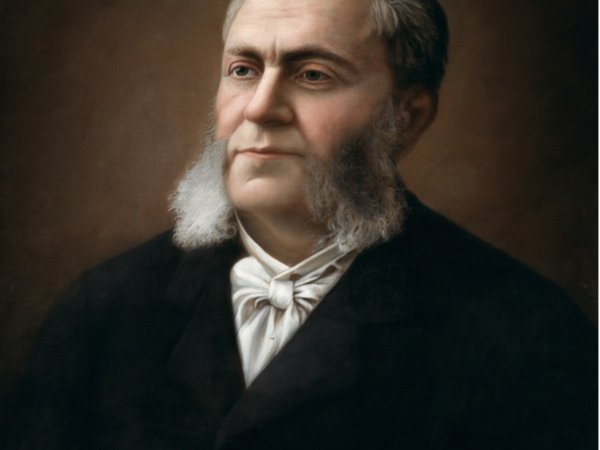
Few Romanian historians have influenced the way the nation's past is understood as profoundly as Alexandru Dimitrie Xenopol. A rigorous researcher, respected professor, jurist, philosopher, and publicist, Xenopol was one of the scholars who laid the foundations of modern Romanian historiography. His name is forever linked to the monumental work The History of the Romanians in Trajan's Dacia, a masterpiece that transformed the way the evolution of the Romanian people was perceived and continues to serve as a reference for historians today. The importance of his contribution extends far beyond historical research. Alexandru D. Xenopol educated generations of intellectuals, and among those deeply influenced by him was Nicolae Iorga, a figure still regarded as one of the brightest minds in Romanian culture. In recognition of his outstanding achievements, the Romanian capital preserves his memory through a street that bears his name. Alexandru D. Xenopol's life is remarkable not only because of his academic accomplishments but also because of the striking contrast between his intellectual glory and the final years of his life, marked by illness, suffering, and financial hardship. His story is one of talent, relentless work, and sacrifice in the service of Romanian culture.
A studious child who discovered his passion for history at an early age
Alexandru Dimitrie Xenopol was born in Iași on March 23, 1847, during a period when the Romanian Principalities were undergoing significant political and cultural transformations. The city where he was born was one of the most important intellectual centers of Moldavia, and the environment in which he grew up provided him with access to a solid education from an early age.
From his earliest years, Xenopol demonstrated a natural inclination toward learning and a deep curiosity about the past. He attended primary school at the Greek-French boarding school run by Constantin Athanasiade and later at the Trei Ierarhi Primary School, where he was taught by the educator I. A. Darzeu. His teachers quickly recognized the intelligence and diligence of the young student, who stood out for his discipline and his constant desire to learn.
His educational journey continued at the former Mihăileană Academy and the Academic Institute of Iași, institutions that represented the pinnacle of Romanian education at the time. There, he had the privilege of studying under distinguished professors such as Titu Maiorescu, Nicolae Culianu, and Grigore Cobălcescu, all of whom played an important role in shaping his intellectual development.
The results soon followed. In June 1867, Alexandru D. Xenopol graduated from high school by ranking first in the Baccalaureate examination, confirming the reputation of an outstanding student that he had built throughout his school years.
Studies in Germany and the beginning of an impressive career
The success he achieved in Romania opened the door to university studies in Germany, one of Europe's leading academic centers during the nineteenth century. In the autumn of 1867, benefiting from a scholarship granted by the Junimea Society and the Iași City Hall, Xenopol left for Berlin to study philosophy and law.
His experience in Germany proved essential to his intellectual formation. Contact with the great European universities gave him access to the most modern research methods and to the philosophical and historical ideas that dominated the Western academic world.
His efforts were rewarded in 1871 when he earned two doctoral degrees: one in law from Berlin and another in philosophy from Giessen. This double specialization demonstrated not only his exceptional intellectual abilities but also his determination to understand historical phenomena from multiple perspectives.
After returning to Romania, Alexandru D. Xenopol began his career in the judiciary. He practiced law and served as a public prosecutor, but his passion for education and research led him to become involved in teaching at the same time. He thus joined the faculty of the Academic Institute, where he began educating new generations of students.
The founder of the chair of national history at Iași
The moment that would define his entire academic career came in 1883, when Alexandru D. Xenopol established the Chair of National History at the University of Iași.
It was an extremely important step in the development of Romanian higher education. For the first time, the study of Romanian history benefited from a well-organized academic framework, and historical research began to acquire the rigor characteristic of Europe's leading universities.
Three years later, Xenopol became the holder of this chair, a position from which he decisively influenced the development of Romanian historiography. His lectures were appreciated for their clarity, thorough documentation, and the way he succeeded in turning the past into a logical and coherent narrative.
It was also in the lecture halls of the University of Iași that Nicolae Iorga received part of his education. The relationship between the two men would go far beyond the usual bond between professor and student. Alexandru D. Xenopol became his mentor, and the influence he exercised on the young Iorga contributed to the development of one of the greatest Romanian historians of all time.
Xenopol's educational legacy is just as important as his scholarly one, because his ideas were continued and further developed by his disciples.
His activity within Junimea and his involvement in public life
Beyond his academic work, Alexandru D. Xenopol was actively involved in the cultural and intellectual life of his era.
He became the secretary of the Junimea Society, succeeding Iacob Negruzzi. During this period, he contributed extensively to the magazine Convorbiri Literare, one of Romania's most prestigious literary and cultural publications.
However, Xenopol was never an intellectual willing to accept the dominant opinions without reservation. Although he respected Titu Maiorescu, he did not always share the Junimist leader's views regarding Romania's political and cultural development.
These differences of opinion are evident in articles such as National Culture and Studies on Our Present Condition, published in Convorbiri Literare. In them, Xenopol presented his own convictions regarding the modernization of Romanian society and the role of national culture.
In 1878, he left Junimea and joined the group of moderate liberals together with Vasile Conta, later becoming a member of the National Liberal Party.
His convictions were rooted in the ideals of the 1848 Revolution, and the positions he adopted on issues such as the national question and the condition of the peasantry anticipated many of the ideas that would later be promoted by Nicolae Iorga.
The History of the Romanians in Trajan's Dacia, the work that brought him immortality
Between 1888 and 1893, the work that would forever establish him as a landmark of Romanian historiography was published: The History of the Romanians in Trajan's Dacia.
The completion of this monumental work required years of meticulous research, consultation of an impressive number of historical sources, and the writing of extensive volumes that offered a coherent picture of the evolution of the Romanian people from the earliest times.
For Xenopol, history was not merely a succession of events or reigns. He sought to explain the causes behind historical transformations and the mechanisms through which societies evolve. It was precisely this modern approach that distinguished him from many of his contemporaries.
His work quickly became one of the most important historical syntheses ever produced in Romania and served as the starting point for numerous later studies.
The significance of his writings extended beyond Romania's borders, earning appreciation in European academic circles, where Xenopol was already recognized for his contributions to the philosophy of history.
Historian, philosopher, and writer
Although he is best known as a historian, Alexandru D. Xenopol's intellectual interests extended much further.
He published works on philosophy, essays, and studies dedicated to the evolution of society, attempting to identify the laws governing historical processes. These concerns place him among the important thinkers of late nineteenth-century Europe.
At the same time, literature occupied a special place in his intellectual pursuits. Xenopol wrote numerous poems and pastoral poems, which were published in the journal Arhiva under the pseudonyms I. Laur and Rama.
These literary works reveal the sensitivity of a man who, beyond the rigor of the scholar, also possessed a deeply artistic side. Although his literary activity never achieved the fame of his historical works, it completes the portrait of a multifaceted intellectual interested in every form of culture.
International recognition and an end marked by suffering
Alexandru D. Xenopol's prestige was confirmed through his election as a member of the Romanian Academy and through his membership in numerous European scientific institutions. His research in history and philosophy was appreciated beyond Romania's borders, and his name became well known in Western academic circles.
Despite this recognition, the final years of his life were far removed from the intellectual success he had once enjoyed. Illness severely affected his health, eventually leaving him paralyzed and living in difficult financial circumstances.
His destiny illustrates the tragedy experienced by many of the great intellectuals of his time, who devoted their entire lives to research and education without ever achieving financial security. Despite these hardships, Xenopol never lost his passion for knowledge.
He passed away on February 27, 1920, leaving behind one of the most impressive historical legacies in Romanian culture. Today, Alexandru Dimitrie Xenopol is regarded as one of the founders of modern Romanian historiography. His works continue to be studied in universities, and his ideas about researching the past remain relevant to historians and scholars alike.
The fact that a street in Bucharest bears his name is a fitting tribute to the man who dedicated his entire life to understanding the history of the Romanian people and educating generations of intellectuals, including Nicolae Iorga. His legacy is found not only in the books he wrote but also in the way he contributed to building a modern historical consciousness based on research, evidence, and respect for documented historical truth.
We also recommend: The brightest mind in Romania’s history, treacherously killed by the Legionaries 85 years ago. Nicolae Iorga – the man, the historian, the legend