10 streets in Sector 1 of Bucharest that have interesting stories
- Articles
- 20 MAR 26
Sector 1 of Bucharest does not mean only expensive areas, office buildings, or elegant neighborhoods. Beyond its image as a privileged administrative and residential space, this sector preserves some of the most interesting layers of urban history in the Capital. Here old commercial roads, aristocratic boulevards, diplomatic streets, arteries with an interwar perfume, and places that went through spectacular transformations meet, from the Phanariot era and Belle Époque to the accelerated modernization of the 20th century. Many of these streets are important not only through their architecture, but also through the stories of the people who lived there, through the institutions they hosted, or through the role they had in the public life of the city. An article about the streets with interesting stories in sector 1 cannot be only an enumeration of famous names. The charm of these places lies precisely in the way each artery preserves a distinct identity. Some tell the story of old commercial Bucharest, others speak about the ambition of Europeanizing the Capital, while others refer to the cultural, political, or fashionable life of the city. In many cases, the buildings on these streets are themselves historical monuments, and the simple walk among them becomes a lesson in urban history.
Calea Victoriei, the street that became the showcase of Bucharest
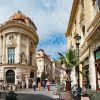
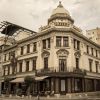
Few arteries in Bucharest have an aura comparable to that of Calea Victoriei. It is, probably, the most famous street in the Capital and one of the most loaded with memory. Over time, it was the place where palaces, hotels, newspaper headquarters, clubs, elegant shops, and cultural institutions were built, institutions that defined the image of the modern city. Buildings such as Nifon Palace or other monumental buildings on the route recall the era in which Calea Victoriei was, literally, the stage on which Bucharest wanted to display its refinement.
The story of this street is also connected to the transformation of Bucharest into a European capital. Here the elite walked, here fashion was seen, here the political and social pulse of the city was felt. Calea Victoriei was not only an important road, but a true urban theater. Even today, when many buildings have gone through degradation, restoration, or changes of function, the street continues to have that air of the symbolic backbone of Bucharest.
Elisabeta Boulevard, the place where modernity took shape
Queen Elisabeth Boulevard has a special story because it was one of the first great “Parisian” boulevards cut through Bucharest, a sign of the ambition of urban modernization from the end of the 19th century and the beginning of the 20th century. Its imposing buildings, some with Viennese or Art Nouveau influences, contributed decisively to the image of “Little Paris” that the Capital cultivated with stubbornness. Today’s Elisabeta Theater functions in a building that in the past had other uses and that recalls the cosmopolitanism of the area.
The street tells a story about the city that wanted to reinvent itself through architecture, alignments, perspective, and prestige. If you look carefully, Elisabeta is not only a transit boulevard. It is a visible archive of the urban taste of other times. It has something of the energy of early-20th-century Bucharest: desire for spectacle, taste for the monumental, and the obsession with appearing Western.
Lipscani Street, the echo of the merchants of old times
Although today it is associated especially with the Old Town and nightlife, Lipscani preserves in its name and structure the memory of old commercial Bucharest. The name comes from the commercial links with Leipzig, and the street was for a long time one of the most important arteries for trade, shops, and the circulation of goods. It recalls the merchant city, dense, lively, and full of contrasts, which existed before the appearance of the great boulevards.
Its story is interesting precisely because it illustrates the change of function of the city. From a street of merchants and workshops, Lipscani has become, in recent decades, a place of terraces, bars, and urban tourism. It is one of those streets that did not lose their centrality, but only changed their public and their rhythm.
Batiștei Street, between boyar life, culture, and discretion
Batiștei Street has a charm less spectacular at first sight, but very strong for those interested in old Bucharest. The area was connected to boyar houses, institutions, and a discreet atmosphere, slightly withdrawn from the great boulevards. Nearby there were and there are valuable buildings, and the entire central area in which it is inscribed is part of that urban geography where Bucharest still preserves the fine signs of its historical elegance.
Batiștei is the kind of street that does not shout, but says a lot. It does not necessarily have the glamour of Calea Victoriei, but it has that beauty of the city that lets itself be discovered in details: a house, a yard, a façade, a memorial plaque, an old proportion that survived among modern interventions.
Paris Street, the little diplomacy of Bucharest
Paris Street is one of those arteries that best express Bucharest’s fascination for the Western model. The name itself says something about the urban imaginary of the era in which the area developed. The neighborhood around Dorobanți Square and the adjacent boulevards became, over time, one of diplomatic representations, elegant villas, and a certain refined sobriety.
The story of Paris Street is connected not only to the name, but also to the way Bucharest wanted to project itself as a cosmopolitan city. On such streets one can see very well the break from the old Balkan city and the aspiration toward a Westernized, orderly, and elegant capital.
Modrogan Street, the address of power and discretion
Modrogan Street is interesting especially through its political and institutional role. It is not one of those streets you visit for architectural spectacularity at every step, but it is one of those addresses that accumulated over time prestige, influence, and a certain aura of power. In this part of sector 1, the proximity to institutions and important residences made the street acquire a special weight in the Bucharest urban landscape.
Modrogan tells the story of official Bucharest, of the city in which politics and urban space mixed permanently. It is a street that seems rather reserved, but precisely that makes it interesting: it has the air of places where many things are decided without noise.
Painter Arthur Verona Street, where the city came closer to art
Painter Arthur Verona Street is one of the streets that best show that sector 1 is not only about power, money, and institutions, but also about culture. Today, its name is immediately associated with the garden and the space around the House of University Staff, but also with cultural events, exhibitions, and the bohemian atmosphere of a central area that remained surprisingly friendly.
Its story is interesting because it shows another face of the city: a calmer, more cultivated, and less hurried one. It is one of those streets on which Bucharest seems, for a few minutes, more breathable and closer to itself.
Brezoianu Street, between press, culture, and transformation
Brezoianu is one of the best proofs that a street can concentrate several successive lives. Here there were buildings with an important role in the history of the press and of urban culture, and the story of Universul Palace and of the House with Statues connected to the newspaper “Universul” is one of the most beautiful in the area. The street went through periods of glory, then through oblivion and, more recently, through rediscovery.
Brezoianu tells a story about the city of printing houses, newspapers, and modernity built through paper, news, and public opinion. At the same time, it is also a street of urban reconversion, because many historical spaces here were put back into the cultural or commercial circuit, without completely losing their memory.
Aviatorilor Boulevard, the monumentality of an era
Aviatorilor Boulevard is not only a wide and elegant artery, but also one that speaks about the prestige of the Romanian state and about the way interwar Bucharest built its great symbolic axes. The proximity to Victory Square, the Arch of Triumph, and the green areas in the north of the city transforms it into a boulevard of representation, not only of circulation.
Aviatorilor has something solemn and calm at the same time. It is not a street of chance, but one of clear urban planning intention. It is the kind of place that shows how the city wanted to stage itself, with broad perspective, vegetation, and buildings that breathe status.
Kiseleff Road, promenade, prestige, and urban memory
Kiseleff Road is one of the most elegant arteries in sector 1 and one of the most loved by Bucharest residents, precisely because it combines the function of circulation with that of promenade and representation. Its connection with the northern area, with the parks, with the elegant residences, and with the public life of other times transforms it into a major landmark of the city.
The story of the road is connected to the idea of breathable, tree-lined, and ceremonial Bucharest. It is one of the few arteries that preserved relatively well the feeling of scale and refinement. Even today, when traffic changes the perception a lot, Kiseleff continues to transmit something of the old prestige of the Capital.
Streets that tell the history of the city better than a manual
The ten streets in sector 1 are not only points on the map, but distinct chapters in the history of Bucharest. Some speak about trade and beginnings, others about modernization, about elite, about press, about culture, or about power.
Together, they show that the city was not built uniformly, but from overlapping layers, sometimes contradictory, but precisely for that reason fascinating. Sector 1 concentrates a large part of this urban memory, and the simple crossing of these arteries can become a living lesson about how the Capital was formed.
The charm of Bucharest often lies in such streets. Not only in the great monuments, but in the way a façade, a name, an old house, or an intersection opens a story. And in sector 1, such stories are everywhere, you only need to have the patience to see them.
We also recommend: The first boulevard in the history of Bucharest, laid out by mayor Pache Protopopescu. Yesterday, Academia. Today, Queen Elisabeth