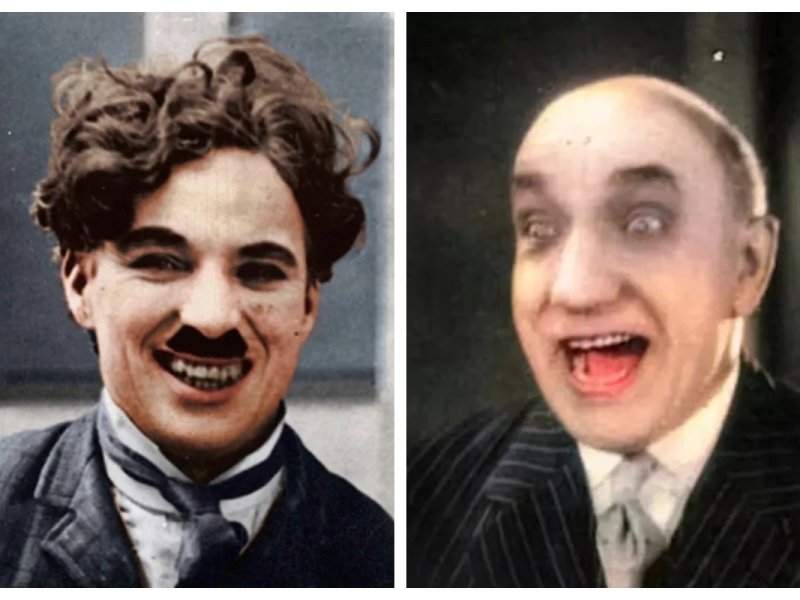
How the legendary Charlie Chaplin and Constantin Tănase met: “Tell him I’m Romanian!”
By Bucharest Team
- Articles
Cultural history preserves numerous spectacular moments in which great artists of the world crossed paths, exchanging ideas, emotions, and visions. One such special episode is the meeting between Constantin Tănase, an emblematic figure of Romanian theatre, and Charlie Chaplin, the genius of world cinematography. Although they came from different cultural spaces, the two were united by the same deep passion for comedy, stage expression, and social satire. The story of their encounter, which took place in Paris in the 1930s, remains one of the most charming and symbolic moments in the history of performing arts.
Constantin Tănase, the satirical spirit of interwar Romania
Born on January 5, 1880, in the town of Bârlad, Constantin Tănase was destined to become one of the most beloved figures of the Romanian stage. From a young age, he was drawn to theatre and to the power of the spoken word, and the beginnings of his career date back to the early years of the 20th century. His natural talent, combined with remarkable stage intelligence, quickly turned him into an actor appreciated by the public.
Tănase’s humor was not simple or superficial. It was based on keen observation of everyday realities, irony, and the courage to criticize the flaws of society. In a period marked by political and social turmoil, the actor chose to use the stage as an artistic platform, where laughter often became a subtle form of protest.
The revue theatre and the birth of a cultural symbol
A defining moment in his career was the founding of the famous theatre that today bears his name – the “Constantin Tănase” Revue Theatre in Bucharest. Here, the artist laid the foundations of a modern type of performance that combined music, dance, comic dialogue, and social satire.
The audience came not only for entertainment, but also for the messages hidden within jokes, couplets, and monologues. Tănase quickly became a symbol of free spirit, and his nickname, “Năsăilă,” was known throughout the country. Through his performances, the actor managed to create a deep bond with spectators, who recognized themselves in his witty and often bitter humor.
Charlie Chaplin, the artist who conquered the world without words
During the same period, thousands of kilometers away, Charlie Chaplin dominated world cinema. His iconic character, the Tramp, had already become a universal symbol of the ordinary man struggling against the injustices of society. Through silent films, Chaplin managed to convey emotion, revolt, and tenderness without uttering almost a single word.
His international success was immense, and his public appearances attracted attention wherever he went. Chaplin was not merely an entertainer, but a careful observer of the modern world, deeply concerned with themes such as poverty, alienation, and social inequality. It was precisely this humanistic vision that unknowingly brought him close to Constantin Tănase’s artistic spirit.
Paris in the 1930s, the place where destinies intersected
The meeting between the two took place in the 1930s, in a Paris vibrant with cultural life. The French capital was then a true magnet for artists from all over the world, hosting performances, social events, and major cultural gatherings.
Both Constantin Tănase and Charlie Chaplin were in the city for artistic engagements. The decisive moment occurred in an elegant venue – the El Garon restaurant – where artists, intellectuals, and public figures frequently met. At one table sat Tănase, together with his wife and the actress Mia Apostolescu, while at another table was Chaplin, already surrounded by the discreet admiration of those present.
The dance scene that stirred everyone’s admiration
The atmosphere in the restaurant came alive when Chaplin stood up to dance. The public immediately recognized him and applauded enthusiastically. Constantin Tănase, who sincerely admired the creator of Charlot, was among those who applauded warmly.
Shortly afterward, the Romanian actor decided in turn to invite Mia Apostolescu to dance. Although he had a robust build, Tănase moved with surprising ease, full of charm and natural confidence. His stage gestures and self-assurance drew the attention of everyone in the room, including Chaplin himself.
“Tell him I’m Romanian!”
Intrigued by Tănase’s energetic presence, Chaplin called over a waiter and asked who the man dancing so freely was. Not knowing exactly, the waiter assumed he was “a wealthy and eccentric American.” Later, approaching Tănase’s table, he conveyed Chaplin’s curiosity.
Tănase’s reply would become famous. Amused, yet determined to affirm his identity, the actor told the waiter: “Please go immediately and tell him that I am Romanian. Roumain… artist from Bucharest… Bucharest… comprenez?”
The message was delivered exactly, and the two artists smiled at one another from a distance. Moments later, as the tables were not far apart, they approached each other and shook hands, introducing themselves simply: “Tănase!” – “Chaplin!”
The moment delighted those present, and the orchestra resumed the music, inviting them once again to dance with their partners.
The influence of the meeting on Constantin Tănase
The encounter with Charlie Chaplin had a genuine impact on Constantin Tănase’s artistic evolution. Fascinated by the great actor’s physical expressiveness, the Romanian artist began to place greater emphasis on physical comedy in his performances.
Later on, his shows became more dynamic, blending satirical dialogue with gesture, movement, and lively rhythm. This combination attracted an even larger audience, strengthening his position as the leading figure of Romanian revue theatre. Meeting an international personality also offered him symbolic validation of his artistic value.
What Tănase meant for Chaplin’s artistic vision
For Charlie Chaplin, the contact with Constantin Tănase was a rare opportunity to discover Eastern European humor. The British actor was well known for his interest in diverse cultures and artistic expressions.
Observing how Tănase used satire to criticize social realities, Chaplin recognized a similar approach to his own artistic philosophy. The meeting reinforced his belief that humor is a universal language, capable of conveying serious messages beyond linguistic barriers. His films from the 1930s, which increasingly addressed social and human themes, clearly reflect this direction.
The artistic legacy of two great creators
Constantin Tănase remained in Romanian history as a pioneer of modern satire. His courage, artistic intelligence, and ability to transform reality into performance influenced entire generations of actors and comedians. The theatre that bears his name continues to be a cultural landmark to this day.
Charlie Chaplin, in turn, became an eternal figure of world cinema. His films are constantly studied, admired, and rediscovered, while his social messages remain strikingly relevant. The meeting with Tănase was one of those rare connections that prove how great spirits recognize each other beyond borders.
A story that proves the universal power of comedy
The encounter between Constantin Tănase and Charlie Chaplin was not merely a social anecdote, but a symbol of art’s power to unite people from different worlds. In a simple Parisian restaurant, two masters of laughter demonstrated that authentic humor has no nationality — only sincerity and depth.
Their story remains moving proof that sometimes a smile, a dance, and a handshake can connect artistic destinies and leave behind a cultural lesson that endures through time.
We also recommend: The Great Constantin Tănase, the Poor Boy Who Put Bucharest on the Map of Romanian Theater. He Put Cardboard in His Shoes and Ran Across the City for a Pretzel