The Great Constantin Tănase, the Poor Boy Who Put Bucharest on the Map of Romanian Theater. He Put Cardboard in His Shoes and Ran Across the City for a Pretzel
- Articles
- 03 DEC 25
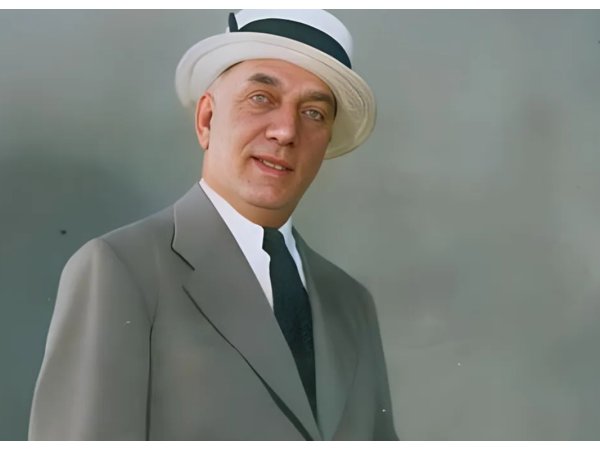
Constantin Tănase was born on July 5, 1880, in Vaslui, in a modest home, the son of Ion and Elena Tănase. His father worked as a lab assistant at Ortenski Pharmacy, the only one in town, while his mother took care of the household and the education of their son. From an early age, his life was marked by scarcity: food was often insufficient, and the cold Moldavian winters were harsh. Nevertheless, his childhood was sprinkled with songs and stories, which formed his first contact with the world of art and inspired him to dream of the stage.
Constantin Tănase’s Childhood: Between Stories and Hardship
From a young age, Tănase was drawn to theater. He never missed a performance when the military band played in front of the theater or when theater troupes visited the town. In a 1932 interview for the magazine Rampa, he recalled how he would sneak onto the stage, taking the double bass during the band’s performance, reaching the curtain.
His fascination with the stage became a concrete dream when Segalescu’s troupe came to Vaslui. Although he was still a child, his well-developed physique and knowledge of Yiddish allowed him to play the role of an innkeeper, confirming his vocation as an actor.
Adolescence and the Boy Known as “Năsăilă”
Tănase was not only talented but also strong and more developed than other children. His family was known for tall and long-lived people, and he stood out for his robust constitution and agility. At school, he was not among the top students, but his natural intelligence and charisma helped him overcome challenges. His school days were full of adventures and nicknames: one in particular, “Năsăilă” (The Mischievous One), would stay with him for life.
A legendary story involves the Turkish vendor Mehmet, who sold not only braga but also sweets. Tănase and a friend would eat and then run before paying, leaving the friend to be blamed. This prank eventually reached the school authorities, earning him a scolding and the lifelong nickname.
At 19, he attempted to enlist in the army but failed the medical examination. Undeterred, he persisted and was eventually assigned to the 1st Engineer Regiment in Bucharest in October 1899. His years in the barracks were tough, but they allowed him to combine military discipline with his passion for art.
First Teaching and Theater Experiences
Before formally pursuing theater, Tănase worked briefly as a teacher in Cursești, then in Hârșoveni. He discovered that his approach, based on kindness, music, and gymnastics, attracted students willingly, unlike traditional methods of coercion. Although effective, the local authorities disapproved and dismissed him.
In the regiment, he sang in the choir at Popa-Tatu Church and formed a small military theater troupe. There he discovered what he considered “the gateway to paradise” – the Conservatory, where he could learn the arts of the stage and music.
On the last day of enrollment, he received 5 lei from Vaslui, enough to pay the fee and buy three pastries. On exam day, he arrived in his military uniform, without other clothing, and his natural performance and humor earned him admission to C.I. Nottara’s comedy class.
Life as a Poor Student
Life in Bucharest was difficult. Tănase shared cold, damp rooms with his friend Bârlogeanu and lived in extreme poverty. He repaired his shoes daily with cardboard in the soles and, for a pretzel, would traverse the city selling grease for horses’ hooves.
Professor Nottara warned his students, “The actor’s glory is not earned sitting at a café.” Constantin combined military duties with studies, serving in the regiment, assisting in the disciplinary commission, singing in the church choir, and sometimes performing at the National Theater.
First Tours and Early Professional Career
After graduating from the Conservatory in 1905, Tănase and colleagues Belcot and Manolescu toured the country, facing extreme poverty. Third-class train rides, shabby hotels, poorly lit theaters, and provincial stages were grueling, yet his talent shone.
In Brăila, along with Alexandru Bărcănescu and others, he founded the Lirica Association, where he became stage director. Their performances began filling theaters, and Bucharest soon recognized him as a star.
Theater as a Weapon Against Hardship and War
1913 brought success, but also challenges: the Second Balkan War and mobilization sent him to Turnu Severin, where he suffered from food poisoning. During World War I, Tănase served in the 1st Engineer Regiment and continued to bring joy to hospitals and trenches, performing comedies and rhymes near the front lines.
In Iași, during the harsh winter of 1917, Tănase and his troupe faced severe shortages: there was no food, no firewood, and survival was a daily struggle. Yet they organized charity performances for the Red Cross and war orphans.
A touching episode involved two mutilated soldiers who, during a performance in a hospital, joined their beds to applaud together, symbolizing the power of theater to bring hope and relief even in the most extreme circumstances.
Constantin Tănase: The Legend of Romanian Laughter
After the war, Tănase became a symbol of Romanian comedy. His songs, satires, and vaudevilles offered optimism and humor, turning performance into a means of survival and protest. From the boy who put cardboard in his shoes and ran across Bucharest for a pretzel to the actor who conquered the city, Constantin Tănase proved that perseverance, talent, and tireless work can transform one’s destiny and influence a nation’s culture.
His legacy is indelible: he created a unique style of humor, placed Bucharest on the map of Romanian theater, and inspired generations to believe that, regardless of material conditions, dreams and talent can triumph.
We also recommend: The first theatre of the great Constantin Tănase: Năsăilă’s Cărăbuș, the former temple of Romanian comedy