What You'll Find at Bucharest's Markets, Week by Week, Through September and October
- Articles
- 01 SEP 26
On September 7th, Obor market doesn't smell like July anymore. The tomatoes are still piled high, the kapia peppers still spill out of their crates, but underneath, something new drifts through the stalls: the faint, slightly bitter scent of raw quince, like unripe apple skin. The woman at the corner stall, her apron stained with tomato juice, holds a quince up to your nose without asking and just says "smell it." She doesn't explain further — she knows you'll catch the difference yourself.
That's how markets in Bucharest shift at the start of September: not overnight, but in pieces, like a coat coming apart at the seams. One stall loses its summer tomatoes, another gains small, hard plums, a third suddenly smells of smoke, from someone grilling peppers for zacuscă right there on a gas burner, out in the open, smoke rising into a sky that's still summer-blue. Walk through Rahova or Obor once a week and you catch the transition frame by frame. Come once a month and all you see are two different seasons, with nothing linking them.
First week of September
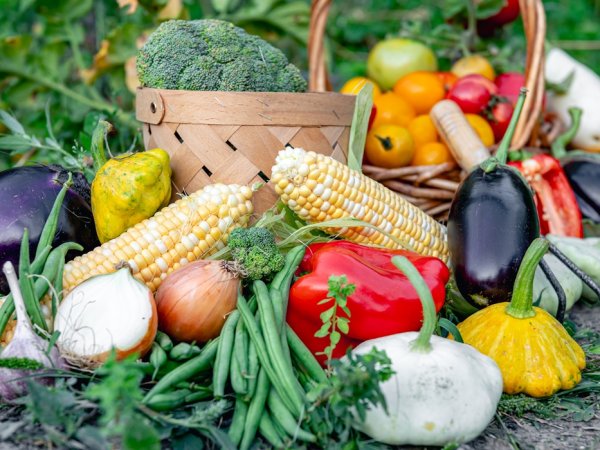
Summer doesn't end abruptly at the market. Tomatoes are still abundant, ripe, their thin skins splitting if you press too hard. Bell peppers and kapia peppers — the long, sweet red kind used for roasting — sit in heaps next to cucumbers and eggplants, same as in July. What shifts is subtler: among the crates of summer vegetables, the first quinces appear, greenish-yellow, with a fine fuzz on the skin that comes off on your fingers. Next to them, small, dense plums from the autumn varieties grown around Bistrița-Năsăud or in the orchards near Topoloveni — the kind meant for magiun, the thick, sugar-free plum spread Romanians cook down for hours, not for eating straight out of the bag.
In the morning, at the open-air stalls, the smell is an odd mix: sun-warmed tomatoes, damp dust from paths just hosed down, and occasionally smoke from a vendor roasting a sack of peppers on the spot for zacuscă, made to order. This is when families put up their first jars of the season, while peppers and eggplants are still cheap.
Second half of the month
Around September 15-20, the picture shifts visibly. Leeks, thin and green at the tip, show up in abundance and rank among the cheapest vegetables of the month. Green walnuts, their husks staining anyone's fingers black, reach the stalls — expensive, because their real season only lasts a few weeks. Table grapes, in heavy clusters, black or golden, take over the fruit stands visually, and a sweet-sour smell of must drifts near the stands where someone's already selling to people making their own wine at home.
Cucumbers and tomatoes start to retreat, though they don't vanish — they just stop being the main act. Autumn apples, varieties like Golden or Jonathan, take the place of the peaches and apricots that are already gone.
Late September into early October
This is where the market's overall color changes. Summer's bright greens and reds give way to heavier tones: the pale green-white of cabbage, the matte orange of pie pumpkin, the golden-brown of ripe quince. White and red cabbage arrive in bulk, in heavy heads, sometimes cut in half on the spot for anyone who doesn't need a whole one. The smell — sharp, slightly bitter, the smell of cut leaves — reaches you from several meters away, especially near the stands where someone's already shredding cabbage for pickling.
Pie pumpkin, with its ridged orange skin, sits in big, hard-to-miss piles. Beets and new carrots, still crusted with dirt, round out the root vegetables that are just getting started. Quinces hit full ripeness now — firm, yellow, with a sweet, floral scent you can catch from a stall away, stronger than any other fresh fruit in the market at this point.
October
The market turns into an exercise in root vegetables: parsnip, celeriac, parsley root, kohlrabi with its violet-green skin. Wild mushrooms join in — hribi (porcini) and ghebe (honey mushrooms) brought in from the wooded areas around the capital or from Prahova — smelling of damp earth and bark, nothing like mushrooms grown in a shed. Dried walnuts, ready to crack open, replace the green ones from a month earlier. Chestnuts show up mid-month, a novelty at first, then more and more common.
This overlaps with the students' first school break, from Saturday, October 24, through Sunday, November 1 — the kind of week when a lot of Bucharest families make their last big stock-up before winter: sacks of potatoes, net bags of onions, jars lined up on the balcony for pickling.
The last quince
Toward the end of October, at a stall in Rahova, a woman holds a quince in her hand and smells it before dropping it in her bag. The vendor watches and says, like it's nothing worth remarking on, "These are the last good ones, next week we'll only have the fallen fruit." He doesn't explain further. She buys every one he has left on the table, eight or nine of them, enough for jam and enough for compote to get through winter.
No one at the market keeps a calendar posted anywhere. The vendor knows, from memory and from the stock that stops arriving, when a season ends. Regular shoppers learn the same thing over time — not from reading, but from what's missing the next week at the stall they visited the week before.
Also recommended Where to find the best autumn vegetable markets in Bucharest