“To be an actor means to be a slave!” Aristizza Romanescu, the diva of the Bucharest stage during the Belle Époque, died in suffering and extreme poverty
- Articles
- 18 JUN 26
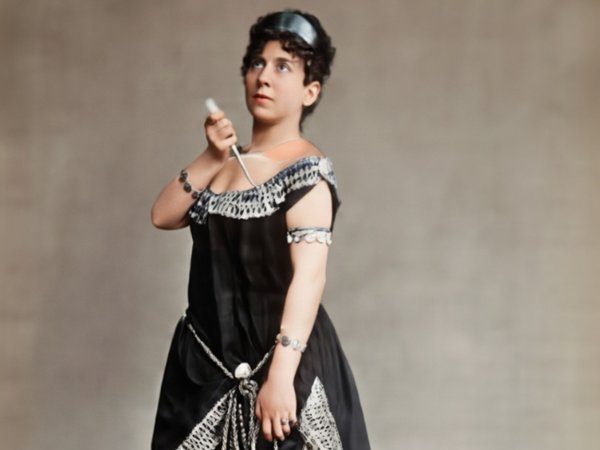
The history of Romanian theatre is marked by the names of great artists who elevated the stage to the rank of art and left behind unforgettable performances. Among these personalities was Aristizza Romanescu, one of the most brilliant actresses of the Belle Époque period in Romania, a woman who experienced glory, applause and public admiration, but who spent the last years of her life in loneliness, illness and poverty. Her destiny is one of the most dramatic examples of the contrast between fame on stage and the painful reality behind the curtain. Although she was considered one of the greatest actresses of her generation, performing hundreds of characters and training future legendary names of Romanian theatre, Aristizza Romanescu reached old age dependent on the help of her former students and the support reluctantly offered by the authorities. In her memoirs, published after her retirement from activity, the great artist left a moving confession about the sacrifices that the life of an actor requires: “To be an actor means to be a slave; to have no rest, no holidays, no child, no affection, no heart. Until death! The saddest thing is the heartbreaking misery of the comedian, who lives only for others.”
Childhood in a family of artists and the first steps on the stage
Aristizza Romanescu was born in Craiova, on December 24, 1854, into a family in which theatre represented a true tradition. She came into the world in a privileged artistic environment, being the daughter of the actor Costache Dimitriad and having in her family tree important names of the Romanian stage, such as Teodor Teodorini and Maria Teodorini. Also, the famous actress Raluca Stavrescu was her aunt.
In such a family, the road to the stage seemed almost predetermined. Aristizza grew up among actors, sets, rehearsals and performances, and her passion for dramatic art appeared from childhood. She received her first acting lessons from her own father, who noticed his daughter’s talent and artistic sensitivity.
During her teenage years, while studying dramatic art in Craiova, the young woman made her debut on the stage of the city’s theatre. She was only 18 years old when she first stepped into the spotlight, playing the role of a little boy in the troupe of the well-known couplet performer I. D. Ionescu.
Although she was only at the beginning of her journey, her talent was immediately noticed. Her debut represented the first step toward a spectacular career that would last three decades and transform her into one of the most respected names in Romanian theatre.
The rise to the glory of the Romanian stage
Only one year after her debut, Aristizza Romanescu received an engagement at the Theatre of Iași, one of the most important cultural institutions in Romania at that time. Here, she had the opportunity to demonstrate her artistic qualities and attract the attention of major personalities of cultural life.
Her talent was noticed by Ion Ghica, who was then the director of the National Theatre in Bucharest, and he offered her the leading role in the play “Defeated Rome”. This opportunity represented the moment that permanently changed her destiny, and in 1877 she became an employee of the Dramatic Society of Bucharest.
Eager to perfect her style of interpretation and become familiar with the great European trends in theatre, Aristizza Romanescu left for Paris to study dramatic art. The French capital was, at that time, the cultural centre of Europe, and the French experience had an important influence on her artistic vision.
She was accompanied on her study journey by her husband, the actor Grigore Manolescu, one of the most appreciated performers of the era. Her contact with Western theatre gave her a broader perspective on the profession and made her reflect on the tendency of Romanian artists to copy foreign models without taking local realities into account.
In her memoirs, Aristizza Romanescu wrote lucidly about this problem: “In theatre, as in our entire daily life, we have always had the sin of imitating foreign countries, especially Paris, without thinking that the living conditions there are different from those here.”
An impressive career and an undeniable artistic legacy
After returning to the country, Aristizza Romanescu became a full member of the National Theatre of Bucharest and continued to conquer audiences through memorable performances. In numerous plays, she performed alongside her husband, Grigore Manolescu, forming one of the most appreciated artistic couples of the period.
The premature death of Grigore Manolescu represented a painful blow for the actress. Later, she remarried the actor Ion Romanescu, with whom she continued her personal and professional life.
During approximately 30 years of theatrical activity, Aristizza Romanescu played more than 400 roles, demonstrating a rarely encountered versatility. Each of her appearances on stage was appreciated for the refinement of her acting, the sensitivity with which she built her characters and her ability to transmit authentic emotions to the audience.
Besides her work as an actress, she played an essential role in forming a new generation of artists. She was a professor of declamation at the Conservatory of Dramatic Art in Bucharest, where she contributed to the education of names that would mark the history of Romanian theatre, including Maria Ventura and Lucia Sturdza Bulandra.
Thus, her influence was not limited only to her own performances, but extended to the entire development of Romanian theatrical art.
Glory that did not bring her a peaceful old age
Although her name was among the gallery of great Romanian actors, the end of Aristizza Romanescu’s life was marked by material deprivation and suffering. After retirement, the pension she received was so small that it barely allowed her to survive.
Her dramatic situation determined the authorities to grant her, in 1904, an aid of only 100 lei, offered “out of the mercy of the state”. For a woman who had dedicated her entire existence to theatre and who had contributed to the development of Romanian culture, this form of support was insufficient and represented a sad image of the way artists were treated after the end of their careers.
The First World War found her in Iași, the city where she had retired after leaving the stage. The difficult times of the conflict further worsened her financial situation. Her modest pension could not provide decent living conditions, and illness and old age made everyday life a continuous struggle.
Her former students, who had in the meantime become great actors of Romania, tried to ease her suffering and collected money to help her overcome the difficult period. Their gesture represented proof of the respect and gratitude that the following generations felt for the woman who had been their mentor.
The death of a legend and the destiny of an artist who gave everything to the stage
Aristizza Romanescu passed away on June 4, 1918, in Iași, ill and in a state of deep poverty. Her end contrasted painfully with the success she had enjoyed during her years of glory, when she was considered one of the great divas of the Bucharest stage during the Belle Époque.
Her life remains a story of talent, sacrifice and absolute devotion to art. For three decades, Aristizza Romanescu lived for theatre, giving up the comfort of an ordinary existence and offering the public hundreds of memorable characters.
Today, her name occupies a place of honour in the history of Romanian culture. Beyond the applause that faded away once the curtain fell, Aristizza Romanescu left behind a legacy that continues to inspire: that of the artist who dedicates their entire life to creation, even when the personal sacrifices are immense.
We also recommend: How Ion Luca Caragiale “drove away” Aristizza Romanescu and Constantin Nottara from the National Theatre of Bucharest