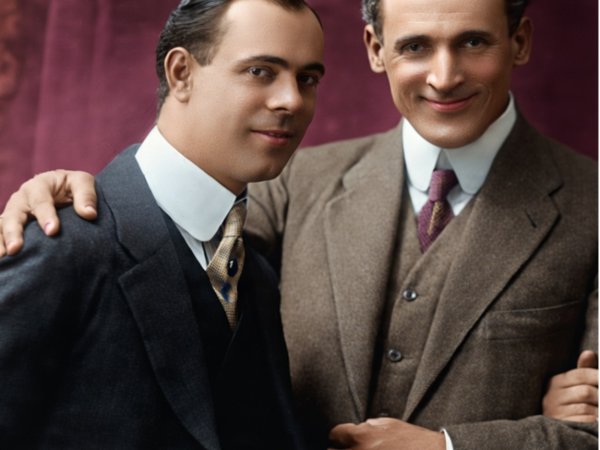
The story of the great artist Gogu Carussy, one of the pioneers of Romanian operetta
- Articles
- 15 JUN 26
Gogu Carussy was one of the most appreciated operetta singers in Romania at the beginning of the 20th century, being part of the generation of artists who laid the foundations of modern Romanian operetta. Although his name is no longer as well known today among the general public as those of other great performers of the era, such as Nae Leonard or Velimir Maximilian, Gogu Carussy played an important role in the development of Romanian lyrical theatre and in the consolidation of the first professional operetta companies in Bucharest.
The rise on the Romanian operetta stage
At the beginning of the 1900s, operetta was a musical genre undergoing rapid development in Romania. One of the essential figures of this period was the composer and tenor Constantin Grigoriu, the founder of the first stable operetta ensemble in the country, the Romanian Lyric Company. He had a remarkable talent for discovering and promoting young artists, and among those who benefited from his support was Gogu Carussy. His name appears among the artists promoted by Grigoriu, alongside Nicolae Leonard, Velimir Maximilian, Nae Ciucurette, Florica Florescu, Elena Teodorescu Leonard and many others.
An important moment in Gogu Carussy’s career took place in the first years of the 20th century, when he performed within Constantin Grigoriu’s company, one of the most influential operetta companies of the period. Through these performances, he became part of the first generation of interpreters who transformed operetta from an occasional entertainment spectacle into a cultural phenomenon with a loyal audience.
Throughout his artistic activity, Carussy appeared alongside important names of the Romanian lyrical and theatrical scene. His presence in the productions of the period contributed to the popularity and development of operetta, a genre that was gaining more and more appreciation among the Bucharest public.
Collaboration with the great artists of the era
Gogu Carussy’s career crossed paths with some of the most important personalities of the Romanian stage during the Belle Époque. He collaborated with artists such as Nae Leonard, Velimir Maximilian and Nae Ciucurette, performers who left a lasting mark on the history of Romanian musical theatre.
In 1906, together with Constantin Grigoriu, Velimir Maximilian and Nae Ciucurette, Gogu Carussy participated in the foundation of the famous Operetta Society, within which he worked for many years. This moment confirmed that he was not only a simple performer, but also an active participant in the organization and development of Romanian operetta.
Gogu Carussy also appeared in numerous productions alongside notable artists of the time. Historical records mention his collaborations with performers such as Florica Florescu and Vasile Maximilian in operetta performances staged in Bucharest during the early decades of the 20th century.
Gogu Carussy’s artistic legacy
Even though time has erased part of the information regarding Gogu Carussy’s personal life, his artistic activity remains connected to the beginnings of Romanian operetta. He belongs to the generation of pioneers who created the first professional operetta troupes and shaped the public’s taste for musical theatre.
The history of Romanian operetta preserves his name alongside other great artists from the beginning of the 20th century. The fact that he was promoted by Constantin Grigoriu, performed with the most important names of his era, and participated in the establishment of the Operetta Society demonstrates his status as a respected artist of his time.
Today, although the documents preserved about Gogu Carussy are limited, historical sources that mention his activity confirm that he was one of the people who contributed to the development of Romanian operetta, an artistic genre that would later enjoy great popularity in the decades that followed.
We also recommend: Velimir Maximilian, the best Jupân Dumitrache of the theatre, the sacred monster of operetta in Belle Époque Bucharest