The story of Mircea the Shepherd, the cruel ruler who killed his boyars at the Princely Court in 16th-century Bucharest
- Articles
- 06 FEB 26
The history of Bucharest is not made up solely of moments of glory, urban development or periods of cultural effervescence. Behind the walls of the Princely Court and on the still muddy lanes of the 16th-century market town, episodes of extreme violence also unfolded, leaving deep marks on collective memory. Sadism and cruelty, although not dominant, did exist and manifested brutally, especially during times of political instability. From the assassination of boyars meant to intimidate politically, to public executions designed to inspire fear, Bucharest experienced the dark face of power.
Cruelty as a political instrument in the Romanian Lands
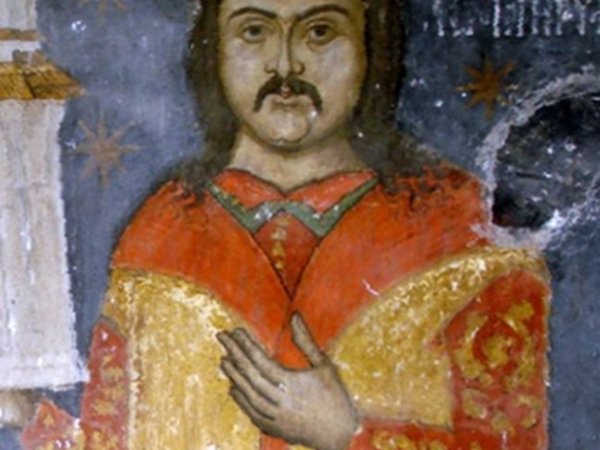
One of the darkest figures in the history of Wallachia remains Mircea the Shepherd, the ruler who earned his reputation as a tyrant through extreme methods of consolidating authority. His reign is closely linked to crimes committed right at the Princely Court in Bucharest, where boyars were summoned under the pretext of loyalty and ended up killed without trial.
In the 15th–16th centuries, rule in the Romanian Lands was deeply unstable. The throne was not hereditary in the strict sense, and the appointment or confirmation of a ruler depended largely on the will of the Ottoman Porte and on power games among the great boyar families. In this context, cruelty often became a political instrument. A ruler perceived as weak or indulgent risked being quickly removed through plots or betrayal.
In order to ensure political survival, many rulers resorted to acts of violence meant to inspire fear. The boyars, the main rivals of princely power, were the preferred targets. Their physical elimination was not only revenge, but also a message sent to those who remained: any opposition would be paid for with one’s life. In this harsh landscape, Mircea the Shepherd stands out through the frequency and scale of the massacres he ordered.
Mircea the Shepherd and the road to the throne
Mircea the Shepherd came to the throne of Wallachia during a tense period marked by internal conflicts and external pressure. He ruled three times: between January 1545 and November 1552, then briefly between May 1553 and February 1554, and his final reign lasted from January 1558 to September 1559. His official entry into Bucharest took place on March 17, 1545, a moment that marked the beginning of one of the bloodiest reigns in the city’s history.
The chronicles of the time record that, just two weeks after his installation, Mircea ordered the killing of several boyars. This was not an isolated act, but the beginning of a deliberate policy of terror. The boyars were not only executed, but also subjected to torture before death, in order to reveal where they had hidden their wealth. The confiscated money and jewels ended up in the princely treasury, financially strengthening the reign, but also fueling the hatred of the nobility.
The massacre of the boyars and the first revolts
The wave of killings unleashed by Mircea the Shepherd had rapid effects. The relatives of the victims and a large part of the boyar class chose the path of exile, taking refuge in Transylvania and Hungary. There, the exiles attempted to unite their forces and overthrow the ruler, whom they regarded as a dangerous tyrant.
The first serious attempt took place in August 1546, when the exiled boyars gathered an army and entered Wallachia. The decisive confrontation unfolded at Periș, on August 24. Mircea the Shepherd managed to surprise his adversaries and annihilate them, demonstrating not only cruelty, but also military skill. The victory at Periș consolidated his position, but did not put an end to the opposition.
A climate of continuous terror
After the defeat of the exiled boyars, Mircea the Shepherd intensified repression. Those who remained in the country lived under a permanent threat. At the beginning of 1548, a new departure into exile of the boyars took place, a sign that fear had exceeded the tolerable threshold. The exiles reorganized and, in the same year, launched a new attempt to overthrow the ruler.
This time, the boyars brought at their head a young pretender and were supported by approximately one thousand Székely mercenaries. Their plan relied on the presumed uprising of the population, dissatisfied with Mircea’s tyranny. Popular support, however, did not materialize, and the confrontation once again ended with the ruler’s victory. Following this failure, terror became even more pronounced.
The massacre at the princely table
One of the most shocking episodes of Mircea the Shepherd’s reign took place just before the decisive confrontation with Radu Ilie, a pretender supported by the Habsburgs. Fearing betrayal, Mircea decided to prevent any plot through an extreme act. Two days before the battle, he invited the boyars to a meal, a gesture that traditionally symbolized reconciliation and trust.
In reality, the feast turned into carnage. Forty-seven boyars were killed right at the princely table, without warning. The act became emblematic of Mircea the Shepherd’s cruelty and consolidated the reputation of the Princely Court in Bucharest as a place of death, not only of power.
Temporary fall and refuge at Giurgiu
The decisive battle between Mircea the Shepherd and Radu Ilie was fought at Mănești, on November 16, 1552. This time, fortune was no longer on the ruler’s side. Radu Ilie emerged victorious, and Mircea was forced to take refuge together with his family at Giurgiu. The defeat, however, did not mean the end of his political ambitions.
Return to the throne and a new massacre
The death of Radu Ilie and the sultan’s approval allowed Mircea the Shepherd to return to the throne in 1558. His return caused a new wave of panic among the boyars, many of whom once again chose exile beyond the Carpathians. Aware of his lack of internal support, Mircea resorted to a perfidious strategy.
He promised the exiled boyars that, if they returned and swore allegiance to him, they would be forgiven. The reception took place at the Princely Court in Bucharest, in the presence of Ottoman officials, in order to give the impression of genuine reconciliation. After the Ottoman representatives left, Mircea nevertheless ordered the killing of the boyars, led by the grand vornic Stănilă.
The first killing of members of the clergy
The day of February 3, 1558, remained in history not only because of the massacre of the boyars, but also because of an unprecedented fact: for the first time, the victims of repression also included members of the clergy. This gesture crossed an important symbolic boundary, showing that no one was safe in the face of the ruler’s will. Religious authority, usually respected even in the harshest regimes, was trampled underfoot.
Fear, the key to maintaining power
The case of Mircea the Shepherd perfectly illustrates the political logic of the era. The boyars were the main target of rulers, but even Ottoman envoys were not completely safe from violence. A leader had to be perceived as unforgiving and unpredictable in order to keep his throne. Fear was the bond that held together a fragile reign.
In 16th-century Bucharest, the Princely Court was not only an administrative center, but also a stage of terror. The crimes of Mircea the Shepherd turned the city into a symbol of political cruelty, leaving a lasting imprint on its history.
The legacy of a feared ruler
Although Mircea the Shepherd was not devoid of administrative or military qualities, his historical memory is dominated by violence and bloodshed. His reign demonstrates how fragile power was in the Romanian Lands and how easily leadership could turn into a regime of terror. Bucharest, witness to these events, long carried the echo of the screams from the Princely Court.
The story of Mircea the Shepherd remains one of the darkest pages in the history of the city, a lesson about how fear can become a political weapon and about the price paid when power is exercised without moral limits.
We also recommend: