The story of Max Goldstein, Romania’s first terrorist. “The Hooked Monster” planned the attack on the Senate in Bucharest in the 1920s
- Articles
- 09 FEB 26
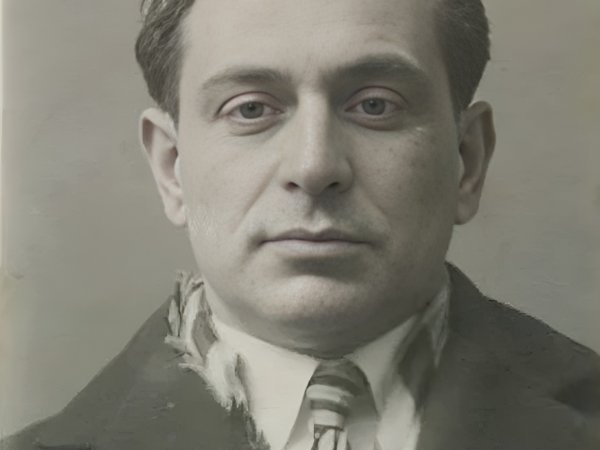
The history of interwar Romania is marked not only by cultural effervescence and political development, but also by dramatic, violent episodes that shook society to its core. One of the most shocking such moments took place on 8 December 1920, when a bomb exploded inside the building of the Romanian Senate. At the center of this attack was Max Goldstein, a young man only 23 years old, considered today the first terrorist in the modern history of Romania. Nicknamed “the Hooked Monster” because of his physical disability, Goldstein became a symbol of political extremism taken to the extreme in an era dominated by fear, radical ideologies, and instability.
Origins, family, and early years
Max Goldstein was born in the commune of Bârlad, in Tutova County, into a Jewish family, his parents, Alter and Toni, being merchants known in the region. He came from a modest but stable environment that could have offered him the premises of a relatively quiet life. Nevertheless, the young man would take a completely different path, marked by political radicalization and violence.
By profession a commercial clerk, Max Goldstein lived for a time in Iași, on Sărăriei Street. In the radical workers’ and intellectual circles of the time, he came into contact with communist ideology, which was beginning to take shape in Romania under the influence of the Bolshevik Revolution in Russia. For Goldstein, communism was not merely a political conviction, but a creed for which he was willing to sacrifice everything.
Political radicalization and the turn toward communism
At only 23 years of age, Max Goldstein had already become a convinced communist militant, deeply hostile to the Romanian state and its institutions. In the context of repression against left-wing movements and the authorities’ fear of Soviet influence, Goldstein radicalized rapidly. He did not limit himself to propaganda, but moved on to concrete, violent actions.
Over time, he specialized in espionage and sabotage techniques, entering conspiratorial circles and establishing connections with foreign agents. He was arrested and imprisoned, but managed to escape, an experience that strengthened his belief that the struggle against the “bourgeois regime” had to be carried out without compromise. During this period, his terrorist plans began to take shape.
“The Hooked Monster” and the loss of his right arm
One element that made him highly visible in the public space was his infirmity. Max Goldstein had lost his right arm as a result of a failed experiment to manufacture an improvised bomb. The accident did not discourage him; on the contrary, it consolidated his reputation as a fanatic willing to go all the way.
Because of this disability, he received the nickname “the Hooked Monster”, as he used a metal device in place of the lost hand. His image quickly became one to be feared, and the authorities already considered him extremely dangerous. Despite this, Goldstein continued to move skillfully, using false identities and avoiding capture.
Attacks on the railway lines
Before the attack on the Senate, Max Goldstein carried out two attacks on railway infrastructure. By using false identities, he managed to organize explosions targeting railway lines. Although these attacks did not result in human casualties, they caused panic and drew the attention of the authorities to the existence of an active terrorist network.
The two attacks triggered a series of investigations and arrests, and the security services began an intense search for those responsible. For Goldstein, these actions were merely general rehearsals for what he considered the decisive blow: a direct attack on the political power of the Romanian state.
Preparing the attack on the Senate
The plan for the attack on the Senate was conceived meticulously and involved two close accomplices of Max Goldstein, Leon Lichtblau and Saul Osias, both supporters of the communist cause. The declared goal of the attack was the elimination of the Minister of the Interior, Constantin Argetoianu, known for his firm positions against communism.
Goldstein managed to procure two German 75 mm shells, left over from the First World War, which he transformed into a time bomb. The explosive device was designed to cause maximum destruction in an enclosed space, at a moment of high attendance.
Infiltration into the Senate building
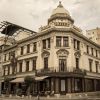
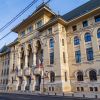
The three conspirators carefully studied the plans of the Senate building and identified its vulnerable points. They chose an evening when access could be achieved more easily and entered the building through a side door that led toward the old latrines. The operation took place around 9:00 p.m.
After entering, they waited until close to midnight. Using a master key, they opened the main door of the Senate hall. Leon Lichtblau, who knew the layout of the building best, placed the time bomb behind a curtain, in an area where the representatives of political power were usually seated.
The moment of the explosion and the tragic toll
The following morning, around 5:00 a.m., the bomb was armed and set to explode at 3:00 p.m., a time when activity in the Senate was intense. After completing the operation, the three left the building and withdrew, waiting for the outcome.
The explosion occurred, however, at 2:40 p.m., 20 minutes earlier than planned, due to a calculation error. The blast was devastating. As a result of the attack of 8 December 1920, there were dozens of injured and three dead: Dimitrie Greceanu, Minister of Justice; Demetriu Radu, a Greek-Catholic bishop; and Senator Spiridon Gheorghiu. Among the victims was also General Constantin Coandă, who was seriously wounded.
The reaction of the authorities and the impact on society
The attack caused a major shock in Romanian society. National mourning was declared, and the funerals of the victims were held with special honors. For the first time, the Romanian state was facing an act of terrorism of such magnitude, carried out in the very heart of legislative power.
The investigation launched immediately after the explosion quickly revealed the involvement of Max Goldstein. All clues converged toward him, and the authorities began a large-scale manhunt. The target of the attack, Minister of the Interior Constantin Argetoianu, survived, but the terrorist message had been delivered with brutal force.
Flight, Soviet connections, and communist propaganda
After the attack, Max Goldstein managed to escape temporarily. He made contact with Soviet agents, from whom he obtained financial support. With this money, he acquired a property in Iași, where he began printing communist propaganda materials, attempting to expand ideological influence among the population.
The pressure of the investigations, however, forced him to leave the country. He took refuge in Odessa, a city under Soviet control, where he continued to be involved in subversive activities. Nevertheless, the desire to return to Romania would prove fatal.
Capture, conviction, and death
In October 1921, after returning to the country, Max Goldstein was arrested. His trial had a strong public impact, being considered the ultimate example of the danger posed by political extremism. On 28 June 1922, he was sentenced to life imprisonment and incarcerated at the Doftana penitentiary.
Max Goldstein died in 1924, only a few years after his conviction. The exact cause of death remains controversial. Some sources claim that he died as a result of a severe pneumonia, while others state that he went on a hunger strike for 60 days, seeking to hasten his own end.
The story of Max Goldstein remains one of the darkest pages of Romanian history, a warning about how ideological fanaticism and violence can transform a young man into a symbol of terror.
We also recommend: The story of gangster Gică Cioc, the “Dragon” of Ferentari who terrorized Bucharest in the 1940s