The story of maestro Aurel Stroe, one of Romania’s greatest musicologists
- Articles
- 22 OCT 26
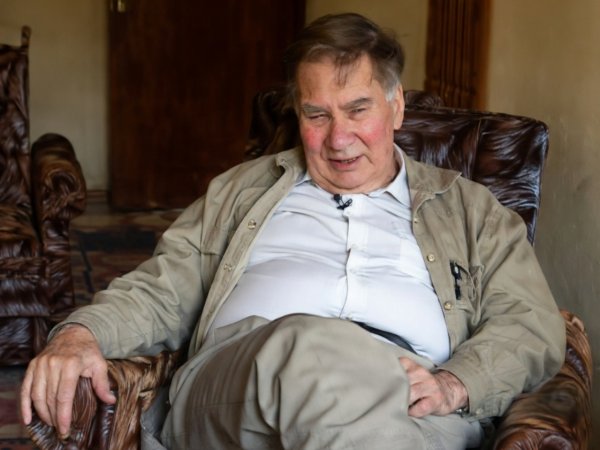
Aurel Stroe was one of the most original and complex personalities in Romanian music during the second half of the 20th century. A composer, professor, musicologist, and author of profound reflections on the relationship between music, mathematics, philosophy, and culture, Stroe went far beyond the boundaries of a single discipline. His work was built at the intersection of European tradition, the world’s musical cultures, the exact sciences, and the newest directions of the musical avant-garde. Born in Bucharest on May 5, 1932, Aurel Stroe died in Mannheim, Germany, on October 3, 2008, at the age of 76. At the time of his death, Radio Romania Muzical described him as one of Romania’s most important composers and an intellectual of remarkable originality, recognized both in Romania and abroad. He left behind a body of work encompassing symphonic, vocal-symphonic, chamber, choral, and stage music, as well as works associated with electronic music and the possibilities offered by computer technology. At the same time, he was an influential teacher for several generations of Romanian composers and an author who was constantly concerned with understanding the deeper mechanisms of musical creation.
From piano and composition to the Bucharest Conservatory
Aurel Stroe’s musical education began at an early age. He studied piano privately with Maria Fotino and composition with Marțian Negrea, after which he continued his training at the Bucharest Conservatory. Sources devoted to his biography also mention his encounters with teachers such as Mihail Andricu, Theodor Rogalski, and Mihail Jora, while his later contact with international musical circles brought him closer to important figures of the European avant-garde, including Mauricio Kagel and Karlheinz Stockhausen.
Stroe was not, however, a creator interested solely in the technical aspects of traditional composition. From his youth, he displayed an unusually broad intellectual curiosity. Music, mathematics, linguistics, philosophy, the history of science, and questions concerning the perception of sound gradually became part of his field of interest.
After graduating, he tied his professional career to the Bucharest Conservatory. Beginning in 1962, he taught there, first as an assistant, then as a lecturer and associate professor, and eventually as a professor. He taught subjects such as orchestration and composition and trained numerous musicians who would later become important figures in contemporary Romanian music.
A teacher who shaped generations of composers
Aurel Stroe’s influence on Romanian music cannot be measured solely by the number of works he composed. An essential part of his legacy lies in the generations of composers and musicologists he trained.
Among those who studied in his circle were Liana Alexandra, Maia Ciobanu, Șerban Nichifor, Gabriel Vlădescu, Carmen Stoianov, Petru Stoianov, Fred Popovici, and Violeta Dinescu, together with other musicians who went on to develop important directions in contemporary Romanian music.
His teaching career also extended beyond Romania’s borders. Stroe taught in Strasbourg, at the University of Illinois at Urbana-Champaign, and gave courses at the renowned international summer courses in Darmstadt. He was also a composer-in-residence in West Berlin through the DAAD program in 1972–1973.
In 1993, after returning to teaching in Romania, he resumed his composition classes at the National University of Music Bucharest. At the same time, Bușteni became one of the most important places associated with his pedagogical activity.
Bușteni, the place where music became a summer school
Aurel Stroe had a special connection with Bușteni, the mountain town at the foot of the Bucegi Mountains where he regularly spent extended periods and where he owned a holiday home. After returning to Romania, he began organizing composition courses there, turning the town into a meeting place for young musicians and teachers.
The summer courses in Bușteni became one of the most important educational initiatives associated with his name. Musicians who would later become an important part of the Romanian contemporary music elite took part in them. The Romanian Cultural Institute mentions among the participants names such as Dan Dediu, Sabina Ulubeanu, Maia Ciobanu, Șerban Nichifor, Gabriel Vlădescu, Carmen Stoianov, Petru Stoianov, and Violeta Dinescu.
The connection between the composer and the town continued after his death. Today, the Cultural Center in Bușteni bears the name Aurel Stroe, and his legacy is celebrated through concerts, festivals, exhibitions, and events dedicated to his work. The Romanian Cultural Institute also supports the Aurel Stroe International Festival, launched in 2024 to promote his work and ideas.
Aurel Stroe’s music, between tradition, mathematics, and the avant-garde
What makes it difficult to place Aurel Stroe within a single compositional school is precisely the interdisciplinary character of his work. He drew from European musical culture but was equally interested in musical systems originating outside Europe and in the ways different civilizations developed their own conceptions of sound and music.
One of his fundamental concerns was the existence of different tuning systems, which he regarded as genuine cultural paradigms. From this perspective, differences between musical systems were not merely technical characteristics but reflected different ways of understanding the world. This vision lay at the heart of his interest in what he called “morphogenetic musics.”
His encyclopedic knowledge led him toward concepts originating in mathematics, logic, thermodynamics, and philosophy. During his years in Germany, these interests became increasingly elaborate, and the composer attempted to develop a musical way of thinking in which sound structures could also be analyzed through concepts originating in other fields of knowledge.
A pioneer of computer-assisted music
Aurel Stroe was among the Romanian musicians who recognized at an early stage the potential of computer technology in the creative process. In 1968, at the invitation of the United States government, he visited several American universities to study computer-assisted music.
His interest in technology was not simply a passing curiosity. Stroe developed programs such as MusGener and used computer tools to construct compositional processes. The journal Muzica has recently examined this aspect of his work and shown that Stroe regarded the music produced through his programs as the result of strictly determined procedures rather than chance.
For this reason, the claim that he was “the first composer to create a musical program for a computer” should be treated with caution when presented as an absolute worldwide record. It is much safer to describe Aurel Stroe as a Romanian pioneer of computer-assisted music and of the use of programming in the compositional process, at a time when these technologies were still in their infancy.
The Oresteia and his encounter with Lucian Pintilie’s theater
Among his most important works are those inspired by Greek tragedy, particularly his Oresteia trilogy. Aurel Stroe transformed the texts of Aeschylus into an intensely personal musical universe in which theater, voice, orchestra, and his ideas about sound systems came together.
The second part of the trilogy, “Oresteia II – The Libation Bearers,” had a remarkable international trajectory. In 1979, the work was presented at the Avignon Festival in a production directed by Lucian Pintilie. Documentary sources preserved by the Romanian Musical Information Center contain numerous references from the contemporary press concerning the international reception of the opera.
“Oresteia” remains one of the works through which Aurel Stroe’s name is recognized outside Romania. The Romanian Cultural Institute lists it among the major landmarks of his oeuvre, alongside “Arcade,” a work inspired by the sculptural universe of Constantin Brâncuși.
From the “Thermodynamics” Sonata to “Capricci and Rāgas”
Aurel Stroe’s output encompasses a remarkable diversity of genres and forms. His works include Sonata No. 1 for piano, “Suite for Orchestra,” the Clarinet Concerto, the operas of the “Oresteia” cycle, Sonata No. 2 for piano, known as “Thermodynamics,” Sonata No. 3 for piano, as well as concertante works for violin, saxophone, percussion, and accordion.
A special place is occupied by “Capricci and Rāgas,” the Concerto for Violin and Solo Ensemble, a work representative of his interest in bringing together different musical worlds. Radio Romania Muzical listed it among the composer’s essential works, alongside “The Trilogy of the Closed City – A New Oresteia” and “Arcade.”
Aurel Stroe’s works were performed in major European musical centers, including Paris, Rome, Warsaw, Darmstadt, Wiesbaden, and Mannheim, as well as in the United States. Their presence at international festivals and in international programs contributed to the recognition of the Romanian composer in a musical environment dominated by experimentation and the search for new forms of expression.
The Herder Prize and international recognition
Aurel Stroe’s work was honored with numerous distinctions. He received the Romanian Academy Prize in 1974, while in 1991 he was awarded the French Order of “Chevalier des Arts et des Lettres.” In 1998, he received the Grand Prize of the Union of Romanian Composers and Musicologists.
His most prestigious international recognition came in 2002, when he was awarded the Herder Prize in Vienna. The distinction confirmed the value of an oeuvre that could not be confined within the borders of a single culture. The Romanian Cultural Institute notes that Stroe himself regarded the prize as recognition of his attempt to build, through music, bridges between different civilizations.
The Herder Prize thus crowned a career in which Romania, France, Germany, and the United States represented important spaces for creation, research, and teaching.
The legacy of a great Romanian musician
Aurel Stroe died in Mannheim on October 3, 2008, after almost six decades of artistic and intellectual activity. His legacy, however, is not limited to his scores. It can be found in his ideas about music, in the studies and essays he published, in the students he trained, and in the cultural institutions that preserve his name today. The “George Enescu” National Museum dedicated a photo-documentary exhibition to his life and work, using documents from the archives of the National University of Music Bucharest, the Union of Romanian Composers and Musicologists, and the Aurel Stroe Cultural Center in Bușteni.
Aurel Stroe remains one of the essential figures of contemporary Romanian music precisely because he refused to regard music as an isolated field. For him, sound could enter into dialogue with mathematics, philosophy, linguistics, science, and the traditions of different civilizations.
From Bucharest to Bușteni and Mannheim, the course of his life was that of a creator who constantly searched for new forms of expression. And the fact that his works, theories, and students continue to be studied demonstrates that Aurel Stroe was not merely a composer of his generation, but one of the personalities who decisively contributed to opening Romanian music toward the major debates of contemporary culture.
We also recommend: He was born with art flowing through his veins, and at 10 years old he was admitted to the Conservatory in Bucharest. The story of composer Constantin C. Nottara