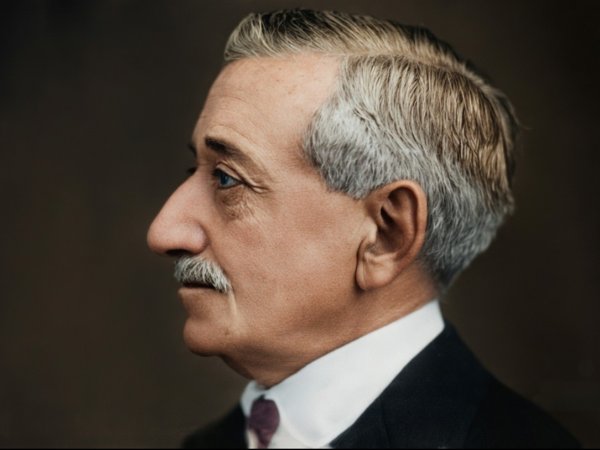
The story of Dumitru Georgescu Kiriac, the Bucharest composer who brought authentic Romanian folklore into classical music
- Articles
- 18 SEP 26
Dumitru Georgescu Kiriac holds a distinctive place in the history of Romanian music at the turn of the 20th century. Composer, conductor, professor and folklorist, he belonged to a generation of musicians determined to give Romanian music a distinctive voice rather than simply reproduce Western models. For Kiriac, that voice could be found in the country’s authentic folk traditions and in the Byzantine musical heritage that had shaped Romanian religious culture for centuries. His contribution extended far beyond his own compositions. Kiriac helped shape Romanian musical education, trained generations of musicians at the Bucharest Conservatory, founded the influential “Carmen” Choral Society, promoted the systematic study of Romanian musical folklore and became one of the founding members of the Society of Romanian Composers. He was also among the pioneers of organized Romanian folklore research, helping introduce phonographic recording into the documentation of traditional music.
A Bucharest childhood and an education at Saint Sava
Dumitru Georgescu Kiriac was born in Bucharest on March 6, 1866, and received his first musical education in the city where he grew up. He attended Saint Sava High School, where he studied music with Alexandru Podoleanu. Between 1880 and 1885, he continued his studies at the Bucharest Conservatory, where his teachers included Gheorghe Brătianu, Eduard Wachmann and George Ștephănescu.
Music was not his only field of study. Kiriac also attended the Faculty of Law in Bucharest and earned a law degree. His decision to pursue music professionally, however, eventually led him abroad, to Paris, where he would receive the advanced training that profoundly influenced his later career.
In the French capital, Kiriac studied at the Paris Conservatoire under Théodore Dubois and Charles-Marie Widor. He also attended the Schola Cantorum, where he studied with Vincent d’Indy. His education exposed him to the major currents of late 19th-century European musical thought, including counterpoint, modal writing and the study of early sacred music.
Paris also provided Kiriac with practical experience as a conductor. Between 1894 and 1899, he conducted the Romanian Chapel in the French capital. His years in France did not cause him to turn away from Romanian traditions. Instead, his exposure to European musical culture appears to have strengthened his interest in finding a way to develop a modern Romanian musical language without sacrificing its distinctive character.
Returning to Bucharest and shaping a new generation
Kiriac returned to Romania at the end of the 19th century and soon became an important figure in Bucharest's musical life. In 1900, he was appointed professor of theory and solfège at the Bucharest Conservatory, where he would teach for the rest of his life.
Teaching was central to Kiriac's vision of Romanian music. He believed that a national musical culture required more than composers trained in European techniques. It also needed musicians capable of understanding and preserving the country's own melodic traditions.
Among his students were Gheorghe Cucu and Ioan D. Chirescu, both of whom would later become influential figures in Romanian musical culture. Kiriac encouraged his pupils to develop an original musical language by combining Western contrapuntal techniques with Romanian melodies while preserving the distinctive modal structures of traditional music.
This approach reflected a broader cultural movement of the period. Romanian intellectuals and artists were increasingly interested in defining a national identity through the country's language, literature, visual arts and music. Kiriac's contribution was to argue that Romanian composers should look to the country's own musical heritage rather than simply imitate the dominant Western styles of the day.
Before beginning his own systematic field research, Kiriac worked with melodies preserved in older collections, including those associated with Anton Pann, Carol Mikuli and Theodor Burada. He arranged and harmonized traditional melodies, bringing them into the concert and choral repertoire while attempting to preserve their essential character.
His output included religious works, choral compositions and songs for voice and piano. Among the pieces most closely associated with his name are “Morarul”, “Cântecul murgului”, “Codrule, codruțule” and “Când aud cucul cântând”.
From folk melodies to systematic folklore research
One of Kiriac's most significant achievements was his insistence that Romanian folklore should not merely be used as artistic material but should also be documented and studied systematically.
In 1910, he submitted a memorandum to the Romanian Academy proposing a systematic campaign to collect musical folklore throughout the country. He advocated the use of the phonograph to record traditional performances and argued for the creation of an institution capable of preserving and studying the resulting material.
The chronology is significant. Although Kiriac presented his research proposal in 1910, the Romanian Academy dates his first phonographic collections to 1912. With the support of Ion Bianu, he obtained funding to purchase an Edison phonograph and began making direct recordings of traditional performers.
These recordings represented an important methodological step. Instead of relying exclusively on written transcriptions or melodies preserved in earlier collections, Kiriac could document actual performances and preserve elements of traditional music that notation alone could not fully capture.
The manuscripts and materials produced through this work are now preserved in the archives of the “Constantin Brăiloiu” Institute of Ethnography and Folklore. His work belongs to the early history of systematic ethnomusicological research in Romania and anticipated methods that would later become fundamental to the study of traditional music.
For Kiriac, folklore was not simply a reservoir of attractive melodies waiting to be transformed into concert music. It was a cultural heritage that deserved to be recorded, studied and preserved as faithfully as possible.
“Carmen” and the rise of Romanian choral music
Kiriac's influence was particularly visible in Bucharest's choral movement. In 1901, he founded the “Carmen” Choral Society, an ensemble that would become one of the most important Romanian choirs of the early 20th century.
The society made its public debut at the Romanian Athenaeum on December 18, 1901. Kiriac remained its conductor for almost three decades, until his death in 1928.
“Carmen” was more than a performing ensemble. Its mission included promoting music among the wider population and, particularly, encouraging appreciation of Romanian folk song. Under Kiriac's leadership, the choir became an important platform for Romanian compositions and arrangements of traditional melodies.
The society performed extensively in Bucharest and also undertook tours, helping bring Romanian choral music to audiences beyond the capital. Its activities reflected Kiriac's broader belief that Romanian musical culture should be developed both through education and through public performance.
One of the notable moments in the society's history came in 1906, when Kiriac and “Carmen” participated in a major choral festival organized as part of the celebrations marking the 40th anniversary of King Carol I's reign. The event brought together choirs from different parts of Romania and showcased the country's rich choral traditions to audiences in Bucharest.
Through “Carmen”, Kiriac helped transform choral singing into an important vehicle for the presentation of Romanian musical heritage.
Between Byzantine tradition and Romanian folklore
Kiriac's musical philosophy was shaped by two major sources: Romanian folk music and the Byzantine tradition.
He was particularly interested in the modal characteristics of traditional Romanian melodies. Rather than forcing them into conventional Western harmonic structures, he sought ways to harmonize and arrange them while retaining their archaic melodic qualities.
This was an important distinction. Kiriac did not simply take a folk melody and dress it in a Western musical style. He was interested in understanding the musical language behind the melody and preserving elements that gave it its specifically Romanian character.
His religious music reflected another dimension of this approach. Kiriac composed works based on the Byzantine musical tradition, including his “Psalmodic Liturgy”, as well as other liturgical pieces such as “The Angel Has Proclaimed” and “The Axion of the Resurrection”.
The combination of Romanian folklore, Byzantine chant and the Western compositional techniques he had studied in Bucharest and Paris allowed Kiriac to develop a distinctive musical language.
He was certainly not alone in seeking a national direction for Romanian art music. He belonged to a wider generation of composers, musicians and intellectuals who were searching for ways to define a modern Romanian cultural identity. Yet Kiriac's contribution was distinctive because he combined composition with teaching, conducting and systematic folklore research.
His work helped establish the principle that Romanian musical modernity did not have to come at the expense of traditional culture.
A founder of the Society of Romanian Composers
Kiriac's efforts to strengthen Romanian musical culture also led him into the emerging professional institutions of the period. In 1920, he became one of the founding members of the Society of Romanian Composers, alongside figures including George Enescu, Constantin Brăiloiu, Mihail Jora, Dimitrie Cuclin and Ion Nonna Otescu.
The creation of the society represented an important step toward organizing Romania's professional musical community. It provided a framework for promoting Romanian compositions and supporting the interests of composers at a time when the country's musical institutions were undergoing significant development.
Kiriac's involvement was a natural extension of his life's work. From the classroom and concert hall to the folklore archive and the choral stage, he had consistently advocated the development of a Romanian musical culture grounded in its own traditions.
Dumitru Georgescu Kiriac died in Vienna on January 8, 1928, at the age of 61. His death brought to an end a career that had spanned almost three decades of intense activity in Romanian musical life.
His legacy, however, extended well beyond the scores he left behind. It lived on through the musicians he trained, the “Carmen” Choral Society, his pioneering folklore recordings and the generations of Romanian composers who continued to explore the relationship between traditional music and art music.
For Bucharest, Kiriac's story is inseparable from the city's transformation into a modern cultural capital at the turn of the 20th century. He was a musician educated in both Romanian and European traditions, but his ultimate goal was not to reproduce what he had learned abroad. It was to use that knowledge to understand and elevate the musical heritage of his own country.
That vision made Dumitru Georgescu Kiriac one of the important pioneers of Romania's modern national musical school—and one of the early composers to recognize that authentic folklore could serve not merely as inspiration, but as the foundation of an original Romanian musical language.
We also recommend: He was born with art flowing through his veins, and at 10 years old he was admitted to the Conservatory in Bucharest. The story of composer Constantin C. Nottara