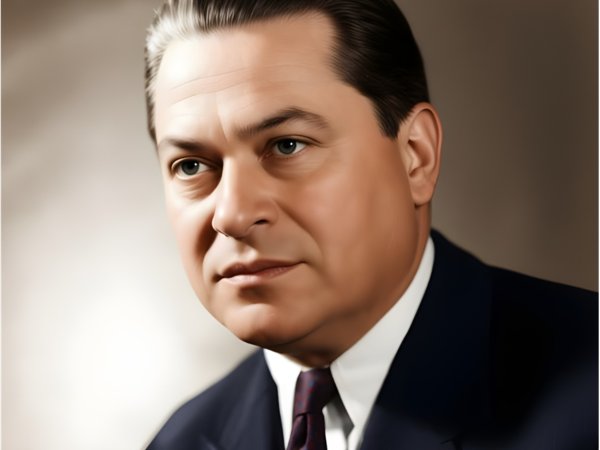
The stars of interwar Bucharest: Titi Botez, the king of Romanian tango, acted in the first Romanian film with sound
- Articles
- 20 MAR 26
Titi Botez remains one of the emblematic figures of interwar Bucharest, an artist who combined vocal talent with stage charm and a passion for Romanian and international music. Born in 1902 in the Capital, the son of the renowned violinist Titi Botez, he inscribed his name in music history through the interpretation of tangos, romances, and popular songs that conquered the hearts of the Romanian public between the two world wars. His career was full of performance, prestigious collaborations, and artistic innovation, including participation in the first Romanian film with sound.
Debut and early stage beginnings
From childhood, Titi Botez was surrounded by music. Coming from a family of musicians – his father and grandfather were both renowned violinists – he began studying music at the Royal Academy of Music and Dramatic Art in Bucharest, where he specialized in classical singing.
Later, he attended the private conservatories Alberto della Pergola and Egizio Massini, consolidating his vocal technique and interpretative expressiveness. This solid foundation allowed him to successfully approach a wide range of genres, from delicate romances to passionate tangos, demonstrating remarkable versatility.
His first role came in 1918 when, together with the Maximilian-Leonard company, he appeared on the stage of the famous Oteteleșanu venue, performing in the musical The Count of Luxembourg. This experience represented a cornerstone for his theatrical and musical career.
After six years, Titi Botez joined the Bulandra-Maximilian-Storin-Manolescu company, participating in numerous notable productions such as The Inspector, The Bourgeois Gentleman, Broken Wings, The Devil’s Disciple, and The Lady of the Camellias. This period consolidated his reputation as a complete artist, capable of adapting to different types of roles, from comedy to drama, from musicals to classical theatre.
In 1931, Titi Botez debuted in revue theatre at the Vox Theatre, a genre highly appreciated by the interwar public. A significant part of his career took place at the famous Cărăbuș Revue Theatre, where he performed from 1939 until the death of Constantin Tănase in 1945. During this period, he performed in musical comedies created by Vasile Vasilache, collaborating with some of the greatest composers and musicians of the time, including Ion Vasilescu, at the Alhambra Revue Theatre.
The tango revolution in Romania and Titi Botez’s contribution
Between 1932 and 1934, Titi Botez recorded an impressive series of discs at the Odeon record company, gaining national recognition for his expressive voice and the ability to convey deep emotions through music.
Tango, which had already conquered Europe, thus became a symbol of musical sophistication in Romania, and Titi Botez was undoubtedly the most representative performer of this genre during the interwar period. His versatility allowed him to also excel in interpreting romances and Romanian popular songs, consolidating his image as a complete and beloved artist.
His repertoire includes famous songs such as Goodbye!, You will love someday too!, Last night I dreamed of you…, Chrysanthemums, Woman… the eternal story, Marcitta, I miss your kiss!, A word you could say…, Yesterday, at the meeting, For you I cried, Poor little doll cries!, The story of a loafer, Tangolita, Under the balcony I sang you a serenade, or even A violin’s lament. These songs became part of Romanian musical culture, capturing the spirit of the era and the audience’s sensitivity.
Appearances in cinema and the first Romanian sound film
Besides his musical success, Titi Botez also entered the history of Romanian cinema, acting in the first Romanian sound film. This achievement marks a bridge between theatrical tradition and the technological innovation of the time, adding visibility and prestige to his career.
His participation in the sound film demonstrated not only his artistic adaptability but also strengthened his image as a symbol of interwar Bucharest, where tango, theatre, and cinema converged in a vibrant cultural scene.
Presence in public spaces and emblematic venues
Titi Botez brought his music to the most sophisticated restaurants and bars of the time, such as Zissu, Colonade, and Dori-Parc, collaborating with prestigious orchestras and bringing tango and romance close to the wider public. Through his constant presence in urban spaces and prestigious stages, he contributed to consolidating a cosmopolitan atmosphere in Bucharest, conveying elegance, refinement, and musical passion.
On the radio, Titi Botez presented works composed by leading musicians, including Ion Vasilescu, Gherase Dendrino, Elly Roman, Petre Andreescu, Claude Romano, Ionel Fernic, Nello Manzatti, Nicolae Vlădoianu, George Corologos, and Mișu Constantinescu. This exposure gave him a wide audience and consolidated his status as a reference artist of the interwar period, demonstrating that his talent was not only local but had national resonance.
Recognition and image in the interwar press
In the Romanian press of the time, Titi Botez was nicknamed “the eternal lover,” a title that illustrated his expressive manner and the sensitivity with which he conveyed feelings through music. This nickname reflects the deep emotional connection the artist managed to establish with the public, as well as the way he lived music with sincerity and passion.
Critics and journalists of the era noted his ability to combine technical virtuosity with interpretative expressiveness, especially in the tango genre, which required not only vocal precision but also a dose of drama and stage charisma. Thus, Titi Botez remained a benchmark for all interpreters of tango and Romanian light music during that period.
Artistic legacy and influence on future generations
The legacy of Titi Botez is preserved through the recordings he left behind, offering a window into the musical atmosphere of interwar Bucharest. Through his interpretations, he shaped the musical taste of the public and contributed to establishing tango as a respected and appreciated genre in Romania. Subsequent generations have looked to Titi Botez as an example of a complete artist, capable of combining passion, technique, and personal charm.
Even today, his songs remain in repertoires dedicated to the interwar era, listened to and reinterpreted by contemporary artists who wish to keep the tradition of Romanian tango alive. His influence on Romanian music was and remains essential, confirming the value and artistic relevance of his career.
The king of Romanian tango and the legend of interwar Bucharest
Titi Botez remains, without a doubt, one of the most important artists of interwar Bucharest. Through his expressive voice, stage presence, and involvement in theatrical and cinematic innovations, he redefined the image of the Romanian performer and contributed to popularizing tango, romances, and popular music. His career demonstrates that music is not only a means of entertainment but also a form of cultural and emotional expression.
His participation in the first Romanian sound film, alongside his intense activity on the Revue Theatre stage and in the elegant urban spaces of Bucharest, turns his story into a legend of interwar Bucharest. Titi Botez thus remains “the king of Romanian tango,” whose music and personality continue to inspire and fascinate future generations of artists and music lovers.
We also recommend: Tuberculosis Crushed the “Prince of Operetta” on the Stage in Bucharest: The Tragic Story of Interwar Tenor Nae Leonard