The Stars of Interwar Bucharest: Prince Ion Filotti Cantacuzino, the Doctor Passionate About Films and Oppressed by the Communists
- Articles
- 16 FEB 26
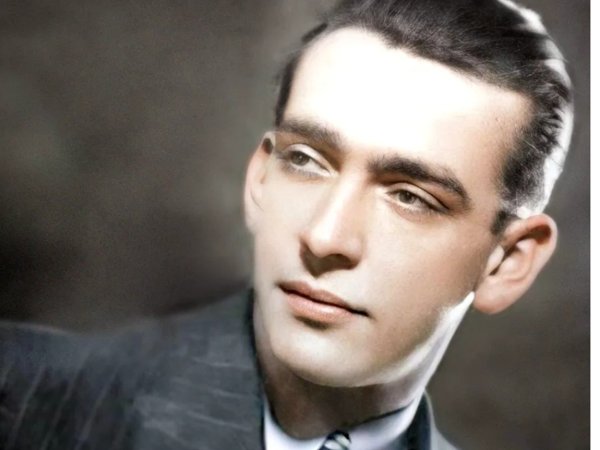
In the gallery of personalities who shone in interwar Bucharest, the name of Prince Ion Șerban Filotti Cantacuzino holds a special place. A descendant of an aristocratic family with resonance in the history of Romania, the son of a great actress and the grandson of a world-renowned scholar, he managed to carve out his own path, combining medical science with a passion for cinematography. His destiny dramatically reflects the transformations through which Romanian society passed in the 20th century: the cultural effervescence of the interwar period, the trauma of war, and the repression of the communist regime.
Noble Origins and Intellectual Formation
Ion Șerban Filotti Cantacuzino was born on November 7, 1908, in Bucharest. He was the son of Prince Ioan Radu Cantacuzino and of the celebrated actress Maria Filotti and the grandson of the eminent physician Ioan Cantacuzino. He thus inherited both the nobility of an old boyar family and the cultural and scientific vocation of his forebears.
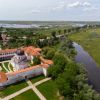
The childhood and adolescence of Ion Șerban Filotti Cantacuzino unfolded in a privileged environment in which culture, discipline, and responsibility were fundamental values. He attended the Military High School “Mănăstirea Dealu,” one of the elite institutions of the time, which trained young men destined for prestigious military or administrative careers. The experience of the military high school cultivated in him rigor and perseverance, traits that would later define him.
After graduation, the young man did not immediately choose medicine, although he came from a family with tradition in the field. He first pursued university studies in philosophy, and in 1931 he defended his bachelor’s thesis in letters and philosophy. This intellectual stage offered him a broad opening toward theoretical, aesthetic, and ethical reflection, elements that would later be found in his writings and cinematographic activity.
Subsequently, he decided to embrace medicine. He enrolled in the Faculty of Medicine and, in 1935, obtained the title of Doctor of Surgery. His desire for further refinement took him to Paris, where, in 1936, the University of Paris awarded him the diploma of forensic psychiatrist. This double formation – humanistic and medical – transformed him into a complex personality, capable of viewing the human being both from a biological perspective and from a psychological and cultural one.
Fascination with Cinematography and Public Affirmation
Upon returning to the country, Ion Șerban Filotti Cantacuzino practiced his medical profession, but in parallel he developed an intense passion for cinematography, an art that was in full expansion during the interwar period. Bucharest was then experiencing a remarkable cultural effervescence, and the cinema was becoming a modern means of expression and education.
He began to write film reviews and to produce at Radio Romania the program “The Cinematographic Chronicle,” an extremely appreciated broadcast by the public. Through his voice, spectators discovered the novelties of the screen and were invited to reflect upon the art of film. His style was erudite yet accessible, combining aesthetic analysis with psychological observation.
At the same time, he wrote screenplays, directed documentaries, and published studies dedicated to cinematography, such as “The Fairy-Tale Factory,” “Encounters with the Cinema,” “Notes for Today,” “De amore,” “Moments from the History of Romanian Film,” “Jean Mihail,” and “The Romanian Film of Yesteryear.” Through these works, he contributed to laying the foundations of a theoretical reflection on Romanian cinema at a time when the field was still in its beginnings.
On the personal level, he married Elena Warthiadi, with whom he had two sons: the historian Gheorghe I. Cantacuzino and Șerban Cantacuzino, the latter debuting on stage at only 11 years old alongside his grandmother, Maria Filotti, and later becoming an actor.
Director of the National Center of Cinematography
In 1941, Ion Șerban Filotti Cantacuzino was appointed director of the National Center of Cinematography, a position that gave him the possibility to directly influence film production in Romania. It was a period marked by war, and cinematography also had a propagandistic role.
He participated in the making of the film “Odessa in Flames,” a Romanian-Italian co-production starring the Bessarabian actress Maria Cebotari. The motion picture, considered lost for decades, was rediscovered in 2004 in the archives of the Cinecittà studios in Rome.
He was also involved in the production of the film “A Stormy Night,” directed by Jean Georgescu, which premiered in March 1943 at Cinema ARO. In 1953, the film was mutilated by communist censorship, the removed sequences being lost forever. This episode symbolizes the brutal rupture between interwar cultural freedom and the ideological control later imposed.
During the same period, his mother, Maria Filotti, honorary member of the National Theatre, revitalized the “Teatrul Mic,” known to Bucharesters as Maria Filotti’s theatre. The building was destroyed by bombings during the war, but after 1944 the actress managed, with bank loans and with the help of her son, to raise a new headquarters, where great actors such as Grigore Vasiliu Birlic and Radu Beligan performed until nationalization.
Communist Repression and the Years of Detention
The establishment of the communist regime brought dramatic changes to the life of the prince-doctor-filmmaker. He was arrested because he had treated a patient who had been a legionary, being accused of not informing the authorities. In 1949, he was sentenced for “conspiracy against the social order and aiding the offender” and served one year of imprisonment at Jilava Penitentiary.
His release was due to the desperate interventions of Maria Filotti. However, in March 1951, he was arrested again and investigated for “crimes against peace,” being incarcerated once more at Jilava, under registration number 865. These accusations reflected the repressive mechanisms of the era, in which social origin and cultural connections could become grounds for persecution.
In 1953, by decree of the Presidium of the Great National Assembly, Maria Filotti was awarded the title of “Artist of the People” for her artistic merits. The irony of fate made this official recognition coincide with the sufferings of her son. The great actress died in 1956, at the age of 73.
The Final Years and the Legacy Left Behind
After his release from the second detention, Ion Șerban Filotti Cantacuzino was forbidden to continue working in cinematography. He was, however, allowed to practice as a psychiatrist, being employed at Brâncovenesc Hospital until 1975. He continued to exercise his profession with discretion and professionalism, far from the lights of the cultural stage he had animated in his youth.
He passed away in Bucharest, on the night of July 26, 1975, at the age of 67, and was buried at Bellu Cemetery, the necropolis of great Romanian personalities.
His destiny remains emblematic for a generation that experienced interwar glory and collapse under totalitarianism. Through his medical activity, through his reflections dedicated to cinematography, and through his involvement in the cultural institutions of the time, Ion Șerban Filotti Cantacuzino inscribes himself among the complex figures of old Bucharest – a prince of the spirit, for whom science and art were two faces of the same vocation.
We also recommend: The stars of interwar Bucharest: Maria Filotti, nurse in war, director of a cultural institution, the grande dame of Romanian theater