The stars of interwar Bucharest: Maria Filotti, nurse in war, director of a cultural institution, the grande dame of Romanian theater
- Articles
- 26 JAN 26
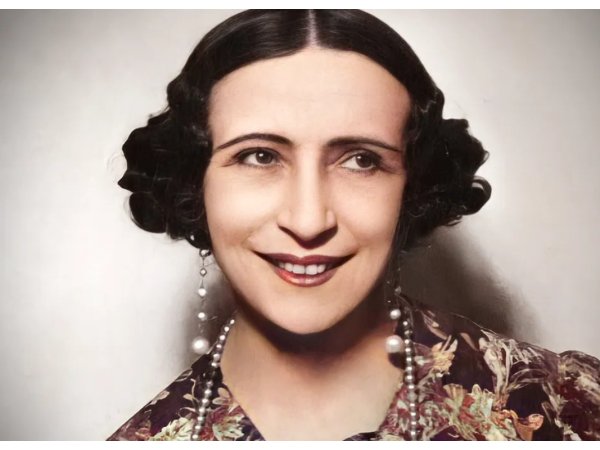
Maria Filotti passed away more than six decades ago, yet she remains immortal in the collective memory of theater and film lovers, remembered as one of the most important actresses in Romanian theater of all time. She was, by definition, a perfectionist, constantly engaged in inner struggles, as any great artist who respects both the audience and herself must be. The great lady of the stage lived under the sign of questioning, always reflecting deeply on her craft and choices.
Early life and education
Lucid to her core, extremely logical, temperamental, and endowed with extraordinary intelligence, Maria Filotti left an indelible mark on Romanian theater. Over a remarkable career spanning 51 years, she performed in 167 plays, taking the leading role in 45 of them. Her talent was first recognized by a teacher when she took her baccalaureate exam, setting her on a path that would lead to legendary status.
Maria Filotti was born in the commune of Batogu, near Brăila. She saw her first theater performance while attending primary school, an experience that sparked a lifelong passion for the stage. After completing her primary education, she continued her studies at the “Penetis and Zurmali” Secondary School for Girls in her hometown.
At her baccalaureate exam, held at I.C. Massim High School, the examination committee was chaired by university professor Ștefan Sihleanu, the director of the National Theatre of Bucharest. He was immediately impressed by Maria’s artistic abilities and is said to have suggested that she pursue a career in the arts.
After high school, Maria Filotti pursued Letters and Philosophy at the University and Dramatic Arts at the Bucharest Conservatory, studying under the tutelage of the renowned Aristizza Romanescu.
At her graduation performance, she was noticed by Alexandru Davila, who invited her to perform at the National Theatre of Bucharest. She debuted on its stage on the evening of September 29, 1907, at the opening of the season, playing the role of Vidra in Răzvan și Vidra by Hasdeu.
Rise to prominence and international exposure
Although she debuted in Bucharest, Maria Filotti chose to continue her career in Iași, where she quickly gained recognition in several successful performances.
In 1909, she received a scholarship to study in Vienna for one year, which further enhanced her artistic skills and broadened her perspective on European theater.
War-time service and dedication to theater
When World War I erupted, Maria Filotti found herself in Iași. She was deeply involved in assisting Romanian soldiers wounded on the front, organizing a field hospital in the city where she personally cared for the injured. Despite the war, she continued performing on stage, demonstrating an extraordinary commitment to both her country and her art.
After the war, in 1919, she joined the faculty of the Conservatory of Dramatic Arts as a teacher, passing on her knowledge and inspiring future generations of actors. She played alongside some of the greatest Romanian performers, including Constantin I. Nottara, Aristizza Romanescu, Agatha Bârsescu, Ion Manolescu, and Maria Ventura, taking on 45 leading roles in 167 plays.
Acclaimed performances and critical recognition
One of her most celebrated roles was in the play Pariziana. The writer Mihail Sebastian praised her performance in 1929, writing: “She built her pathetic role with the resources of a great comedian, making us forget all that would have been false or outdated. She created a woman, sketched a character, discovered hidden humor, made a faded line shine. Another great success of a great artist.”
Throughout her career, Maria Filotti demonstrated remarkable versatility, performing classical roles, ingenues, femme fatales, queens, and, as she liked to say, “from time to time… a real human being.” Her performances were marked by authenticity, emotional depth, and intellectual rigor, which won her both the admiration of audiences and the respect of critics.
Leadership and contributions to Romanian theater
Maria Filotti’s influence extended beyond the stage. In 1930, she was elected president of the Union of Dramatic and Lyric Artists, reflecting her peers’ recognition of her authority and experience. She was also an honorary member of the National Theatre of Bucharest.
Her contributions were acknowledged by the state as well. By Decree No. 43, issued on January 23, 1953, by the Presidium of the Great National Assembly of the Romanian People’s Republic, she was awarded the title of “Merited Artist of the Romanian People’s Republic” for her exceptional achievements and valuable contributions to art.
Cinematic achievements
Maria Filotti also appeared in the early Romanian cinema, acting in four films: Independența României, Pe valurile fericirii, Visul unei nopți de iarnă, and Citadela sfărâmată.
These appearances complemented her theater work and introduced her artistry to a wider audience, establishing her as one of the pioneering figures in Romanian performing arts.
Legacy and family connections
The theater in Brăila has borne her name, Maria Filotti Theatre, since 1969, preserving her legacy for future generations. She was also the mother of the writer and producer Ion Filotti Cantacuzino and the grandmother of actor Șerban Cantacuzino, continuing her family’s artistic tradition.
Maria Filotti’s life exemplified dedication to her craft, resilience in the face of personal and professional challenges, and a lifelong pursuit of artistic excellence. She bridged the worlds of theater, cinema, and education, leaving behind a legacy that continues to inspire actors, directors, and audiences alike.
Her story is a testament to the power of talent, perseverance, and commitment to art. She not only elevated Romanian theater to new heights but also embodied the spirit of a true cultural leader—an artist whose influence extended beyond her roles, shaping the course of Romanian performing arts for generations to come.
Maria Filotti remains a symbol of passion, intelligence, and artistic integrity. Her life and career illustrate how one woman’s dedication and talent can leave a lasting mark on a nation’s cultural history, making her truly timeless in the hearts of all who love theater.
We also recommend: The stars of interwar Bucharest: Actress Lulu Savu, the diva from Constantin Tănase’s Quartet