The history of the first pharmacies that appeared in Bucharest, with the private apothecaries that contained “the herbs useful for medicines”
- Articles
- 15 JUN 26
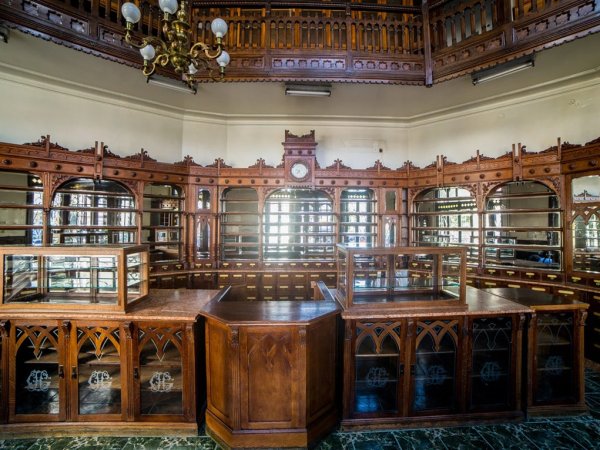
The history of Bucharest’s pharmacies began more than three centuries ago and is closely linked to the development of the medical system in Wallachia. The first apothecaries in Bucharest were not simple places where remedies were sold, but true workshops where the pharmacist prepared treatments from medicinal plants, resins, minerals, and other substances used in the medical practice of the time. In those days, the knowledge of “the herbs useful for medicines” represented an essential quality of an apothecary, who was responsible both for the preparation and the quality of the treatments offered to the sick. From the small pharmacies that operated next to hospitals founded by great boyars and rulers, to the private pharmacies of apothecaries who came from Transylvania and Central Europe, the history of Bucharest’s pharmacy reflects the long journey of traditional medicine towards a profession based on university studies, clear regulations, and scientific standards.
The first pharmacies of Bucharest and their connection with hospitals
The appearance of the first pharmacies in Bucharest was associated with the establishment of the first hospitals. In 1704, when Colțea Hospital, the oldest hospital in the city, opened its doors, it is very likely that a pharmacy also functioned there for the care of patients. Evidence in this regard appears in a document dated June 15, 1715, known as “The Book of Patriarch Samuel of Alexandria”, which mentioned the provisions of the founding act of the hospital created by the great military dignitary Mihail Cantacuzino.
The document explicitly mentioned the existence of an apothecary within the hospital and the obligation for a doctor to work there together with his assistant, having permanently prepared various plants and remedies for the needs of those who suffered from illnesses. This mention represents one of the oldest pieces of evidence regarding organized pharmaceutical activity in Bucharest.
From the same period, there is also information about the existence of a court pharmacist in the service of Prince Constantin Brâncoveanu. He was paid 30 thalers and had the role of preparing and administering the treatments required by the princely court. Furthermore, the pharmacist accompanied the Wallachian ruler in 1703 during a journey to the Ottoman Empire, a sign that his services were considered indispensable.
Another important moment in the development of Bucharest’s pharmacy occurred with the foundation of Pantelimon Hospital. According to the charter issued on October 12, 1735, by Prince Grigore II Ghica, the hospital was to include a pharmacy where an apothecary skilled in “the herbs useful for medicines” would work, meaning a person who possessed knowledge about the plants and substances necessary for preparing medicines.
The first private apothecaries and famous pharmacies of the Phanariot period
If the first pharmacies were connected to hospitals and the princely court, the first private pharmacies in Bucharest were opened by Saxons who arrived from Transylvania, a region where the pharmaceutical craft already had a strong tradition.
The first apothecary known to have opened a private pharmacy in the capital of Wallachia was Johann Traugott Seuler von Seulen in 1740. Shortly afterwards, historical documents mention Georgio Vodopich, who in 1742 was described as “apothecarius buchurestiensis”, meaning a pharmacist of Bucharest. In 1750, Christian Richter, originally from Prešov, a city located today in Slovakia, was also active in the city, owning his own pharmaceutical office on the banks of the Dâmbovița River.
At the end of the 18th century, the number of Bucharest apothecaries remained relatively small. A statistic conducted in 1797 by a commission of doctors led by the archiatros, the personal physician of the ruler and head of Bucharest’s doctors, showed that there were nine pharmacies in Bucharest, while by the end of the Phanariot period their number had increased to thirteen.
During that time, famous pharmacies appeared, such as “Apollo”, established in 1786, “The Golden Eagle”, opened in 1787, and “Aesculapius”, founded in 1794 by Johann Zinnern von Burghtal. Nevertheless, investments in the pharmaceutical field were considered risky because high expenses and the possibility of accumulating debts discouraged many merchants.
An eloquent example was the case of the apothecary Nicoli, who left his son a business burdened with such significant debts that, in 1799, the heir was forced to sell the family house at auction in order to pay the creditors. On the other hand, the apothecaries who had their shops in the great inns of Bucharest, such as Șerban Vodă Inn or Constantin Vodă Inn, located near the commercial heart of the city, could obtain considerable profits thanks to the large number of wealthy customers.
The first regulations that brought order to the activity of pharmacists
The development of apothecaries imposed the need for clear rules to supervise the training of pharmacists and the quality of medicines. The first official measures in this regard were adopted during the reigns of Alexandru Ipsilanti. Through a princely decree issued in 1780, the archiatros received the authority to inspect the activity of pharmacies throughout Wallachia, following numerous complaints regarding poor-quality medicines and the insufficient training of some apothecaries.
Because the problems continued, Alexandru Ipsilanti ordered a new inspection and the drafting of stricter regulations. The result was Ipsilanti’s Nizam, issued on May 15, 1797, consisting of ten articles that established the obligations of pharmacists and introduced a unified system of operation.
One of the most important provisions was the mandatory observance of the Austrian Pharmacopoeia of 1780, which represented an important step towards the modernization of pharmaceutical practice in Wallachia. For the first time, all apothecaries had to follow the same standards regarding the preparation of medicines.
However, after Alexandru Ipsilanti left the throne, some pharmacists returned to unfair commercial practices. The new ruler, Constantin Hangerli, intervened firmly and ordered, in 1798, strict inspections in Bucharest’s pharmacies, carried out by a commission formed of high-ranking boyars, physicians, and representatives of the administration.
The inspections confirmed the existence of agreements between certain doctors and apothecaries to unjustifiably increase the price of treatments. The issue continued even after this period, and in 1803 Prince Constantin Ipsilanti was forced to stop such a “symphony” between the two professional groups, aimed at obtaining undeserved profits.
The remedies of the past and the transformation of pharmacy into a modern profession
In the old pharmacies of Bucharest, treatments were prepared that today may seem unusual. For example, to treat a dry cough, a mixture made from sulfur flowers, white Venetian incense, and frankincense was recommended, administered in small quantities several times a day until the symptoms disappeared.
Another popular remedy, recorded by the hieromonk Sava, involved mixing two eggs with strong brandy, white lemon, and ground pepper. The resulting composition was spread on flax fibers and applied to the affected area. The monk emphasized that his remedy was “a good gift from God”, an expression that reveals how strongly folk medicine and religious beliefs were intertwined during that era.
A fundamental change occurred with the introduction of the Organic Regulation in 1831, when the right to own an apothecary became dependent on holding a diploma of studies. From that moment, privileges previously granted through princely charters could no longer replace professional education. The Medical Commission received clear responsibilities for controlling medicines and altered medicinal plants sold in pharmacies.
During the same period, the authorities decided to increase the number of pharmacies in Bucharest from 15 to 20, despite the dissatisfaction of the apothecaries who feared increased competition. Their petitions were rejected, and the state argued that the needs of the population and access to treatments were more important than protecting the commercial interests of pharmacists.
The 19th century also brought the professionalization of Romanian pharmaceutical education. In 1857, at the initiative of physician Carol Davila, the National School of Medicine and Pharmacy was established. From it developed, in 1869, together with the establishment of the Faculty of Medicine in Bucharest, the Higher School of Pharmacy, an institution that awarded degrees of licensed pharmacist.
Another major step in the development of Romanian pharmacy was the creation of the first edition of the “Romanian Pharmacopoeia”, written in 1862 by pharmacist Constantin C. Hepites and officially entered into force in 1863. It replaced the old Austrian pharmacopoeia and brought together the newest knowledge of the time in chemistry, natural sciences, and pharmacology.
The journey of Bucharest’s pharmacies, from the small apothecaries where healing herbs were prepared to institutions managed by specialists trained in higher education schools, reflects the profound transformation of Romanian society.
The first pharmacies of the capital were not merely places where remedies were sold, but true centers of medical knowledge that contributed to the modernization of public health and to bringing Bucharest closer to the European standards of the era.
We also recommend: The story of Dr. Nicolae Paulescu, the Romanian scientist who discovered insulin and whose Nobel Prize was stolen from him