The drama of Ciprian Porumbescu, the genius thrown into prison, brought down by tuberculosis: “Do not let my music die!”
- Articles
- 16 JAN 26
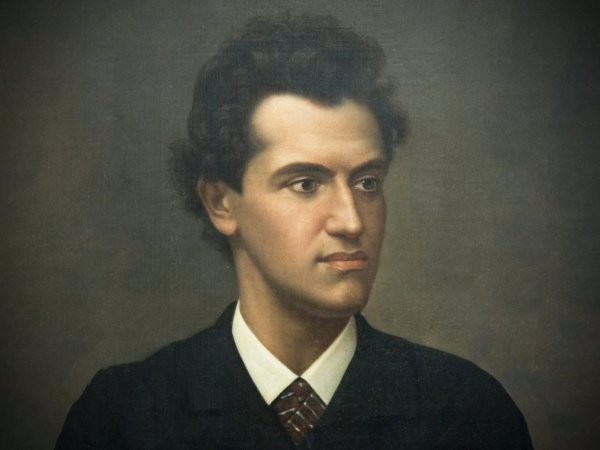
The history of Romanian culture is marked by brilliant destinies cut short far too early, and Ciprian Porumbescu remains one of the most moving examples. Living in a Romania still under the domination of the Austro-Hungarian Empire, the composer experienced not only artistic glory, but also profound suffering, political injustice, and a merciless illness that would end his life. His story is that of a genius who burned intensely, but for far too short a time, leaving behind a musical legacy of inestimable value.
Childhood and the first signs of an exceptional talent
Ciprian Porumbescu was born on October 14, 1853, on a cool autumn day, in the village of Stupca, Suceava County. Nothing at that moment foretold that the child would become one of the emblematic figures of Romanian music. Raised in an environment that respected culture and education, Ciprian showed from an early age a special sensitivity to sounds and harmonies.
The years of childhood and adolescence were marked by solid studies, first in the schools of Suceava and Cernăuți, where his talent became increasingly evident. Music was not just a passion for him, but a way of understanding the world and expressing his inner experiences. Teachers and colleagues quickly noticed his exceptional potential, and the path toward excellence became inevitable.
Artistic training and affirmation as a great composer
Eager to perfect his musical knowledge, Ciprian Porumbescu reached the Conservatory of Vienna, one of the most prestigious cultural centers in Europe. Here, his talent was refined, and his compositions began to gain depth and artistic maturity. His music managed to impress both the public and specialists, through a rare combination of lyricism, patriotism, and sensitivity.
Among his best-known creations is the symphonic poem “Ballad for Violin and Orchestra,” a work that would become emblematic for Romanian music. The appreciation he enjoyed turned him into one of the most respected Romanian musicians of his time, and his name began to be spoken with admiration in cultural circles. His talent was noticed even by major musical personalities, being regarded as a hope for Romanian creation.
Theological studies and a life between work and sacrifice
Between 1873 and 1877, Ciprian Porumbescu attended the courses of the Orthodox Theological Institute in Cernăuți. This period was extremely demanding, in which intense study was combined with material hardships and accumulated fatigue. His days were dedicated to work and learning, and the only moments of rest were the summer vacations spent in his native village, Stupca.
Far from being a period devoid of inspiration, these years contributed to his artistic and spiritual maturation. Music became for Ciprian Porumbescu both a refuge and a form of inner resistance in a world full of constraints. Under these conditions, his sensitivity deepened, and his creations acquired an increasingly strong emotional charge.
The unfulfilled love for Berta Gordon
During one of the vacations spent in Stupca, Ciprian Porumbescu’s life changed radically. He met Berta Gordon, the daughter of the Evangelical pastor from the village of Ilișești, Suceava County, and between the two a sudden love was born. Their glances and feelings connected instantly, but happiness was destined to be short-lived.
The differences in religious confession between their families became an insurmountable obstacle. The parents categorically opposed the marriage, and in order to break the bond between the two, Berta’s father decided to send his daughter abroad. For Ciprian Porumbescu, this separation was devastating, and the emotional suffering was profoundly reflected in his music.
Music, comfort and refuge for a wounded soul
Shattered by the loss of his beloved, the composer withdrew more and more into the universe of creation. Music became the only force that gave him the courage to go on and to continue his work. In one of his confessions, Ciprian Porumbescu acknowledged that only his love for Berta gave him the strength to endure and to bring to completion what he had begun.
During this period, some of his most sensitive and profound works were born. In 1880, he published “Collection of Social Songs for Romanian Students,” a valuable contribution to the national musical heritage, meant to strengthen the communal spirit and Romanian identity.
“Crai Nou” and definitive consecration
The peak of his artistic career was reached with the opera “Crai Nou,” whose premiere took place in 1882. The success was resounding, and both the public and critics recognized his undeniable genius. The opera quickly became a symbol of the rebirth of Romanian music and of national aspirations.
In a period marked by political tensions and struggles for the affirmation of Romanian identity, Ciprian Porumbescu did not hide his sympathies for national ideals. This attitude, however, brought him to the attention of the Austro-Hungarian authorities, who viewed with suspicion any manifestation of Romanian patriotism.
Arrest and the inferno of the Cernăuți prison
In 1887, following unfounded political accusations, Ciprian Porumbescu was arrested and imprisoned in the Cernăuți penitentiary. He even spent the winter holidays behind the cold walls of the prison. The conditions of detention were inhuman: filth, dampness, insufficient food, which he was forced to share with the rodents in his cell.
His sister, Mărioara, described with emotion the day of his arrest, when the musician, looking out the window, realized that the gendarmes had come for him. That moment marked the beginning of the end. In prison, he contracted tuberculosis, a disease that was almost fatal at that time.
The final years and the legacy of a genius
After two months of detention, Ciprian Porumbescu was released, but the disease progressed rapidly and mercilessly. Physically and spiritually weakened, he withdrew to the parental home in Stupca. Here, on June 6, 1883, he passed away in the arms of his sister, at only 29 years of age. His last words remain an emotional testament: “Do not let my music die!”.
His wish was respected, and his grave was covered with the Romanian flag, as he had asked in the verses of the “Song of the Tricolor.” Berta Gordon never forgot him, and in the letters she sent to the composer’s sister she expressed her deep pain for not having been by his side in his final moments. Thus, the life of Ciprian Porumbescu remains a heartbreaking drama, but also a lesson about sacrifice, love, and the eternal power of music.
We also recommend: The story of Dinu Lipatti, the genius of Romanian music. The greatest Romanian pianist died at the Christ-like age