The child of the Craiovești family became the most educated ruler of Wallachia. The history of ruler Neagoe Basarab
- Articles
- 18 JUN 26
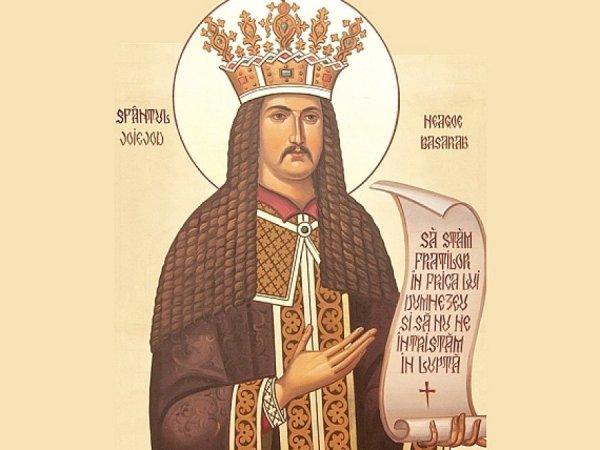
Few rulers of the Romanian Middle Ages have remained in the memory of history with such a complex and impressive image as Neagoe Basarab. In a period dominated by permanent wars, struggles for power and the enormous pressure exerted by the Ottoman Empire on the states of South-Eastern Europe, the ruler of Wallachia chose a different path. Instead of building his glory exclusively through military victories, Neagoe Basarab placed culture, diplomacy, faith and the spiritual development of the country at the center of his reign. His contemporaries viewed him as a prince with an exceptional education and a vision that surpassed the limits of his era. Later, great Romanian historians highlighted his unique character. Bogdan Petriceicu Hasdeu called him the “Marcus Aurelius of Wallachia”, making a comparison with the famous philosopher-emperor of ancient Rome, while Nicolae Iorga described him as “a ruler with imperial habits”, emphasizing his refinement and his cultural and political ambitions. Neagoe Basarab is considered by numerous researchers to be the most cultivated ruler that Wallachia ever had. His personality combines several roles: a skilled political leader, a careful diplomat, a protector of culture, the author of philosophical works and one of the most important founders of Romanian spirituality.
Origin in the Craiovești family and an education rarely encountered in the Middle Ages
Neagoe Basarab was born around the year 1482 in Curtea de Argeș, in an environment that gave him the chance for an extraordinary intellectual formation. He grew up in the powerful Craiovești family, one of the most influential noble families in South-Eastern Europe at that time. However, his exact origins continue to represent a subject of debate among historians.
Some sources present him as the son of the great vornic Pârvu Craiovescu and Neaga of Hotărani, while other historical theories support the existence of a blood connection with Basarab IV the Younger. Beyond this genealogical controversy, it is certain that Neagoe grew up in a noble circle with extensive political and religious connections, which reached Constantinople and the great monastic centers of Mount Athos.
The education he received was truly exceptional for a young man in Eastern Europe during the 15th and 16th centuries. Among those who influenced his formation were the monk Macarie of Bistrița, who would later become Metropolitan of Ungrovlahia, Patriarch Niphon of Constantinople and the Serbian scholar Maxim Branković, one of the most important Orthodox intellectuals of his time.
Under the guidance of these mentors, Neagoe studied Greek, Church Slavonic and Latin, while also deepening his knowledge of theology, philosophy and the art of diplomacy. His travels through the Byzantine and Central European areas broadened his horizons and offered him a modern political perspective for that period.
In an age when many European princes had limited education and few knew how to write or read in depth, the young Neagoe had already transformed himself into a true intellectual, capable of understanding the major political and religious changes taking place across the continent.
The road to the throne of Wallachia and the beginning of a difficult reign
Neagoe Basarab’s political career began at a very young age. At only 19 years old, he held the position of postelnic at the court of ruler Radu the Great, a role that allowed him to understand the mechanisms of power and the relationships between the great noble families. Later, during the reign of Vlad the Younger, he became mare comis (master of the horse), further strengthening the influence of the Craiovești family in the leadership of the country.
The period during which he rose to power was marked by numerous internal conflicts between different noble factions, but also by the increasingly frequent interventions of the Ottoman Empire in the selection of the rulers of Wallachia. Under these tense conditions, Neagoe was forced for a period to seek refuge south of the Danube.
His return to the country became possible with the support of Mehmed Beg, an ally of the Craiovești family. After defeating Vlad the Younger, Neagoe Basarab managed to obtain the throne and was crowned ruler of Wallachia on January 23, 1512.
His reign began at an extremely complicated moment for the entire region. After the fall of Constantinople, the Ottoman Empire had become the main power in South-Eastern Europe, while the Kingdom of Hungary was trying to maintain its influence over the Danubian area. At the same time, Western Europe was going through major political and religious transformations that would forever change the history of the continent.
The diplomacy of balance between the Ottoman Empire and the Christian world
Unlike many medieval rulers who tried to solve their problems through direct military confrontations, Neagoe Basarab understood the real limits of Wallachia’s power. Although he remained a vassal of the Ottoman Empire, he pursued a foreign policy based on balance, prudence and permanent negotiations.
The ruler maintained diplomatic relations with the Republic of Venice, Rome and the Kingdom of Hungary, trying to build connections that would provide his country with a certain degree of protection against the great powers of the time. Moreover, he even attempted to reduce the distance between the Orthodox and Catholic worlds, an extremely difficult ideal in a Europe that was approaching the Protestant Reformation and the great religious conflicts.
In 1519, together with Stephen IV of Moldavia, Neagoe Basarab sent a representative to the Vatican to discuss the possibility of an anti-Ottoman crusade against Sultan Selim I. This initiative continued the idea of an alliance of the Christian states of the East, a political project previously supported by Stephen the Great.
However, the ruler understood that a direct confrontation with the powerful Ottoman Empire would have meant disaster for a relatively small country such as Wallachia. For this reason, his foreign policy was one of intelligent survival, based on diplomacy and maintaining a fragile balance between the interests of the great powers.
Neagoe Basarab, the author of one of the most important Romanian medieval works
What truly distinguished Neagoe Basarab from most contemporary rulers was his intellectual contribution. He was not only a leader concerned with the administration of the country, but also a thinker who left behind one of the most valuable creations of medieval culture in South-Eastern Europe: “The Teachings of Neagoe Basarab to His Son Theodosie”.
Originally written in Church Slavonic between 1519 and 1521, the work represents a remarkable combination of a political leadership treatise, a manual of diplomacy, religious reflection and a work of moral philosophy.
Historians have often compared this work with the famous “The Prince” by Niccolò Machiavelli. However, the two texts propose completely different models of leadership. While Machiavelli describes a pragmatic prince willing to use any means to maintain his power, Neagoe promotes the image of a ruler guided by faith, moderation, responsibility and respect for Christian moral values.
Through the depth of its ideas, “The Teachings...” is considered one of the first great works of political and philosophical thought from the Romanian cultural space.
Curtea de Argeș Monastery and the legacy of a Renaissance prince
Neagoe Basarab’s name remains forever linked to one of the most impressive medieval constructions in Eastern Europe: Curtea de Argeș Monastery, a masterpiece of Romanian religious architecture and a symbol of his era.
The ruler supported the development of written culture, encouraged printing activities and contributed to the restoration of important monastic establishments, including Cozia, Tismana and Snagov. He also promoted schools and manuscript-copying workshops, investing considerably in art and spiritual life.
Through the way he built his public image, using symbols inspired by the Byzantine imperial tradition, Neagoe attempted to transform his princely court into a center of political and cultural prestige in the region. From many points of view, he resembles the model of a Renaissance prince more than that of an ordinary medieval ruler from the Balkan space.
The death of Neagoe Basarab and his place in Romanian history
Neagoe Basarab died on September 15, 1521, at the age of only 39. He was buried in the princely tomb of Curtea de Argeș, the monastery he founded and which would preserve his memory for centuries.
On his funerary stone was engraved a request that expresses the awareness of the fragility of power and the passing of time: “And I ask those whom God will allow to come after us to protect this small shelter and the resting place of my bones...”
More than five hundred years after his death, Neagoe Basarab continues to be one of the most fascinating personalities in Romanian history. He was simultaneously a ruler, diplomat, philosopher, writer and great founder of religious establishments.
His legacy demonstrates that the power of a state is not measured only through armies, fortifications or material wealth, but also through culture, education, faith and the ability of a society to preserve its memory through the ages.
We also recommend: Who Radu of Afumați Was and Why a Street in Bucharest Bears His Name