The Bucharest Resident Who Created the First Map of the Capital. The Story of the Architect Alexandru Orăscu
- Articles
- 20 FEB 26
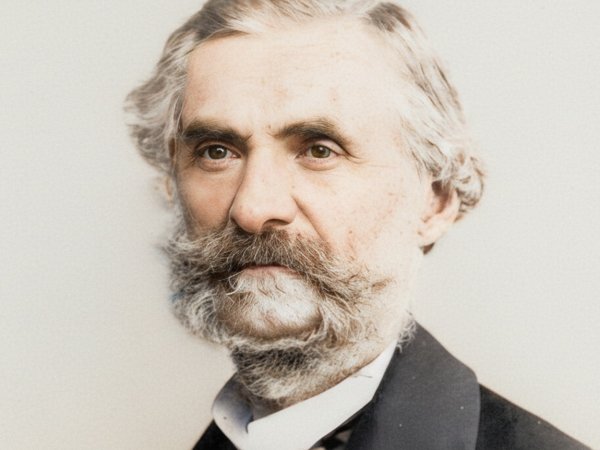
Few Bucharest residents know today that the shape of the city in which they live, its major axes, and many of the landmark buildings of the historic center are connected to the vision of a single man. His name is Alexandru Orăscu, and his contribution to the modernization of the Capital and to the professionalization of Romanian architecture is fundamental. Considered the first Romanian architect with higher specialized studies, Orăscu was not only a creator of buildings, but also a visionary of the city, a devoted professor, and a man involved in public life. At a time when Bucharest still preserved the Balkan air of irregular streets and disorderly neighborhoods, Alexandru Orăscu dared to systematically think through urban development. He is the author of the first modern map of the Capital and of an urban plan that would decisively influence the city’s evolution. His story is, in fact, the story of Bucharest’s transformation from an Oriental market town into a European capital.
The Training of the First Romanian Architect with Higher Education
Alexandru Orăscu was born in 1817, in Bucharest, during a period when Wallachia was undergoing a slow but steady process of modernization. His education began at Saint Sava College, one of the most important educational institutions of the time, which he graduated from in 1837. This stage was essential for his intellectual formation, providing him with the theoretical foundation necessary to continue his studies abroad.
Eager to deepen his knowledge in the field of construction, Orăscu left for Germany, where he attended the courses of a technical school in the field. Subsequently, he completed his training at the Academy of Fine Arts in Berlin, a center of excellence in architecture and the fine arts. His Western experience gave him direct contact with the principles of modern urbanism, the rigor of planning, and the new European architectural currents. Upon his return to the country, he came back not only with a diploma, but with a coherent vision of how a modern city should look.
In a context in which the profession of architect was not yet well defined in the Romanian space, Orăscu opened new paths. He was the first Romanian to bring solid academic training in architecture and to apply it systematically in his projects, becoming a benchmark for the generations that followed.
The Orăscu Plan and the First Modern Map of Bucharest
One of Alexandru Orăscu’s most important contributions remains the drafting of an urban plan for Bucharest, known as the “Orăscu Plan.” At a time when the city had grown chaotically, without clear alignment rules or systematization, this plan represented a turning point.
Orăscu created the first coherent and modern map of the Capital, an indispensable instrument for any serious urban intervention. His map and plan were not simple technical drawings, but the expression of a unitary conception regarding the city’s development. He established the directions of expansion, proposed alignments, and designed the structure of the main traffic arteries.
An essential element of the Orăscu Plan was the definition of the north-south axis, which would become one of Bucharest’s backbones. This axis organized the urban space and allowed a more coherent development of the central area. Through his vision, the city center was conceived as a space with clearly delimited functions: administrative institutions, buildings intended for commercial speculation, and areas dedicated to entertainment.
The implementation of the plan profoundly influenced the urban identity of the Capital. Although not all proposals were immediately put into practice, the principles established by Orăscu guided the city’s subsequent development. Modern Bucharest, with its wide boulevards and strategically placed institutions, bears the imprint of this visionary thinking.
Emblematic Buildings That Shaped the Cities of Romania
Alexandru Orăscu’s activity was not limited to urban planning. He was also the author of buildings that became landmarks of Romanian architectural heritage. Among these is the University Palace in Bucharest, known today as the central building of the University of Bucharest.
The construction of the University represented an important step in affirming the academic identity of the Capital. The building, placed at a strategic point of the city, contributed to the configuration of Bucharest’s civic and cultural center. Through its balanced proportions and sober style, the edifice reflects the Western influences assimilated by Orăscu during his years of study.
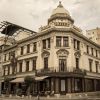
Another important project was the Grand Hotel du Boulevard, one of the most elegant constructions of 19th-century Bucharest. The hotel quickly became a meeting place for the elite, a space of social life and cultural exchanges. Through this project, Orăscu demonstrated that architecture can support not only functionality, but also the social prestige of the city.
His contribution was not limited to the Capital. In Iași, he was involved in the design of the Metropolitan Cathedral of Iași, one of the most important religious edifices in Romania. The monumentality of the cathedral and the balance of its proportions illustrate the architect’s artistic maturity and his ability to adapt Western styles to the local specificity.
Through these works, Alexandru Orăscu decisively contributed to defining the urban image of several Romanian cities. His buildings are not merely functional constructions, but identity landmarks, spaces that shaped the social and cultural life of communities.
Professor, Trainer, and Leader in Education
In addition to his design activity, Orăscu played a major role in the training of new generations of specialists. He taught descriptive geometry and architecture at educational institutions in Bucharest, contributing to the structuring of modern technical and artistic education.
At a time when Romania needed well-trained professionals to support the modernization process, Orăscu understood the importance of education. Through his academic rigor and the experience accumulated abroad, he transmitted to his students not only technical knowledge, but also a certain professional ethic. Architecture, in his vision, was a combination of science and art, of calculation and aesthetic sensitivity.
His influence was felt in the careers of many architects and engineers trained under his guidance. Thus, Orăscu’s impact is not limited to his own buildings or urban plans, but extends to the entire generation that followed him and that continued the process of modernization of Romanian cities.
Involvement in Public Life and the Legacy Left Behind
Alexandru Orăscu was not only an architect and professor, but also a man involved in political life. He held the position of senator and, for a short period, that of Minister of Public Instruction. In these positions, he supported the development of education and the consolidation of the institutions of the modern state.
His involvement in administration was a natural continuation of his concerns for education and organization. For Orăscu, modernization did not mean only building new constructions, but also strengthening the institutional framework that would support the progress of society. He understood that architecture and urbanism are closely linked to public policies and to the vision regarding the future of a nation.
His death, in 1894, marked the end of a life dedicated to the art and science of construction. However, Alexandru Orăscu’s legacy remains alive. Contemporary Bucharest, with its coherent urban structure and its emblematic edifices, bears the imprint of his thinking.
The story of the architect who created the first modern map of the Capital is, in essence, the story of a visionary. Alexandru Orăscu succeeded in bringing Western rigor and modernity into the Romanian space, adapting them to local realities. Through his plans, through the buildings he designed, and through the generations of students he trained, he decisively contributed to transforming Bucharest into a European capital.
Today, when we look at the city and walk along its boulevards or admire the historic buildings in the center, we rarely think of the man behind this vision. And yet, without Alexandru Orăscu, Bucharest would have looked completely different.
We also recommend: The story of Sărindar Church, the chapel were Mihail Kogălniceanu, former Romanian prime-minister, got married