The Bucharest-born woman whom Charlie Chaplin called a genius. The story of Clara Haskil, one of the greatest pianists in the world
- Articles
- 06 FEB 26
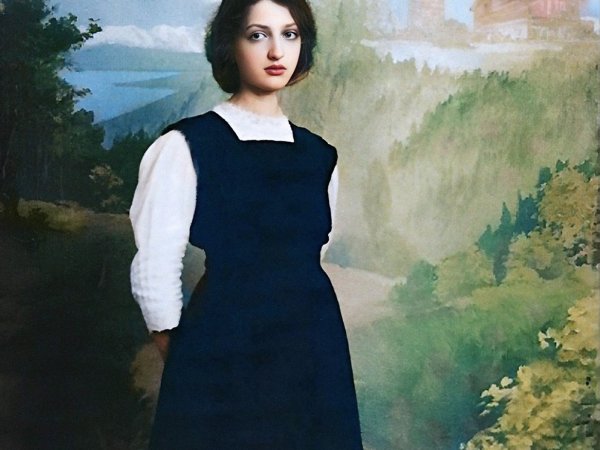
Clara Haskil remains one of the most impressive and paradoxical figures in the history of universal classical music. Born in Bucharest, appreciated late, physically fragile yet artistically immense, the pianist lived a life dominated by suffering, discretion, and absolute devotion to music. Although she performed on the world’s greatest stages, she remained a modest, almost shy presence, and glory came to her only after decades of effort and hardship. Her story is that of pure genius, recognized by equally brilliant minds, such as Charlie Chaplin, who included her in a select trio of absolute geniuses of the 20th century.
The Bucharest roots of an extraordinary talent
Clara Haskil was born on January 7, 1895, in Bucharest, into a family of Sephardic Jews. Her family environment provided her with a solid education and an early openness toward art, yet no one could foresee the magnitude of her talent. From a very young age, the child showed an exceptional musical sensitivity, managing to reproduce complex musical fragments on the piano after hearing them only once.
Her exceptional gift was noticed quickly, and one of the first personalities to recognize her value was Queen Elisabeth of Romania, known in literary circles under the pseudonym Carmen Sylva. Impressed by the child’s talent, the queen decided to support her financially and morally, opening the path toward an elite musical education. Thus, at only six years old, Clara Haskil became a student of the Bucharest Conservatory, a rare achievement even for those times.
Musical training between Vienna and Paris
At the age of seven, Clara left Romania to continue her studies in Vienna, where she began working with Professor Richard Robert, one of the most respected pedagogues of the era. This period was essential for her technical formation, giving her classical rigor and discipline that would later define her interpretative style.
In 1905, at only ten years old, she gave her first public concert, performing without sheet music, a gesture that proved not only extraordinary memory, but also a deep understanding of music. During the same period, she was admitted to the Paris Conservatory, where she studied under the guidance of the famous Alfred Cortot. Their relationship was not free of tension, Cortot at one point addressing her with a harsh reproach, claiming that she played “like a cleaning woman.” Far from discouraging her completely, this episode contributed to strengthening an inner determination that would help her move forward.
A decisive role in her artistic maturation was played by her encounter with Professor Joseph Morpain, who understood the profound nature of her talent and helped her find her own interpretative voice, based on sincerity, clarity, and absolute respect for the score.
Dual performance and early recognition
Clara Haskil studied piano and violin in parallel, demonstrating a versatility rarely encountered. In 1910, she graduated from the Paris Conservatory with First Prize in both instruments, an achievement that should have ensured her a brilliant career. However, fate had other plans.
Although she was already recognized in academic circles, her public debut on major stages was delayed by an unfortunate combination of health problems, lack of managerial support, and an almost paralyzing shyness in front of audiences. Despite these obstacles, Clara Haskil was already regarded by connoisseurs as one of the finest interpreters of Wolfgang Amadeus Mozart, a reputation that would be consolidated in the decades to come.
Physical suffering and the struggle with her own body
One of the paradoxes of Clara Haskil’s life was the contrast between artistic perfection and physical fragility. From an anatomical point of view, the pianist had a rare advantage: she could span 12 keys between her index finger and little finger, an exceptional hand stretch. This technical asset, however, was counterbalanced by severe health problems.
She suffered from bone tuberculosis, a disease that forced her to wear a plaster corset for long periods. During the First World War, she was bedridden in Berk, in northern France. Later, in 1942, she underwent an extremely delicate surgical operation to remove a tumor pressing on her optic nerve, threatening her eyesight and, implicitly, her career.
A fragmented career and illustrious collaborations
Between 1909 and 1938, Clara Haskil performed relatively little, appearing mainly in charity concerts or isolated recitals. She played at the Romanian Athenaeum in Bucharest, as well as in cities such as Lausanne, Geneva, London, New York, Brussels, and Philadelphia. She shared the stage with great names of music, such as Pablo Casals, George Enescu, Leopold Stokowski, Eugene Isaye, and Nikita Magaloff.
George Enescu was one of her great admirers, appreciating the emotional depth and refinement of her interpretations. At the same time, Clara was close to Dinu Lipatti, their meeting in Paris in 1936 marking the beginning of an exceptional artistic and human friendship.
Friendship with Dinu Lipatti and late recognition
The relationship between Clara Haskil and Dinu Lipatti was one of rare intensity. Lipatti admired her deeply and openly acknowledged her superiority in the interpretation of Mozart’s concertos. In a letter dated September 8, 1949, he sincerely confessed that he would unhesitatingly become her student, considering her a consummate artist.
The premature death of Dinu Lipatti on December 2, 1950, affected her profoundly, Clara experiencing the loss of her friend as a personal and artistic tragedy. Paradoxically, it was precisely during that period that her career began to achieve true recognition.
Artistic peak and international triumph
In 1950, Clara Haskil met the violinist Arthur Grumiaux, with whom she formed a legendary duo. Their collaboration had a major impact on public and critical perception, bringing her the long-awaited recognition. Between 1952 and 1957, the pianist gave approximately 80 concerts per season on the world’s most prestigious stages.
The year 1956, dedicated to the 200th anniversary of Mozart’s birth, represented a peak moment. At the Salzburg Festival, Clara Haskil performed Piano Concerto No. 20 in D minor, achieving resounding success. That same year, she embarked on a three-week tour with Herbert von Karajan, which brought her definitive consecration.
Honors, distinctions, and unanimous admiration
In 1957, the French Government awarded her the Legion of Honour in the rank of Knight, a distinction celebrated the following spring at Manoir du Ban, the residence of her friend Charlie Chaplin. Chaplin would later declare that he had met only three geniuses in his life: Winston Churchill, Albert Einstein, and Clara Haskil.
The pianist received the Grand Prix du Disque from the Charles Cros Academy three times, in 1953, 1956, and 1957, the latter together with Arthur Grumiaux. Great musicians of the world praised her without reserve, Rudolf Serkin calling her “Perfect Clara,” while Tatyana Nikolayeva burst into tears upon hearing her for the first time.
Tragic end and lasting legacy
On December 6, 1960, Clara Haskil arrived at Brussels Central Station for a concert, together with her sister Lili and Arthur Grumiaux. An accidental fall caused her a severe head injury, and the pianist passed away the next day, on December 7, just before turning 66. She was buried in the family vault at Montparnasse Cemetery in Paris.
Her legacy continues to inspire generations. In 1962, the Clara Haskil Association was founded, and since 1963, the Clara Haskil International Piano Competition has been held every two years in Vevey. Since 2014, the Clara Haskil International Festival has taken place annually in Sibiu, bringing back to public attention the figure of one of the greatest pianists in the world.
We also recommend: The story of Dinu Lipatti, the genius of Romanian music. The greatest Romanian pianist died at the Christ-like age