Symbols of Bucharest: The Story of Photographer Iosif Berman, “The Man with a Thousand Eyes”
- Articles
- 09 JUN 26
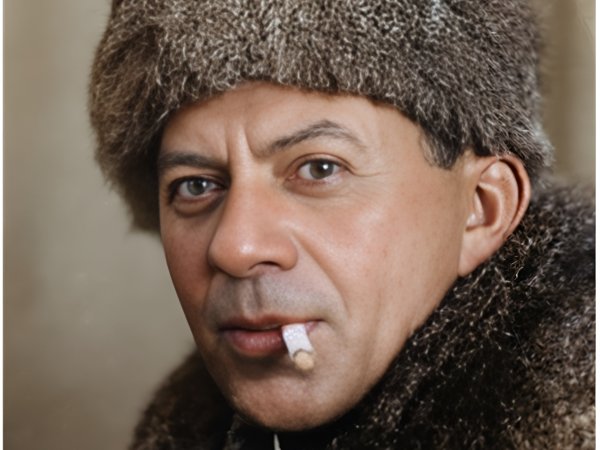
The history of interwar Bucharest cannot be fully understood without the photographs of Iosif Berman. The faces of people on the streets of the capital, major political events, village life, the royal family, as well as the tragedies and joys of a society undergoing constant transformation were all captured through the lens of the man whom writer Geo Bogza admiringly called “the man with a thousand eyes.”. Considered the first great photojournalist of the Romanian press, Iosif Berman succeeded in transforming press photography into a true form of art and documentation. His images did not merely illustrate news stories; they told complete stories about people, places, and eras. Today, many of the photographs that define interwar Romania bear his signature, and his legacy continues to represent one of the most important contributions to Romania’s visual heritage.
A Young Man Fascinated by the Power of Images
Iosif Berman was born on January 17, 1892, in the market town of Burdujeni, near Suceava. He came from a Jewish family, and his father obtained Romanian citizenship after participating in the Romanian War of Independence of 1877.
From an early age, he was attracted to photography and to the mystery of transforming light into images. He spent much of his time around traveling photographers working in Suceava and Chernivtsi, observing their techniques and learning the secrets of the profession. His curiosity and talent quickly became evident, and the young man began photographing everything he saw around him.
His passion led him to move to Bucharest before he turned eighteen. At that time, the capital represented the center of Romania’s cultural and journalistic life, and the opportunities available there were incomparable to those in a provincial town.
After winning a photography competition thanks to images he had captured on the streets in motion, he attracted the attention of the newspapers Adevărul and Dimineața, which were then owned by Constantin Mille. Thus began the career of the man who would become the most famous photojournalist of interwar Romania.
The First World War and the Years Spent in Exile
During the First World War, Berman was attached to a military regiment as a photojournalist. His mission was to document the reality of the front lines and the events that marked that dramatic period.
Fate, however, was about to radically change his life. During his stay in Odessa, he was caught up in the Russian Revolution. His photographic negatives were confiscated, the regiment to which he belonged was dispersed, and every soldier had to find his own path.
Having reached Novorossiysk, in the northern Caucasus, Berman met Raisa, the woman who would become his wife. It was there that he married and where his first child, his daughter Luiza, was born.
Between 1920 and 1923, he lived in Constantinople, today’s Istanbul, where he worked as a reporter and correspondent for Romanian publications. The experience he gained during this period strengthened his professional reputation and gave him an international perspective on journalism.
The Photographer Who Captured Interwar Romania
After returning to Bucharest, Iosif Berman entered the most brilliant stage of his career. He had already become a reference name in the Romanian press and was assigned to cover the most important events of the time.
He was designated to follow the activities of the Royal House and document the public appearances of the royal family. He photographed official events, visits, ceremonies, and private moments, gaining access to places where very few reporters were allowed.
At the same time, he was present in the middle of the capital’s daily life. He rushed to the scene of events before all his competitors and captured images that quickly became iconic for the press of the era.
His photographs were published in newspapers and magazines such as Adevărul, Dimineața, Curentul, Realitatea ilustrată, România ilustrată, Ilustrațiunea română, Cuvântul liber, and L’Indépendance Roumaine.
His prestige, however, extended far beyond Romania’s borders. Berman’s images appeared in prestigious international publications such as National Geographic and The New York Times. He also collaborated with the news agencies Associated Press and Scandinavian Newspaper Press.
Collaboration with Dimitrie Gusti and the Documentation of the Romanian Village
One of Iosif Berman’s most important contributions was his participation in the monographic campaigns coordinated by sociologist Dimitrie Gusti.
These research projects aimed to comprehensively document Romanian villages during the interwar period, and photography played an essential role in preserving information about communities, traditions, and ways of life.
Dimitrie Gusti greatly appreciated Berman’s talent and believed that without his images the research could not be considered complete. Before the campaign carried out in the Bessarabian village of Cornova in 1931, the sociologist sent him a letter in which he practically begged him to participate, considering that the absence of his contribution would compromise the project’s results.
Thanks to these expeditions, rural Romania was documented in an exceptional manner. The portraits of peasants, households, customs, and everyday activities captured by Berman are today genuine historical documents.
The Humor and Pranks That Captivated Bucharest
Beyond the seriousness of his work, Iosif Berman was known for his sense of humor and the ingenious pranks he created.
Every year on April 1, readers of Adevărul and Dimineața eagerly awaited the photomontages he produced. These images had become a tradition in interwar Bucharest.
One of his most famous pranks featured a stork’s nest placed on a traffic light in the center of the capital, directly above a traffic policeman. The photograph generated so much curiosity that numerous Bucharest residents went to see with their own eyes whether the image was real.
On another occasion, Berman created a photomontage in which he symbolically moved the Fire Watchtower (Foișorul de Foc) to a different neighborhood of the city. Once again, many readers fell for the trick and went to verify the information.
These episodes demonstrate not only his photographic talent but also his creativity and his ability to understand public psychology.
The Final Years and the End of a Great Artist
The year 1937 represented a major blow for Iosif Berman. The Goga-Cuza government shut down the newspapers Adevărul and Dimineața, and the newspapers’ archives, including the collections of photographic negatives accumulated over the years, were confiscated.
For a man who had dedicated his life to photography, the loss of the archive was a personal tragedy.
He continued to work in a studio on Doamnei Street and to send photographs to The New York Times. Following the recommendation of historian Nicolae Iorga, who deeply admired him, he began using the pseudonym I. B. Urseanu in order to avoid antisemitic persecution.
However, the situation worsened with the adoption of racial legislation. In 1940, Iosif Berman was completely forbidden from practicing his profession.
For a man who lived through photography, this prohibition was devastating. His daughter would later recount that after being driven away from an official event where he had attempted to take photographs from a distance, he returned home deeply affected and convinced that his professional life was over.
Suffering from kidney disease and overwhelmed by depression, he refused medical treatment and passed away on September 17, 1941.
The Legacy of “The Man with a Thousand Eyes”
After his death, the press of the time was not allowed to speak openly about his passing. Only in 1945 did Geo Bogza publish an emotional tribute dedicated to the man he considered one of the most talented individuals he had ever known.
Bogza stated that Iosif Berman revolutionized Romanian photography in the same way that Tudor Arghezi revolutionized the literary language. Through his images, photography became more expressive, more alive, and closer to reality.
Today, Iosif Berman is recognized as one of the most important photographers in Romanian history and one of the symbols of interwar Bucharest. His images continue to be exhibited in museums, studied by historians, and admired by the public.
Through his tireless work, he succeeded in leaving future generations an invaluable visual chronicle of a world that no longer exists. For this reason, the name of Iosif Berman remains associated not only with Romanian photography but also with the living memory of old Bucharest, captured through the eyes of an artist who seemed to see more than anyone else.
We also recommend: The story of Willy Pragher, the greatest photographer of interwar Bucharest