Saint Andrew the Apostle Church, the holy place of worship in the Drumul Taberei neighborhood. The history of a monument
- Articles
- 16 FEB 26
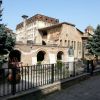
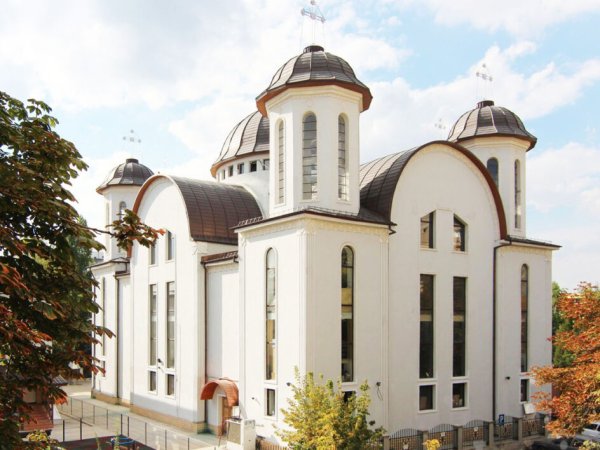
In the heart of the Drumul Taberei neighborhood, hidden among the apartment blocks built during the communist period, on Aleea Parva, rises the imposing Saint Andrew the Apostle Church. For many of the residents of the area, this place of worship is not only a space intended for prayer, but a true landmark of identity and spirituality. Its story is closely linked to the historical transformations of the neighborhood and to the profound need of the community to rediscover the roots of faith after decades of restrictions. Today, the church is recognized as one of the largest and most appreciated in the Capital, yet the road to this recognition was long and filled with challenges. From the total lack of a place of worship in the area to the construction of a monumental building capable of sheltering over 3,000 believers, the history of Saint Andrew the Apostle Church reflects the will of a community that did not give up its spiritual values.
A neighborhood without churches during the communist period
The Drumul Taberei neighborhood was largely built during the communist regime as a residential area intended for the new generations of workers and young families. In the urban plans of that time, the emphasis was placed on apartment blocks, schools, commercial spaces, and utility infrastructure. Places of worship were almost completely absent.
This absence was not accidental. The atheist ideology promoted by the communist regime led to the marginalization of religious life and to the limitation of the construction of new churches. Thus, when Drumul Taberei took shape, the authorities did not include in the project the building of religious edifices. Residents who moved into the neighborhood were forced to travel considerable distances to attend the Holy Liturgy, either to other neighborhoods or to the center of Bucharest.
This situation gradually created an acute need felt by the community. For many believers, the lack of a church near their home was a real burden. Some had even begun to consider moving out of the neighborhood, wishing to live in an area where spiritual life would be more easily accessible.
The first steps after the 1989 Revolution
The changes brought by the December 1989 Revolution opened new perspectives for religious life in Romania. In Drumul Taberei, both the clergy and the believers felt that the time had come to build their own place of worship. Their desire was clear: a church in the middle of the neighborhood that would become a center of prayer and communion.
Until all the legal approvals were obtained, the community gathered in a small wooden church brought from Alba Iulia, together with the transfer of Father Nicolae Popescu. This provisional space was, for a period, the spiritual heart of the neighborhood. However, the construction was small and overcrowded, with a very small altar, which made it difficult to carry out the services and other church rites.
Despite the modest conditions, believers came in large numbers, proof of their attachment to religious life. This mobilization strengthened the conviction that Drumul Taberei needed a real church, spacious and durable.
The land and the blessing for construction
A decisive step was taken on August 27, 1993, when the General Council of the Municipality of Bucharest made available to the Archdiocese of Bucharest six plots of land located in Sectors 3 and 6, areas with a high density of apartment blocks built before 1989. The initiative represented an essential gesture for the development of religious life in the new neighborhoods.
Eventually, in May 1998, His Beatitude Patriarch Teoctist gave his consent and blessed Father Nicolae Popescu to build Saint Andrew the Apostle Church on a plot of approximately 2,600 square meters located on Aleea Parva. The moment was received with emotion and hope by the entire community.
In the spring of 2001, a second priest, Sorin Corneanu, also coming from Alba Iulia, was appointed to the parish. Once all the necessary authorizations were obtained, construction work finally began that same year. The enthusiasm of the believers was immense: their dream was finally beginning to take shape.
Architecture inspired by great Byzantine models
The project of the new church followed the plan previously used for Saint Catherine Church in Alba Iulia, an edifice also built under the coordination of Father Nicolae Popescu. The technical documentation was signed by engineer Constantin Rusca, architect Datcu Florian, and designer Crișan Ioan.
Construction took place between 2001 and 2008, and the result is impressive. The domes, balconies, altar, nave, narthex, and porch are largely inspired by the famous Hagia Sophia Basilica in Constantinople. This Byzantine influence gives the building a monumental air and a particular elegance.
A distinctive element of the church is the use of vertical space through balconies. From a technical point of view, the exterior walls are not supported by buttresses, as is the case with many older churches, but by interior pillars integrated into the balcony structure. These are connected through the concrete slab to the exterior walls, giving the building increased strength and stability.
The church has a length of 30 meters, a remarkable coincidence with the length of the Temple in Jerusalem. The width is 20 meters, and the height reaches 25 meters. Its capacity of over 3,000 people places it among the most spacious churches in Bucharest.
On November 30, 2007, on the feast of Saint Andrew, the church was blessed for the celebration of services. The ceremony was officiated by His Grace Sebastian, Auxiliary Bishop of the Archdiocese of Bucharest, marking a historic moment for the community.
The painting and the community’s contribution
Although the church had been opened to believers, the works continued. The interior painting began in March 2011 and covered approximately 3,500 square meters. Executed with care and attention to detail, it harmoniously completes the architecture inspired by the Byzantine tradition.
Both the building itself and the painting were largely realized from the donations of the believers. Financial support also came from sponsorships and from aid offered over the years by the Sector 6 City Hall. The involvement of the community was essential, each contribution, no matter how small, playing a role in the completion of the project.
This solidarity transformed the construction of the church into a collective effort, strengthening the bond between the place of worship and the parishioners. The church is not only an imposing building, but the fruit of the faith and generosity of those who attend it.
Spiritual and cultural center of the neighborhood
In 2008, the Pastoral–Cultural House was built in the church courtyard under the coordination of parish priest Sorin Corneanu. The building, developed over two floors and an attic, currently hosts the Saint Andrew Multifunctional Social Center.
Here, cultural events, artistic courses, and professional activities are organized, aimed at supporting children and young people from disadvantaged backgrounds. Through these initiatives, the church extends its mission beyond the liturgical space, becoming a true social support for the community.
Every Sunday, thematic catecheses take place, and the priests are actively involved in parish life, including through the publication of the parish bulletin “The Orthodox Magazine Saint Andrew.” Thus, Saint Andrew the Apostle Church is not only an architectural monument, but a living organism involved in the spiritual and cultural formation of believers.
Today, many years after the laying of its foundation, the church in Drumul Taberei remains a symbol of the rebirth of faith in a neighborhood once built without places of worship. Its story is, in essence, the story of a community that transformed absence into hope and desire into reality.
We also recommend: The White Church in Bucharest, 300 years of history. How the most beautiful holy place on Calea Victoriei came into being